News · Social Issues
Thousands march in Madrid to honour pensioner Abascal
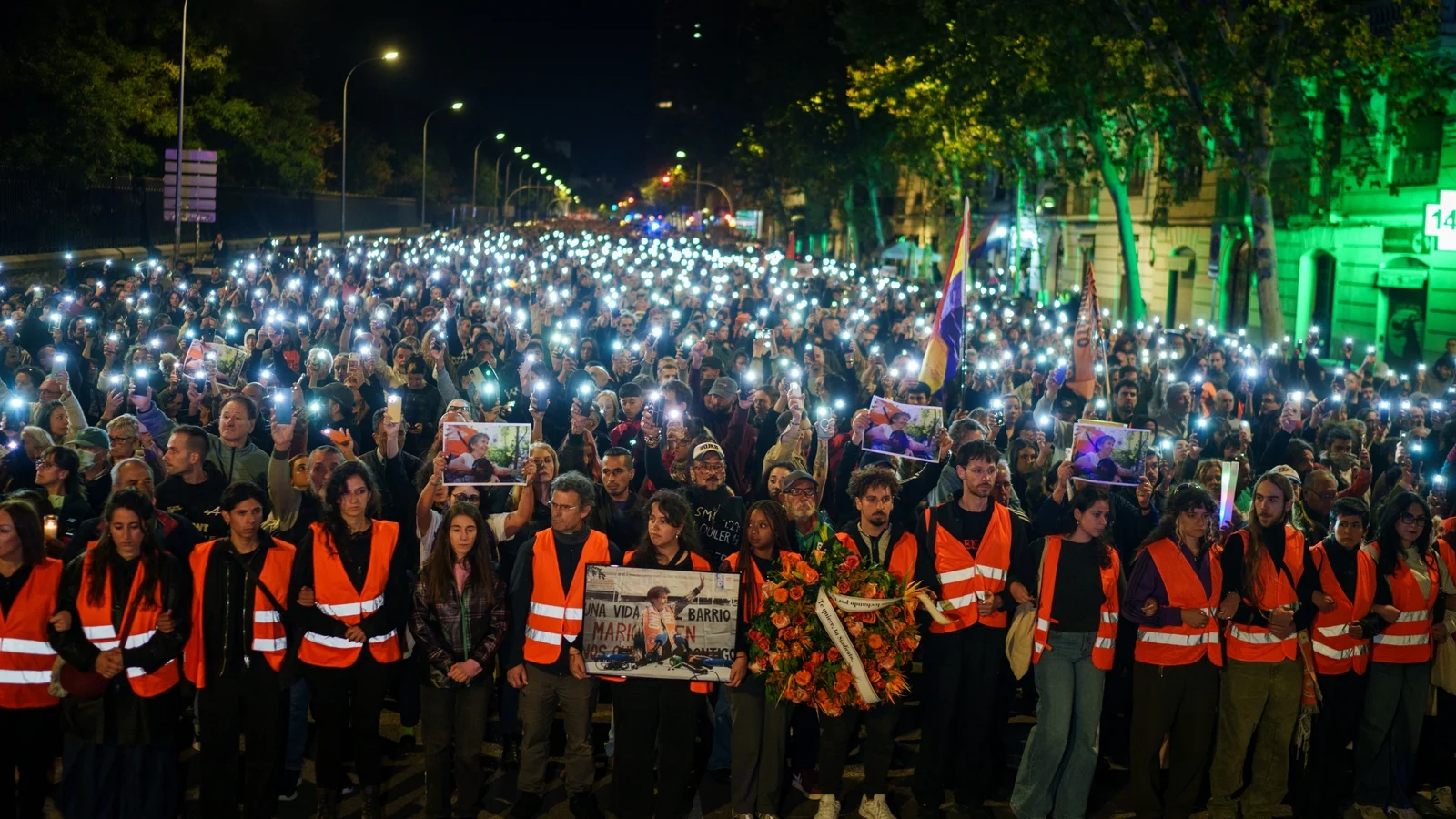
Maricarmen Abascal became a national symbol because her personal loss exposed a wider housing crisis. She was 87 and had lived in the same home for more than 70 years. Her eviction triggered protests over rising rents, scarce homes and protections for vulnerable tenants. Her death intensified that anger. An investment fund bought her building. Abascal then lost a lengthy legal battle against rent increases that exceeded her pension income. She was evicted on 23 September and later hospitalised with severe anxiety and exhaustion. Although she reached a deal to regain her home, she died before returning. The article gives no cause of death. Thousands marched in Madrid, carrying flowers from Puerta del Sol to her former home. Protesters called her death a “murder,” while politicians used her case in arguments about responsibility. Her story also helped push housing to the centre of Spain’s snap election campaign.
Based on reporting by RTE Ireland
Who was Maricarmen Abascal, and why did her eviction become a national symbol in Spain?
Maricarmen Abascal became a national symbol because her personal loss exposed a wider housing crisis. She was 87 and had lived in the same home for more than 70 years. Her eviction triggered protests over rising rents, scarce homes and protections for vulnerable tenants. Her death intensified that anger.
An investment fund bought her building. Abascal then lost a lengthy legal battle against rent increases that exceeded her pension income. She was evicted on 23 September and later hospitalised with severe anxiety and exhaustion. Although she reached a deal to regain her home, she died before returning. The article gives no cause of death.
Thousands marched in Madrid, carrying flowers from Puerta del Sol to her former home. Protesters called her death a “murder,” while politicians used her case in arguments about responsibility. Her story also helped push housing to the centre of Spain’s snap election campaign.
What is an eviction, and how did Abascal lose her long-time home?
An eviction is the legal or enforced process of making someone leave a home. It can follow a landlord’s claim, a court decision or failure to meet housing conditions. Eviction matters because losing a home can threaten a person’s safety, stability and health, especially when affordable alternatives are scarce.
Abascal had lived in her Madrid home for more than 70 years. After an investment fund purchased the building, she faced rent increases far beyond what her pension could cover. She fought those increases in a lengthy legal battle but lost. She was evicted on 23 September and later hospitalised with severe anxiety and exhaustion.
While in hospital, Abascal reached an agreement to regain her home. She died before she could return, and the article gives no cause of death. Her case fuelled protests and renewed demands for stronger protections for vulnerable households facing eviction.
How large is Spain's housing crisis, and how widespread are high rents and eviction orders?
The article portrays Spain’s housing crisis as broad and politically important, but it does not provide a national total for homes needed, rent increases or eviction orders. It reports home shortages and surging rents across the country. Protests took place in Madrid and other main cities, suggesting that the pressure was not confined to Abascal’s neighbourhood.
The article gives several signs of the crisis. Abascal’s rent increases exceeded her pension after an investment fund bought her building. Protesters camped in city squares, and several people who received eviction orders had died by suicide in recent months. These examples show how housing costs and eviction threats can become life-changing dangers.
A June survey found that 76.3% supported market intervention to guarantee access to housing. The same survey found 79% prioritised the right to housing over treating homes as market commodities. The figures show public concern, but do not measure the crisis’s full size.
What happened politically after protests over Abascal's eviction, including why Spain is holding a snap election?
The protests produced a major political consequence: Prime Minister Pedro Sanchez called a snap general election for 29 November. Housing had already become a national issue because of shortages, surging rents and eviction fears. Abascal’s death deepened public anger and made her case a powerful symbol during the political fight.
Parliament rejected the government’s proposals to address the mounting crisis. Left-leaning parties blamed conservative lawmakers for opposing legislation intended to curb soaring rents. The conservative People’s Party responded that Sanchez and the Socialists had failed to solve the problem after eight years in government. Both sides used Abascal’s story to attack their opponents.
The election now gives voters a direct decision amid competing claims about responsibility. The article does not state the election result or whether new housing measures will pass. It does show that public pressure has forced housing policy into the centre of national campaigning.
Which groups are being blamed for the housing crisis, and what roles do landlords, investment funds, regional governments, and the national government play?
The housing crisis has several alleged actors, and the article presents sharply divided claims. Protesters blamed landlords and investment funds for rent increases and profit-seeking. Left-leaning parties blamed conservatives for rejecting legislation to curb soaring rents. Conservatives blamed the national Socialist government for failing to solve the crisis after eight years.
Investment funds can influence rents by buying residential buildings, as happened with Abascal’s home. Her rent rose beyond her pension, and she eventually lost her legal battle. Landlords were then portrayed by protesters as putting greed above people’s lives. Regional governments also faced criticism. Madrid’s opposition accused regional leader Isabel Diaz Ayuso of mocking Abascal, while Ayuso blamed Sanchez.
The national government proposed measures, but parliament rejected them. The article does not establish that one group alone caused the crisis. Instead, it shows responsibility being disputed across private owners, investors, regional authorities and national politicians.
What policies could governments use instead of simply allowing rents to be set by the market?
Governments can treat housing as a public need rather than leaving access entirely to market prices. The article identifies several possible tools: expanding public housing, restricting tourist rentals, increasing rent assistance and strengthening protections for vulnerable households facing eviction. It also reports support for intervention to guarantee access.
Each measure works differently. Public housing adds homes outside ordinary market pricing. Rent assistance helps households meet costs when incomes cannot keep pace. Tourist-rental restrictions could limit competing uses of residential homes. Stronger eviction protections can give vulnerable tenants more time or support, reducing the risk of sudden displacement. The article also mentions proposals to curb soaring rents.
These policies require action from more than one level of government. Ombudsman Angel Gabilondo said the crisis needed greater commitment from all levels. The survey figures show strong public backing for intervention, but the article does not say which measures will be adopted or how effective they will be.
Why can housing become unaffordable when homes are treated both as a basic human need and as investment assets?
A home serves two purposes that can conflict. It is a basic need, because people require a secure place to live. It can also be treated as an investment asset, where owners seek higher rents, rising values or other returns. When investment goals drive prices faster than household incomes, people may be unable to remain in their homes.
Abascal’s experience illustrates the mechanism. An investment fund purchased her building, and rent increases eventually exceeded her pension income. She lost a lengthy legal battle and was evicted after living there for more than 70 years. Her case turned an abstract debate about markets into a visible human crisis.
The article reports that 79% of surveyed Spaniards believed the right to housing should take precedence over treating homes as market commodities. It also reports 76.3% support for intervention. The proposed responses include public housing, rent assistance and rent controls or protections, though their future is uncertain.
Key Facts:
📌 Abascal had lived in her home for more than 70 years.
📌 An investment fund bought her building before her eviction.
📌 Thousands marched after her death, turning her case into a national symbol.
📌 An eviction removes someone from a home through an enforced process.
📌 Abascal’s rent increases rose far beyond her pension income.
📌 She reached a deal to return home but died before returning.
📌 The article reports no nationwide count of evictions or housing shortages.