News · Defence & Security
Some victims killed in Kramatorsk still unidentified - General Staff
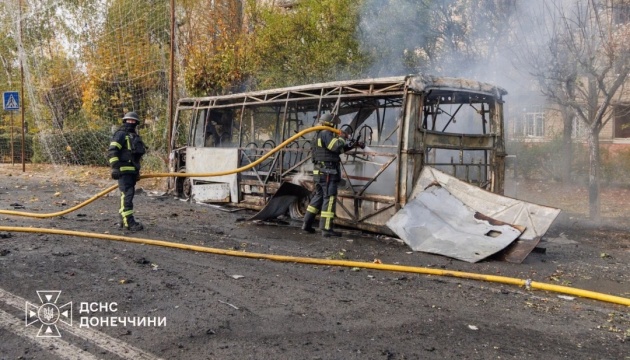
Two passenger buses in Kramatorsk were struck by what Ukraine’s General Staff described as a deliberate Russian attack. The reported toll was at least 30 people killed and another 20 injured. The General Staff warned that the death toll could rise, making the incident both a mass-casualty event and an ongoing emergency. The buses carried passengers in the city when they were hit. The attack also damaged apartment buildings and cars. Because some victims suffered severe injuries, authorities had not yet identified everyone who died. That uncertainty can delay formal death records and complicate information for families. The immediate figures are therefore not necessarily final. Emergency services and authorities must treat the site, care for survivors, assess damage, and identify the dead. The General Staff said Russia would be held accountable, while extending condolences to victims’ families and loved ones.
Based on reporting by Ukrinform English
What happened to the passenger buses in Kramatorsk, and how many people were initially reported killed or injured?
Two passenger buses in Kramatorsk were struck by what Ukraine’s General Staff described as a deliberate Russian attack. The reported toll was at least 30 people killed and another 20 injured. The General Staff warned that the death toll could rise, making the incident both a mass-casualty event and an ongoing emergency.
The buses carried passengers in the city when they were hit. The attack also damaged apartment buildings and cars. Because some victims suffered severe injuries, authorities had not yet identified everyone who died. That uncertainty can delay formal death records and complicate information for families.
The immediate figures are therefore not necessarily final. Emergency services and authorities must treat the site, care for survivors, assess damage, and identify the dead. The General Staff said Russia would be held accountable, while extending condolences to victims’ families and loved ones.
What is Kramatorsk, and where is it located in Ukraine?
Kramatorsk is a city in Ukraine’s Donetsk region, in the country’s east. The supplied article identifies it as the place where two passenger buses were struck, but it does not provide a fuller description of the city or its administrative status.
That location matters because Donetsk region has been heavily affected by the war. In this report, the setting was a city rather than a remote battlefield. The buses, apartment buildings, and cars described by the General Staff indicate an attack occurring amid civilian life.
The article gives no further geographic details, such as the exact street or distance from the front. It does establish that Kramatorsk was the site of a deadly strike involving civilian transport. The reported damage to homes and vehicles broadens the incident beyond the buses themselves.
How large is the reported human toll, and why could the number of deaths rise?
The reported human toll was at least 50 casualties: 30 or more people killed and 20 injured. The word “at least” matters because the figures were preliminary. They describe the situation when the General Staff issued its statement, not necessarily the final outcome.
The death toll could rise for two reasons stated or implied by the report. First, some injured people may later die from their wounds. Second, the attack was still being assessed, so authorities might discover additional victims. The General Staff specifically warned that fatalities might increase.
Identification was also incomplete. Severe injuries had made it impossible to identify some of the dead at that time. This means the casualty count and the list of named victims could develop separately. Families may await confirmation even while authorities report the overall toll.
Why can victims of a severe attack remain unidentified, and what methods are used to identify them?
Victims of a severe attack can remain unidentified when injuries damage fingerprints, facial features, dental structures, or clothing and possessions. The article says that some people killed in Kramatorsk had not been identified because of the severity of their injuries. Identification is important for accurate records and for giving families official confirmation.
Investigators commonly compare DNA from remains with samples from relatives or personal records. They may also use fingerprints, dental records, medical implants, medical histories, photographs, and personal effects. Each method provides evidence; several are often combined before authorities confirm a name.
The article does not describe which techniques were being used in Kramatorsk. It establishes only that identification was incomplete. In a mass-casualty investigation, careful examination can take time, especially when remains are badly injured. Confirmed identities can then support death certificates, family notifications, and accountability investigations.
What damage besides deaths and injuries did the attack cause, and what immediate effects does that have on residents?
Besides killing and injuring people, the reported attack damaged residential apartment buildings and cars. That matters because civilian harm can continue after the initial strike. People may lose safe housing, transportation, belongings, or access to ordinary services even when they were not physically injured.
The General Staff specifically named apartment buildings and cars as damaged property. The article does not give the number of buildings or vehicles, nor does it describe residents’ individual circumstances. Still, damage to homes can force people to seek safer accommodation, while damaged cars can limit travel and emergency access.
The immediate effects are therefore likely to include disrupted daily life and continuing danger around the damaged area, based on the nature of the destruction. Authorities must assess buildings, support residents, and document losses. The report also places the property damage within a broader allegation that civilian cities were deliberately targeted.
What does international humanitarian law say about attacking civilians, passenger vehicles, and residential areas during war?
International humanitarian law requires parties to distinguish civilians and civilian objects from military targets. Deliberately attacking civilians is prohibited. Residential buildings and passenger vehicles are generally civilian objects, unless specific evidence shows they are being used for a military purpose and qualify as military objectives.
The rules also prohibit indiscriminate attacks and attacks expected to cause excessive civilian harm compared with the anticipated military advantage. Forces must take feasible precautions to verify targets, choose means and methods carefully, and reduce harm. A claim that civilians were deliberately targeted would therefore raise serious legal concerns.
The article reports the Ukrainian General Staff’s accusation that Russia deliberately struck passenger buses and targeted civilians. It does not present an independent legal finding or battlefield evidence. Whether an attack violated the law requires investigation of intent, target status, expected harm, precautions, and the facts surrounding the strike.
How can military and political leaders be held legally accountable for attacks that deliberately target civilians?
Military and political leaders can be held accountable through national or international criminal investigations and courts. Individual responsibility may arise when a leader orders, plans, encourages, assists, or otherwise contributes to an unlawful attack. Responsibility can also extend to commanders who knew, or should have known, about crimes and failed to prevent or punish them.
For this Kramatorsk strike, investigators would need evidence about who planned or authorized it, what target information they had, and whether civilians were intentionally attacked. Evidence could include operational orders, communications, targeting data, witness accounts, physical damage, and forensic findings. A court would assess each person’s role separately.
The General Staff said Russia’s military and political leadership would be held accountable. That is an allegation and stated intention, not a completed judgment. Legal proceedings require credible evidence, proper jurisdiction, and fair trials. If responsibility is proven, penalties can follow under applicable national or international law.
Key Facts:
📌 Two passenger buses were struck in Kramatorsk.
📌 At least 30 people were killed.
📌 Another 20 people were injured.
📌 Kramatorsk is a city in eastern Ukraine’s Donetsk region.
📌 The article identifies Kramatorsk as the attack location.
📌 Two buses, apartments, and cars were affected.
📌 At least 30 people were reported killed.