News · Defence & Security
(LEAD) Majority of Americans support S. Korea's nuclear-powered submarine project: poll
A nuclear-powered submarine gets its movement and onboard electricity from a nuclear reactor. The reactor does not automatically mean the vessel carries nuclear warheads. A submarine carrying nuclear weapons is defined by its weapons, while a nuclear-powered submarine is defined by its energy source. The distinction matters because propulsion can improve a submarine's endurance without creating a nuclear arsenal. South Korea's proposed boats would be conventionally armed, according to the article. That means they could use ordinary military weapons while relying on nuclear energy to propel the vessel. The survey showed Americans understood the difference. Fifty-eight percent supported the submarine project, but 71 percent opposed South Korea developing nuclear weapons. This separation shaped Karl Friedhoff's interpretation of the results. He said respondents may view South Korea as an ally while still rejecting nuclear proliferation. The article presents the project as part of security agreements, not as a plan for Seoul to acquire nuclear warheads.
Based on reporting by Yonhap Korea
What is a nuclear-powered submarine, and how is it different from a submarine carrying nuclear weapons?
A nuclear-powered submarine gets its movement and onboard electricity from a nuclear reactor. The reactor does not automatically mean the vessel carries nuclear warheads. A submarine carrying nuclear weapons is defined by its weapons, while a nuclear-powered submarine is defined by its energy source. The distinction matters because propulsion can improve a submarine's endurance without creating a nuclear arsenal.
South Korea's proposed boats would be conventionally armed, according to the article. That means they could use ordinary military weapons while relying on nuclear energy to propel the vessel. The survey showed Americans understood the difference. Fifty-eight percent supported the submarine project, but 71 percent opposed South Korea developing nuclear weapons.
This separation shaped Karl Friedhoff's interpretation of the results. He said respondents may view South Korea as an ally while still rejecting nuclear proliferation. The article presents the project as part of security agreements, not as a plan for Seoul to acquire nuclear warheads.
How much support did the survey find for South Korea developing nuclear-powered submarines, and how many Americans opposed it?
The survey found that 58 percent of 1,207 American adults supported South Korea developing nuclear-powered submarines. Forty-two percent opposed the project. The result shows majority support, but it also indicates that the proposal remains contested, with more than two in five respondents against it.
Support crossed party lines. It reached 56 percent among self-identifying Democrats and 64 percent among Republicans. Independents were also broadly supportive, at 62 percent. The figures suggest that approval was not limited to one political group or party.
The survey was conducted jointly by the Korea Economic Institute of America and YouGov from Aug. 21 to Sept. 1. The poll measured American views after security agreements linked to the project. It also found that support for nuclear-powered submarines did not translate into support for South Korea developing nuclear weapons, which 71 percent opposed.
Why can a submarine be nuclear-powered while remaining conventionally armed?
Nuclear propulsion describes how a submarine moves, not what warheads it carries. A reactor produces heat and electricity for the vessel's propulsion and systems. The submarine can therefore be nuclear-powered while remaining conventionally armed. This distinction matters because nuclear-powered vessels do not necessarily represent a country's decision to build nuclear weapons.
The article applies that distinction directly to South Korea. It says Seoul is pushing to build conventionally armed, nuclear-propelled submarines. The boats would use nuclear energy as their power source, but the article does not say they would carry nuclear warheads. Their propulsion and armament are separate categories.
American responses reflected this separation. Fifty-eight percent supported the submarine project, while 71 percent opposed South Korea developing nuclear weapons. Karl Friedhoff said respondents appeared able to distinguish nuclear-powered submarines from nuclear weapons. He also linked the opposition to a broader rejection of proliferation, whether involving allies or adversaries.
Why does South Korea want nuclear-powered submarines, and what security concerns are they intended to address?
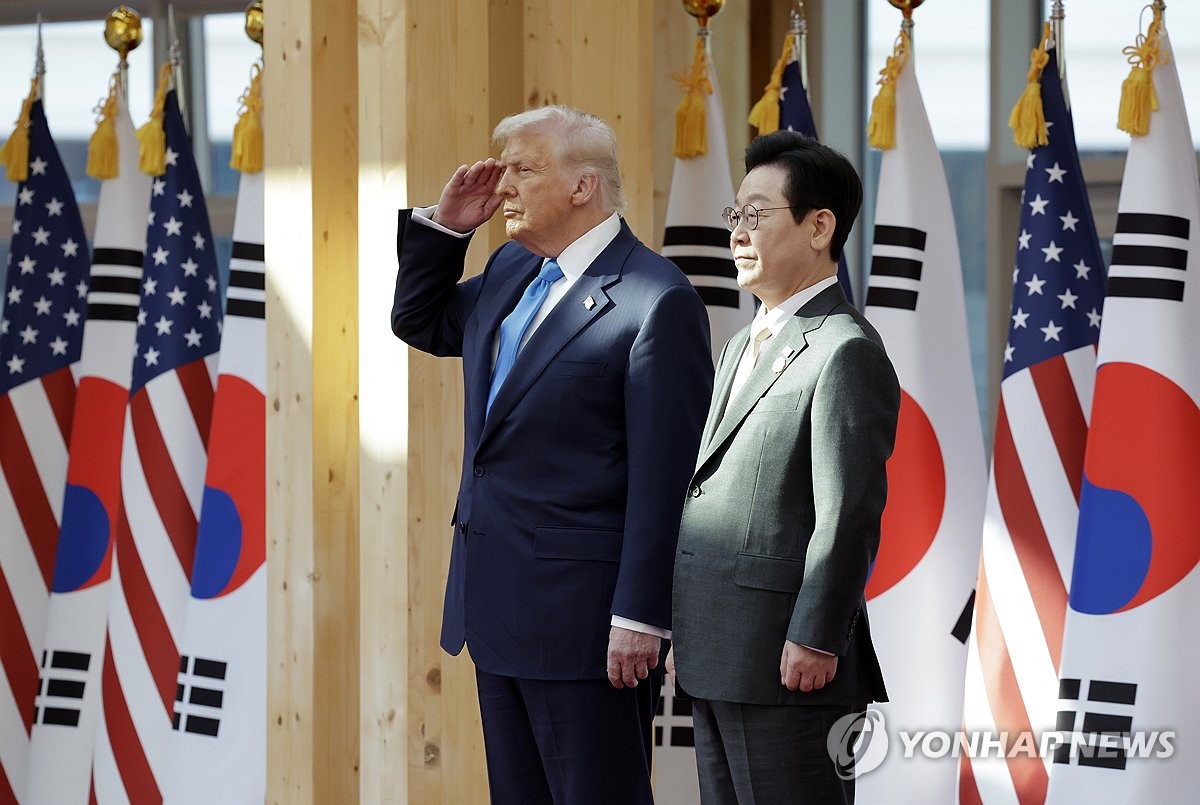
South Korea wants nuclear-powered submarines in the context of security agreements reached during a summit between President Lee Jae Myung and U.S. President Donald Trump. The project involves conventionally armed, nuclear-propelled vessels. That matters because Seoul is seeking a more capable submarine force without, according to the article, pursuing nuclear weapons.
The article does not specify exactly which missions the submarines would perform or list particular threats they are intended to address. It does report continuing concern about North Korea, including the finding that 87 percent of Americans considered it important for North Korea to give up its nuclear capabilities. That regional security setting helps explain why submarine development is being discussed.
The project therefore sits alongside the South Korea-U.S. alliance and U.S. troop commitments. Sixty-four percent said the alliance serves American national security interests, and 71 percent favored using U.S. troops to defend South Korea after a North Korean invasion. The survey shows strong alliance support, but not the project's operational details.
How could South Korean nuclear-powered submarines affect the security balance involving North Korea, the United States, and neighboring countries?
South Korean nuclear-powered submarines could affect the regional security balance by adding a new undersea capability to a country already supported by the United States. Their importance would extend beyond Seoul because North Korea, Washington, and neighboring states all watch changes in military capability. The article, however, does not measure the project's likely strategic impact.
The clearest mechanism is political and military signaling. The submarines would be conventionally armed, so they would not equal South Korea acquiring nuclear weapons. At the same time, their development could be seen as strengthening the South Korea-U.S. security partnership. The article reports that 64 percent believe the alliance serves U.S. national security interests, while 71 percent support defending South Korea against a North Korean invasion.
The response could still raise proliferation concerns, especially because Americans strongly oppose North Korea retaining nuclear weapons and South Korea developing its own. Friedhoff said respondents rejected proliferation for allies and adversaries alike. Future effects would depend on implementation and regional reactions, which the article does not describe.
Why do many Americans support South Korea's nuclear-powered submarines but oppose South Korea developing nuclear weapons?
Nuclear-powered submarines and nuclear weapons involve different capabilities. Propulsion concerns how a vessel operates; nuclear weapons concern warheads and a country's nuclear arsenal. Many Americans can support the first while rejecting the second because they see an ally gaining a military tool without crossing into nuclear-weapon possession.
The survey results show this clearly. Fifty-eight percent backed South Korea developing nuclear-powered submarines, including 56 percent of Democrats, 64 percent of Republicans, and 62 percent of independents. In contrast, 71 percent opposed South Korea developing nuclear weapons. Karl Friedhoff said respondents likely connected their submarine support to South Korea's status as an ally.
Friedhoff also said the public appeared able to differentiate nuclear-powered submarines from nuclear weapons. He added that Americans do not want proliferation whether the country involved is an ally or an adversary. The findings therefore combine support for the South Korea-U.S. security relationship with resistance to expanding the number of nuclear-armed states.
How does nuclear propulsion work, and why does it allow submarines to remain underwater longer than conventionally powered submarines?
Nuclear propulsion uses a reactor to create heat. That heat produces steam, which drives machinery connected to the submarine's propulsion system and generates electricity for onboard equipment. The reactor can operate for long periods without the repeated fuel replenishment required by conventional diesel-based systems. This gives nuclear-powered submarines much greater underwater endurance.
A conventional submarine must manage its fuel and, depending on its equipment, periodically operate systems that support battery charging or air use. A nuclear-powered submarine can keep producing power while submerged for extended periods. Its practical endurance is then shaped more by food, maintenance, crew needs, and mission requirements than by propulsion fuel. These mechanics are established technical knowledge; the article itself does not explain them.
The survey focuses on the political distinction rather than engineering. It says South Korea plans conventionally armed, nuclear-propelled submarines. Americans supported that project, while opposing South Korean nuclear weapons, showing that reactor-powered endurance did not automatically mean support for a nuclear arsenal.
Key Facts:
📌 - Nuclear propulsion and nuclear weapons are separate capabilities.
📌 - South Korea's planned submarines would be conventionally armed.
📌 - Seventy-one percent opposed South Korea developing nuclear weapons.
📌 - Fifty-eight percent supported South Korea developing nuclear-powered submarines.
📌 - Forty-two percent opposed the submarine project.
📌 - Support reached 62 percent among independent respondents.
📌 - Propulsion describes a submarine's power source.