News · Defence & Security
Serviceman recruited by Russia while AWOL detained for directing strikes on Ukrainian forces
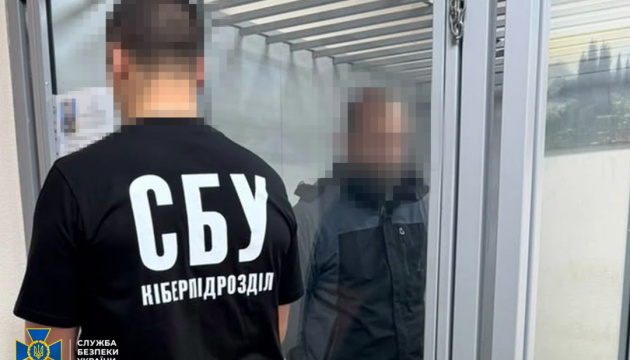
A Ukrainian mobilized serviceman from the Poltava region was detained after allegedly helping Russian intelligence target Ukrainian forces. He directed fire at his assault regiment and nearby Defense Forces units. The case matters because location information can expose troops and equipment to enemy strikes. The SBU documented him sending the geolocation of his battalion's temporary deployment site to Russian handlers. He later left his unit, claiming he was going to a hospital, but instead hid at home in Kremenchuk. Investigators found a smartphone used to coordinate with his handler through an anonymous chat. The SBU said he had been recruited after going AWOL and seeking easy money through Telegram channels. Officers secured nearby Ukrainian positions before detaining him. He was notified of suspicion under Part 2 of Article 111, concerning high treason under martial law, and remains in custody without bail.
Based on reporting by Ukrinform English
What happened to the Ukrainian serviceman, and what information did he send to Russian intelligence?
A Ukrainian mobilized serviceman from the Poltava region was detained after allegedly helping Russian intelligence target Ukrainian forces. He directed fire at his assault regiment and nearby Defense Forces units. The case matters because location information can expose troops and equipment to enemy strikes.
The SBU documented him sending the geolocation of his battalion's temporary deployment site to Russian handlers. He later left his unit, claiming he was going to a hospital, but instead hid at home in Kremenchuk. Investigators found a smartphone used to coordinate with his handler through an anonymous chat.
The SBU said he had been recruited after going AWOL and seeking easy money through Telegram channels. Officers secured nearby Ukrainian positions before detaining him. He was notified of suspicion under Part 2 of Article 111, concerning high treason under martial law, and remains in custody without bail.
What does it mean to be AWOL, and why was the serviceman's unauthorized absence important to the case?
AWOL means absent without leave, or leaving a military unit without official permission. It is an unauthorized absence, not an approved medical visit, leave period, or assigned deployment. In military settings, unauthorized absence can disrupt duties and raise security concerns.
According to the article, the serviceman was AWOL when he began looking for easy ways to make money through Telegram channels. Russian intelligence services then recruited him. They told him to return to his unit and collect information that could help direct Russian strikes. He later sent sensitive location information before leaving again.
This detail is important because it explains how the contact began and why the case involved more than simple absence. The alleged recruitment turned an unauthorized absence into an intelligence operation. The SBU says he then hid at home in Kremenchuk instead of going to a hospital, where officers eventually detained him.
What is a military spotter, and how can a spotter help an attacker direct artillery or missile strikes?
A military spotter is a person who identifies targets and passes location information to an attacking force. The information may help attackers understand where troops, vehicles, equipment, or facilities are positioned. The article calls the detained serviceman a spotter because he allegedly supplied such information to Russian intelligence.
The SBU said he directed fire at his assault regiment and nearby Ukrainian units. It also documented him transmitting the geolocation of his battalion's temporary deployment site. By sending coordinates through an anonymous chat, he gave his Russian handler a way to connect a real Ukrainian position with planned attacks.
A spotter does not necessarily fire the weapon personally. Instead, the spotter's information can help an attacker select a target and adjust timing or aim. The article does not specify which artillery or missile systems were used. It does show that accurate location data was central to the alleged operation and prompted the SBU to protect nearby positions.
How many kinds of military locations did the Russians seek, and what could each type reveal about Ukrainian forces?
The article identifies two kinds of military locations sought by Russian intelligence. The first was the largest concentrations of Ukrainian Armed Forces personnel and equipment. The second was the training grounds where the suspect had undergone combat training. These locations could expose both active forces and military preparation sites.
Large personnel and equipment concentrations can show where many Ukrainian troops and vehicles are gathered. That makes them important intelligence targets because one location may contain a battalion or other sizable force. Training grounds can reveal places connected with combat preparation and may identify where personnel assemble before deployment.
The article does not state that either location was struck. It says Russian intelligence was primarily interested in their coordinates. The suspect also transmitted his battalion's temporary deployment site. Together, these details show an effort to map Ukrainian forces, equipment, training areas, and temporary positions for possible enemy action.
Why is the geolocation of a battalion's temporary deployment site especially valuable to an enemy?
The geolocation of a battalion's temporary deployment site is valuable because it identifies where a substantial Ukrainian unit is temporarily gathered. A precise location can tell an enemy where personnel, command activity, and equipment are concentrated. Temporary sites may also be less familiar or less obvious than permanent bases.
In this case, the SBU documented the serviceman transmitting his battalion's temporary deployment geolocation to Russian intelligence. The battalion belonged to his assault regiment, and the article says Russian forces were interested in large concentrations of Ukrainian personnel and equipment. The information therefore connected a specific place with an active military formation.
The SBU took advance measures to secure Ukrainian Defense Forces positions in the area of the enemy's intelligence activity. That response shows why the information was treated as an immediate security risk. The article does not state whether the site was struck, but it says the suspect had directed fire at Ukrainian positions.
What can happen to soldiers and military units when an enemy receives accurate, timely location information?
When an enemy receives accurate and timely location information, soldiers and military units can become easier to target. The information may identify where personnel, vehicles, command elements, or supplies are concentrated. It can also reduce the time available to move, disperse, or take protective measures.
The article gives a direct example. The serviceman allegedly directed fire at his assault regiment and adjacent Ukrainian units. He also transmitted the geolocation of his battalion's temporary deployment site. Russian intelligence was especially interested in major concentrations of Ukrainian personnel and equipment, so such information could support attacks against grouped forces.
The SBU said it acted in advance to secure Ukrainian positions in the area of enemy intelligence activity. The article does not report specific casualties or damage from the transmitted information. It does show the broader danger: a single insider with access to military locations can create an urgent threat to an entire unit and nearby forces.
What are high treason and martial law, and why do legal systems punish helping an enemy during wartime so severely?
High treason generally means deliberately helping an enemy or harming one's own country in a serious way. Martial law is a special legal regime used during grave threats such as war, when authorities receive additional powers and some rules operate differently. Exact definitions depend on a country's law; the article identifies the Ukrainian legal charge.
The SBU notified the detainee that he was suspected under Part 2 of Article 111 of Ukraine's Criminal Code. The stated charge is high treason committed under martial law. The allegation is that he sent military locations to Russian intelligence and helped direct fire at Ukrainian forces, including his own assault regiment.
Legal systems punish wartime assistance to an enemy severely because it can endanger soldiers, units, and national defense. In this case, the suspect is held without bail and faces life imprisonment with confiscation of property. These are allegations, not a final conviction. The article says the investigation and court process continue after his detention.
Key Facts:
📌 - He directed fire at his assault regiment and adjacent Ukrainian units.
📌 - He transmitted his battalion's temporary deployment geolocation to Russian intelligence.
📌 - The SBU detained him after securing threatened Ukrainian positions.
📌 - AWOL means leaving a military unit without authorization.
📌 - Russian intelligence recruited him after his unauthorized absence.
📌 - He returned to his unit to gather information for Russian strikes.
📌 - A spotter provides target information to help an attacker direct fire.