News · Defence & Security
Drone hits data center of Russia's 'Google' in 1st for Ukraine war
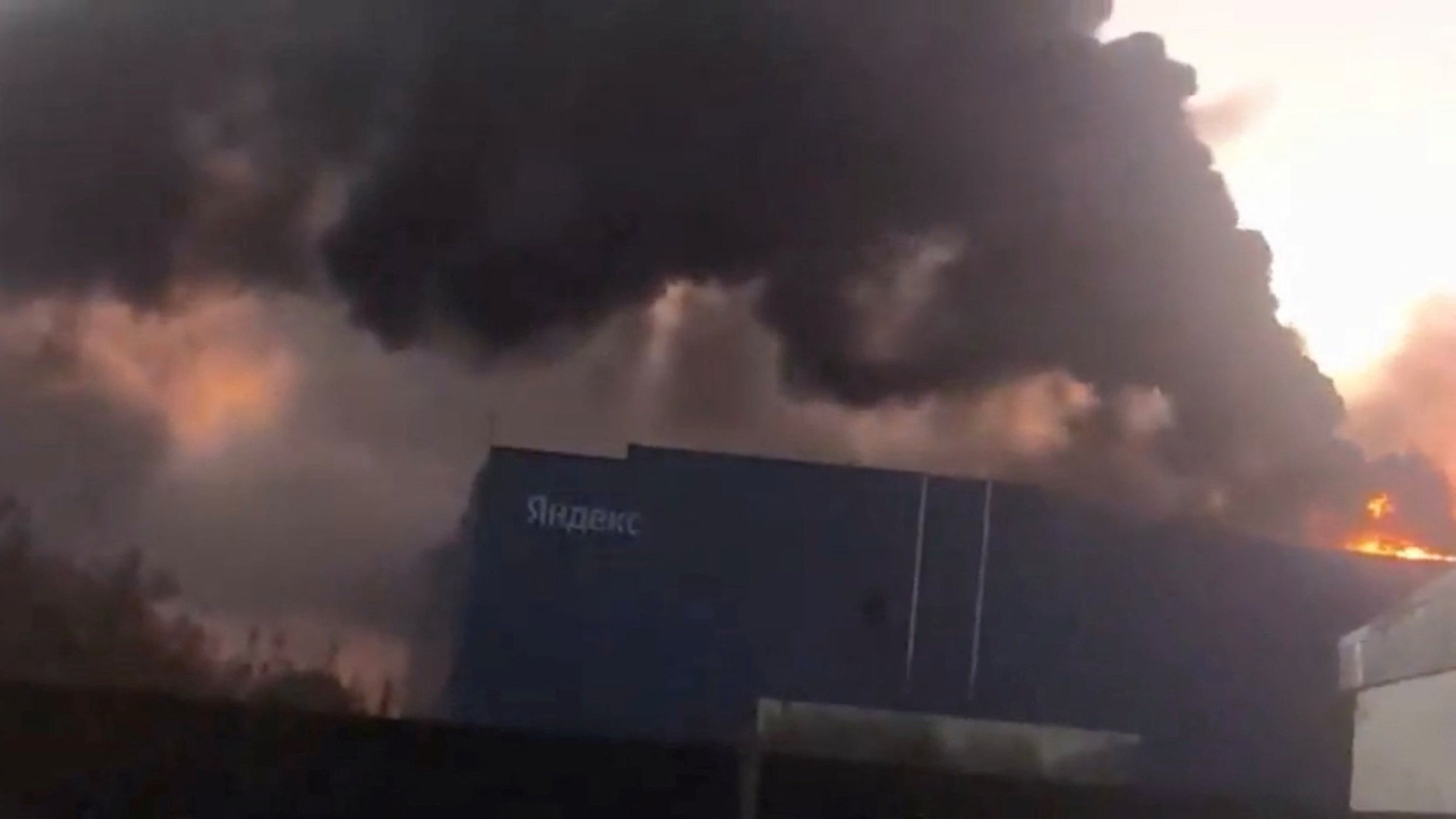
Drones struck Yandex’s Sasovo hub in Russia, causing a fire and forcing the data center to suspend operations. It was described as the first major attack on a Russian data hub since the war with Ukraine began. The incident matters because modern online services depend on large, concentrated computing facilities. Sasovo is one of Yandex’s five large data centers and hosts tens of thousands of servers. Yandex said the attack disrupted electricity to one Yandex Cloud zone. The company advised customers to use other zones while it assessed the infrastructure. Multiple Russian websites and services reported technical problems, including Russian Railways and Spartak Moscow. Yandex said its core consumer products were not affected, but it did not reveal the full damage. Later, it said it could not yet confirm whether the equipment could be restored. The attack also pushed Yandex shares down 3% and raised concerns about protecting Russia’s digital infrastructure from future drone strikes.
Based on reporting by Daily Sabah Turkey
What happened to Yandex’s data center in Sasovo, and how did the attack affect its operations?
Drones struck Yandex’s Sasovo hub in Russia, causing a fire and forcing the data center to suspend operations. It was described as the first major attack on a Russian data hub since the war with Ukraine began. The incident matters because modern online services depend on large, concentrated computing facilities.
Sasovo is one of Yandex’s five large data centers and hosts tens of thousands of servers. Yandex said the attack disrupted electricity to one Yandex Cloud zone. The company advised customers to use other zones while it assessed the infrastructure. Multiple Russian websites and services reported technical problems, including Russian Railways and Spartak Moscow.
Yandex said its core consumer products were not affected, but it did not reveal the full damage. Later, it said it could not yet confirm whether the equipment could be restored. The attack also pushed Yandex shares down 3% and raised concerns about protecting Russia’s digital infrastructure from future drone strikes.
What is Yandex, and why is it often called Russia’s “Google”?
Yandex is Russia’s leading AI and technology company. It created Russia’s first search engine in 1997 and now operates services including YandexGPT, cloud computing, Yandex Taxi, and Yandex Music. Its broad range of digital products makes it a central part of Russia’s technology economy.
The “Russia’s Google” nickname is a comparison, not Yandex’s formal name. Like Google, Yandex began with search and expanded into many internet services. The company also runs a cloud platform and develops a major national AI model. Its Sasovo facility supports this wider technology operation by hosting tens of thousands of servers.
Yandex is one of the few major Russian companies not under Western sanctions. Its importance was visible after the attack: Yandex shares fell 3%, while several Russian online services reported technical issues. The company said its core consumer services continued working, even as damage at Sasovo was still being assessed.
What is a data center, and why does it need a reliable supply of electricity?
A data center is a specialized facility that houses servers, storage systems, networking equipment, and supporting infrastructure. These machines process requests, store information, and deliver online services. The article identifies Sasovo as a site hosting tens of thousands of servers, although it does not provide a physical floor area.
Electricity is essential because servers need continuous power to compute and communicate. Cooling systems also require power because heavily used equipment produces heat. If electricity fails, services can slow down or stop, and equipment may be damaged if the outage is severe. That is why Yandex reported problems with electricity in one cloud-service zone after the attack.
Yandex suspended operations at Sasovo after a fire and said it was still assessing the infrastructure. Its advice to customers to use other zones shows how power and facility failures can affect digital services. The article does not detail Sasovo’s backup systems, so their condition is unknown.
How large was the Sasovo facility, and what kinds of computing equipment did it contain?
The Sasovo facility was one of Yandex’s five large data centers. The article gives no floor area or exact server count, but says the hub hosted tens of thousands of servers. That makes it a major computing site rather than a small office server room.
Yandex said in 2021 that Sasovo housed two of its three supercomputers built around Nvidia A100 chips. The company uses these machines to train YandexGPT, one of Russia’s leading AI models. The article does not say whether the supercomputers were damaged, because Yandex declined to comment on that point.
The attack caused a fire and suspended operations at the hub. Yandex later said it could not yet determine whether the data center equipment could be restored. The uncertainty matters because damage could affect ordinary server workloads, cloud customers, and specialized AI computing. Yandex’s core consumer services were not affected, according to the company.
What consequences can a damaged data center have for online services, businesses, and ordinary users?
A data center outage can affect far more than the company that owns the building. Businesses may lose access to websites, cloud tools, customer systems, or online sales. Ordinary users may see failed logins, unavailable pages, delayed transactions, or disrupted ticket purchases. The impact depends on which services rely on the damaged facility.
The article gives several examples. Cian, Litmarket, Russian Railways, and Spartak Moscow reported technical issues. A state-owned bus company in the Moscow region said online ticket sales were unavailable because of a temporary data center shutdown. Detector404 recorded 58,268 user complaints over the past day, though the article does not attribute every complaint specifically to Sasovo.
The wider economic effects can include lost sales and costs for affected companies. Previous Ukrainian attacks in Russia caused e-commerce losses for tens of thousands of small businesses and contributed to fuel-driven inflation. Yandex said its core consumer services were unaffected, but the full consequences remained uncertain while damage was assessed.
How can companies keep services running when one data center is damaged, and why did Yandex direct customers to other zones?
Companies can improve resilience by operating services in multiple data centers or separate zones. If one location becomes unavailable, systems may continue in another location. This approach can reduce downtime, although the article does not describe Yandex’s complete backup design or guarantee that every service will switch automatically.
Yandex’s Yandex Cloud website reported electricity problems in one data center zone. The company recommended that customers use other zones. This suggests that alternative zones were available for at least some cloud workloads, allowing customers to avoid the affected area while operations were suspended there.
The arrangement did not make the incident irrelevant. Sasovo still suffered a fire, and Yandex could not yet confirm whether its equipment could be restored. The attack shows why companies are discussing better protection and alternative locations. Russian businesses were reportedly talking with the government about developing data centers in countries considered friendly by Moscow.
How do data centers, cloud computing, and specialized chips work together to run services and train artificial-intelligence models such as YandexGPT?
Data centers provide the physical machines behind cloud computing. Cloud customers use computing, storage, and other resources without operating the underlying servers themselves. Specialized chips can handle certain demanding tasks efficiently. Together, these systems support everyday online services and large artificial-intelligence models.
At Yandex, the Sasovo hub hosted tens of thousands of servers and supported Yandex Cloud. Yandex said two of its three supercomputers, built around Nvidia A100 chips, were at Sasovo in 2021. The company uses those machines to train YandexGPT. Training requires substantial computing work, while cloud services provide resources to customers through the network.
Yandex declined to say whether the supercomputers were affected. The attack caused a fire, suspended operations, and created electricity problems in one cloud zone. Yandex’s core consumer services continued, but the company could not yet confirm whether equipment could be restored. Sberbank says Russian AI developers trail U.S. and Chinese counterparts by six to nine months, with advanced-chip imports a key bottleneck.
Key Facts:
📌 A drone attack caused a fire at Yandex’s Sasovo data center.
📌 Operations at the site were suspended after the attack.
📌 Yandex could not confirm whether the equipment could be restored.
📌 Yandex created Russia’s first search engine in 1997.
📌 The company runs YandexGPT and a cloud computing service.
📌 Yandex also operates Taxi, Music, and other consumer products.
📌 Sasovo hosted tens of thousands of servers.