News · Economy & Business
Fuel subsidy would cost Nigeria over N20trn yearly — Minister
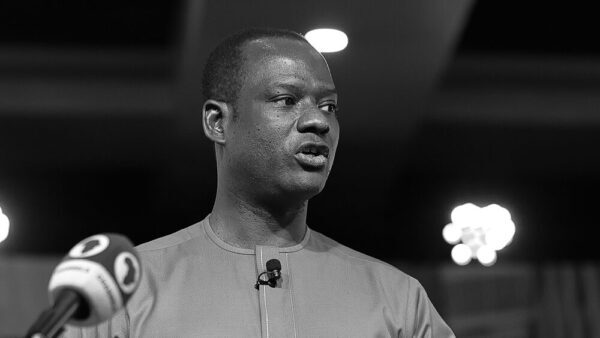
A petrol subsidy is government support that keeps the pump price below the fuel’s underlying cost. Instead of motorists paying the full amount, the government covers the difference. This matters because the payment becomes a major public expense and can reduce money available for other needs. For example, the government could set petrol at N500 per litre while paying suppliers or refiners the remaining amount. The article says that arrangement would cost more than N16 trillion yearly. The bill could grow further if cheaper fuel increases consumption or encourages smuggling into neighbouring countries. The government argues that a subsidy does not remove the cost. It only changes who pays and when. Officials prefer targeted relief, tax waivers, local refining, cash transfers and CNG deployment instead of restoring a blanket subsidy.
Based on reporting by Premium Times
What is a petrol subsidy, and how does the government pay part of the fuel’s cost?
A petrol subsidy is government support that keeps the pump price below the fuel’s underlying cost. Instead of motorists paying the full amount, the government covers the difference. This matters because the payment becomes a major public expense and can reduce money available for other needs.
For example, the government could set petrol at N500 per litre while paying suppliers or refiners the remaining amount. The article says that arrangement would cost more than N16 trillion yearly. The bill could grow further if cheaper fuel increases consumption or encourages smuggling into neighbouring countries.
The government argues that a subsidy does not remove the cost. It only changes who pays and when. Officials prefer targeted relief, tax waivers, local refining, cash transfers and CNG deployment instead of restoring a blanket subsidy.
How much petrol does Nigeria use each day, and how could that add up to more than N20 trillion in subsidy costs each year?
Nigeria consumes about 50 million litres of petrol every day. That equals roughly 18.25 billion litres over a 365-day year. Because the government would cover the price gap on every litre, even a relatively small subsidy per litre becomes a huge annual bill.
For example, multiplying 50 million litres by 365 produces the yearly volume. Applying the subsidy difference to that volume is why the government estimates more than N20 trillion for a return to the pre-2023 reform price. The calculation excludes possible extra consumption and smuggling, which could raise the cost further.
The scale matters because the minister said sums of this size are nearly everything shared by the Federation Account among all three government tiers in 2025. Funding the subsidy could therefore compete with salaries, pensions, schools, hospitals and security.
Why does the government say that selling petrol at N500 per litre could still cost more than N16 trillion annually?
The government’s concern is not only the pump price. It is the amount government must pay on every litre to keep that price below the fuel’s full cost. At N500 per litre, Nigeria’s daily consumption would still create a large payment obligation.
Nigeria uses about 50 million litres daily. Over a year, that is roughly 18.25 billion litres. Applying the government’s estimated price-support gap across that volume produces a bill above N16 trillion. The minister said this estimate comes before allowing for higher consumption and smuggling, both of which could enlarge the subsidy.
That means a lower official price would not make fuel economically cheaper for Nigeria. It would transfer the expense to public finances. The government says the money would then be unavailable for responsibilities such as wages, pensions, education, healthcare and security.
What could happen to Nigeria’s borrowing costs, foreign reserves, exchange rate and petrol prices if the subsidy returned?
The government says returning the subsidy could weaken public revenue and trigger a sovereign credit downgrade. That would increase borrowing costs. It also warns that pressure on foreign reserves and the naira could make the policy self-defeating, because fuel-related costs are largely dollar-priced.
The minister estimates the exchange rate could approach N3,000 to the dollar within months if subsidy returned. A weaker naira would raise the naira cost of crude, freight and refining inputs. The government says that could push supposedly subsidised petrol to at least N2,000 per litre, above the current average of about N1,400.
This is the central warning: a lower official pump price may not remain low. More public spending, weaker finances and currency pressure could eventually make fuel more expensive. The government therefore rejects a blanket subsidy and favours targeted measures to cushion vulnerable consumers.
Who benefited from the N15.8 trillion reportedly saved after subsidy removal, and what government responsibilities might compete for that money?
The minister said subsidy removal released N15.8 trillion to the Federation Account between June 2023 and December 2025. States and local governments received N10.4 trillion of that amount. He also said 27 states could not reliably pay salaries in May 2023, while none was in that position at the briefing.
At the federal level, about two-thirds of the subsidy savings, alongside independent revenue and borrowing, supported higher wages, infrastructure, electricity subsidy and social transfers. The rest helped stabilise the economy while higher interest rates increased debt-servicing costs. These uses show where the saved money was directed.
A restored subsidy would compete with those responsibilities. The minister specifically named salaries, pensions, schools, hospitals and security. The government therefore says subsidy savings support public services and economic stability, rather than returning to a blanket fuel discount.
How is a discount on crude supplied to local refineries different from a production subsidy, and why does the government call it a consumption subsidy?
The distinction concerns who receives the benefit and where the discount ends up. A genuine production subsidy would support producers whose costs prevent them from competing at market prices. It would be aimed at production rather than directly lowering what consumers pay.
The proposal under discussion would provide discounted crude to local refineries. The minister says that discount would eventually be passed through to motorists at the pump. In his view, the crude discount reduces the consumer’s fuel price, so it carries the same financial burden as a direct consumption subsidy.
The government therefore rejects calling the arrangement a production subsidy. It says the same bill remains attached, even if the support begins with crude supply rather than a payment at the station. Officials favour targeted relief and local refining, but not a blanket subsidy that lowers pump prices for everyone.
Why are petrol prices in Nigeria tied to the dollar, exchange rates and international oil-market costs even when the fuel is refined locally?
Petrol prices remain linked to the dollar because key inputs are dollar-priced. The minister identified crude oil, freight and refining inputs as examples. This connection matters even when petrol is refined locally, because local production still depends on the cost of crude and other inputs.
If the naira loses value against the dollar, the naira cost of those inputs rises. The government says forcing petrol’s naira price downward would then require it to subsidise foreign exchange. In other words, the apparent fuel subsidy would also help cover the currency gap behind imported or dollar-priced costs.
That is why the minister warns that subsidy could pressure the naira and foreign reserves. The government is pursuing local refining, naira-for-crude arrangements, exchange-rate stabilisation and CNG deployment to moderate costs. It still rejects restoring a blanket subsidy.
Key Facts:
📌 A subsidy shifts part of petrol’s cost from consumers to government.
📌 Selling petrol at N500 could cost government more than N16 trillion yearly.
📌 The government prefers targeted relief over a blanket subsidy.
📌 Nigeria consumes about 50 million litres of petrol daily.
📌 Returning petrol to its pre-2023 price could cost over N20 trillion yearly.
📌 Extra consumption and smuggling could increase the subsidy bill.
📌 A N500 petrol price could cost government more than N16 trillion annually.