News · Defence & Security
No. of Chinese boats fishing illegally near NLL more than double despite crackdown
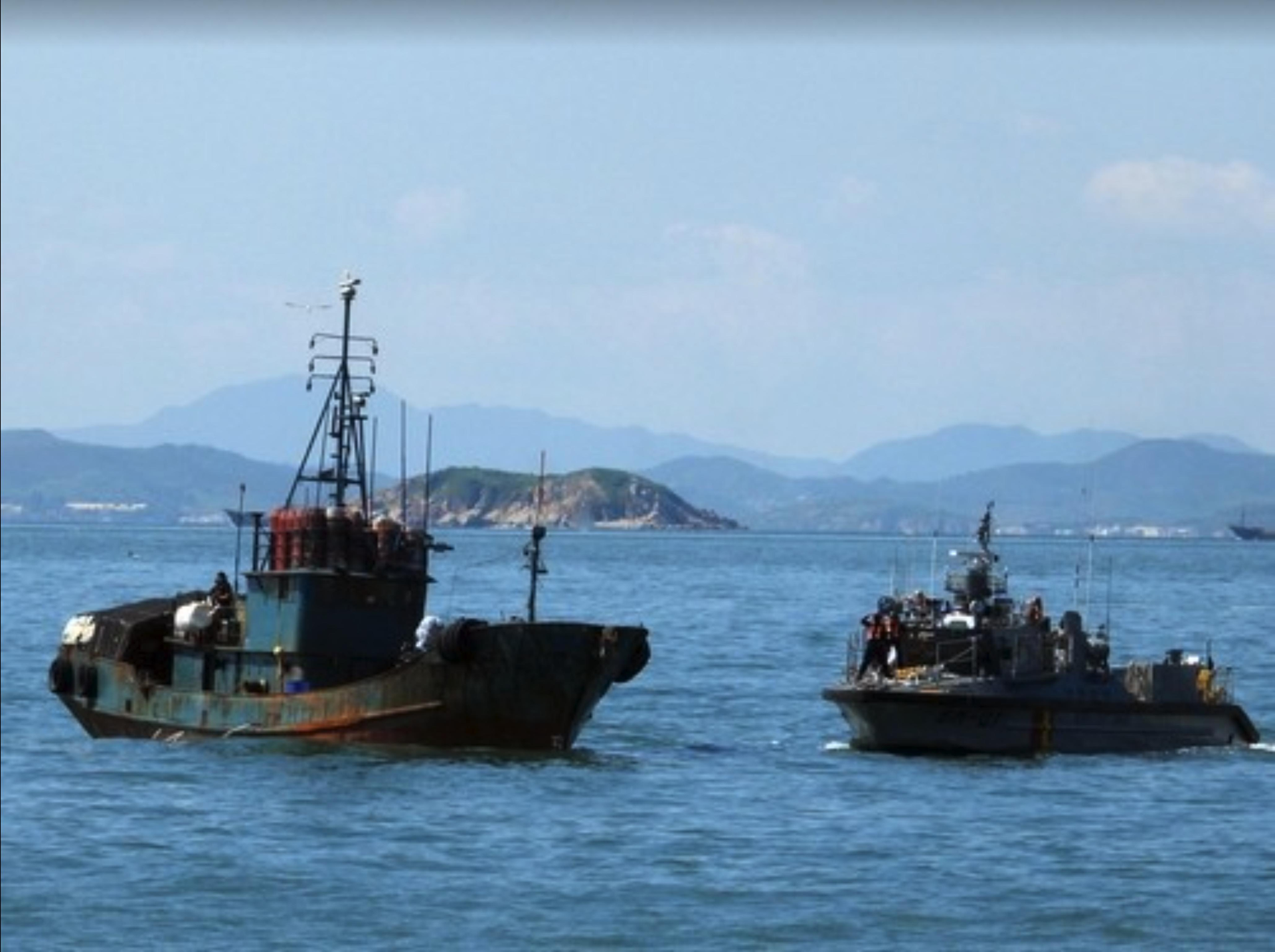
About 190 Chinese fishing boats were operating illegally near the Northern Limit Line early this month. That was more than double the approximately 80 boats counted in late August, when South Korea announced a government-wide crackdown. The increase came despite new enforcement measures. The comparison with last year is more complicated. The latest total was 50 boats lower than the 240 counted a year earlier. Boat numbers usually rise during the autumn fishing season, so the government is confronting a seasonal increase even though the year-on-year figure is lower. The numbers show that the crackdown has not quickly removed the problem. The Coast Guard said its measures were gradually beginning to curb illegal fishing, but 190 boats still remained in the area. Officials plan to continue firm enforcement, including seizures and removal of illegal fishing gear.
Based on reporting by Korea Times
How did the number of Chinese boats near the NLL change after the crackdown, and how does it compare with the same period last year?
About 190 Chinese fishing boats were operating illegally near the Northern Limit Line early this month. That was more than double the approximately 80 boats counted in late August, when South Korea announced a government-wide crackdown. The increase came despite new enforcement measures.
The comparison with last year is more complicated. The latest total was 50 boats lower than the 240 counted a year earlier. Boat numbers usually rise during the autumn fishing season, so the government is confronting a seasonal increase even though the year-on-year figure is lower.
The numbers show that the crackdown has not quickly removed the problem. The Coast Guard said its measures were gradually beginning to curb illegal fishing, but 190 boats still remained in the area. Officials plan to continue firm enforcement, including seizures and removal of illegal fishing gear.
What is the Northern Limit Line, and why is it described as a de facto sea border between North and South Korea?
The Northern Limit Line is a maritime line that functions in practice as the boundary between North and South Korea. “De facto” means it operates as the working border, even though the article does not describe the line’s legal history or say that both sides fully accept it. It separates the waters administered by the two Koreas.
The line matters because foreign vessels are banned from fishing in these waters, yet Chinese boats exploit the division of the Korean Peninsula. They cross back and forth over the NLL and sometimes move into North Korean waters. That movement places their fishing activity across a politically sensitive boundary.
The NLL therefore has direct enforcement importance. South Korean forces can act near the line, but boats may escape across it. The Coast Guard’s operations are also connected to wider inter-Korean tensions, which rose after a land mine explosion in the Demilitarized Zone.
What actions did South Korea’s government introduce to stop the illegal fishing, and what result was it trying to achieve?
South Korea’s government introduced a joint crackdown involving the Coast Guard and four ministries: foreign affairs, unification, national defense, and oceans and fisheries. The measures responded to illegal Chinese fishing near the Northern Limit Line, where foreign vessels are banned from fishing. The issue mattered because many boats stayed for long periods and avoided normal controls.
The plan added more Coast Guard special operations personnel and ordered the forcible removal of illegal fishing gear. It also called for artificial structures to block illegal fishing. A proposed legal revision would penalize vessels anchoring for reasons unrelated to passage. These steps targeted both the boats and the conditions that let them remain.
The government’s announced objective was to drive every Chinese fishing boat out of the area. The Coast Guard later said the measures were gradually beginning to curb illegal fishing. Still, about 190 boats were present early this month, so enforcement had not yet achieved the stated goal.
Why is it difficult for South Korean forces to seize boats that cross back and forth across the NLL?
Seizing these boats is difficult because the vessels move across the Northern Limit Line, the de facto sea border between North and South Korea. South Korean forces may begin an operation on one side, but the boats can cross into North Korean waters. That movement creates an immediate obstacle to continued pursuit.
The article describes a repeated pattern. Chinese boats operate near the NLL, cross back and forth between the two Koreas, and flee into North Korean waters when a seizure operation starts. Their movements exploit the peninsula’s division and make it harder for the Coast Guard to complete an interception. The boats’ long stays also help them avoid authorities in China.
The Coast Guard has Navy support and seized 13 Chinese boats near the NLL this year. Yet enforcement remains difficult because escaping across the line can prevent capture. Rising inter-Korean tensions, including those following a land mine explosion, add sensitivity to operations in the area.
What are “three-no” fishing boats, and why can their lack of registration, home ports and names make enforcement harder?
“Three-no” fishing boats are vessels without registration papers, a home port, or a name. The article also says these boats are unlicensed in China. Those missing identifiers place them outside ordinary registration and licensing systems, making it harder to establish who operates them and where they belong.
The lack of information supports concealment. These boats stay near the Northern Limit Line for long periods instead of returning to China, where Chinese authorities could detect them. When South Korean forces begin seizure operations, the vessels often cross into North Korean waters. Their unclear identity and movement across the line make enforcement more complicated.
This status also helps explain why the crackdown is difficult. Authorities must first locate and intercept boats that lack standard records, then deal with their escape routes. The Coast Guard has seized 13 boats this year, but about 190 were still operating near the NLL early this month.
How did the Korean War and the unresolved status of the NLL make this sea border politically sensitive?
The Korean War ended with an armistice rather than a permanent peace treaty, and the two Koreas remain technically divided. The NLL was established after the war as a practical maritime separation line, but North Korea has disputed it. These historical facts come from established background knowledge; the article itself only calls the NLL a de facto inter-Korean sea border.
That unresolved history makes activity near the line politically sensitive. Chinese boats cross between the two Koreas, and South Korean forces may have to stop pursuing them when they enter North Korean waters. A seizure is therefore not only a fisheries operation; it can also involve the boundary between two rival governments.
The article reports that tensions worsened after a land mine exploded in the Demilitarized Zone last month. Against that backdrop, South Korea’s crackdown must balance enforcement with the risk of further friction. The Coast Guard plans to continue firmly, while boats continue exploiting the divided waters.
Why do international fishing rules depend on maritime boundaries, vessel registration and licensing—and what happens when boats operate outside those systems?
International fishing rules depend on clear maritime boundaries because those boundaries determine which authority controls a particular area. They also depend on vessel registration and licensing, which link a boat to an operator, home port, and legal permission to fish. The article shows all three systems under pressure near the NLL.
Foreign vessels are banned from fishing there, but the Chinese boats described are “three-no” vessels. They lack registration papers, a home port, and a name, and they are unlicensed in China. They also cross back and forth over the NLL. Without clear identity or stable location, authorities face difficulty proving violations and deciding which jurisdiction can act.
When boats operate outside these systems, they can remain at sea for long periods and avoid authorities. They may also flee into North Korean waters during a South Korean seizure operation. The result is weaker accountability, more difficult enforcement, and continued illegal fishing despite joint measures and 13 seizures this year.
Key Facts:
📌 About 190 boats operated near the NLL early this month.
📌 Late-August numbers had been about 80 boats.
📌 The latest figure was 50 below last year's 240.
📌 The NLL is described as a de facto inter-Korean sea border.
📌 Chinese boats cross back and forth over the NLL.
📌 The article does not explain the NLL's legal origin.
📌 Four ministries joined the Coast Guard's August 27 measures.