News · Defence & Security
Half a tonne each: Police neutralize two unexploded ballistic missiles that fell near homes in Kyiv
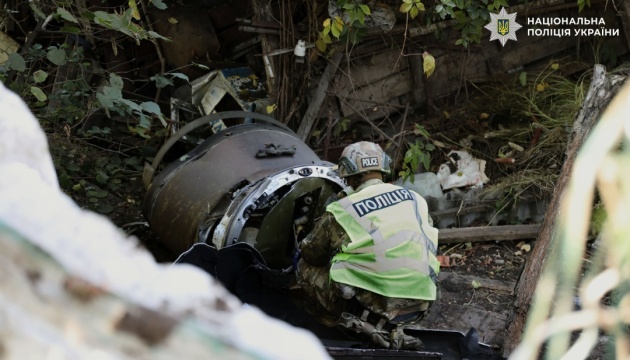
Two enormous missile warheads fell near residential buildings in Kyiv without exploding. Police explosives experts neutralized the dangerous parts, reducing the immediate risk to residents and police officers. The incident mattered because unexploded military hardware can remain hazardous long after an attack ends. The police statement placed the warheads near homes in the Shevchenkivskyi and Darnytskyi districts. It said both came from Iskander-M missiles and weighed about half a tonne each. Officers prepared the neutralized fragments for safe movement using specialized equipment, alongside sappers from Ukraine’s State Emergency Service. The fragments were taken to a temporary demolition site for further destruction. The article’s final sentence identifies September 29, 2026, and refers to Kyiv’s Solomianskyi district, creating a district discrepancy in the report. Police reminded people not to approach suspicious missile or drone debris, but to move away and call 101 or 102.
Based on reporting by Ukrinform English
What happened when the two unexploded missile warheads fell near homes in Kyiv?
Two enormous missile warheads fell near residential buildings in Kyiv without exploding. Police explosives experts neutralized the dangerous parts, reducing the immediate risk to residents and police officers. The incident mattered because unexploded military hardware can remain hazardous long after an attack ends.
The police statement placed the warheads near homes in the Shevchenkivskyi and Darnytskyi districts. It said both came from Iskander-M missiles and weighed about half a tonne each. Officers prepared the neutralized fragments for safe movement using specialized equipment, alongside sappers from Ukraine’s State Emergency Service.
The fragments were taken to a temporary demolition site for further destruction. The article’s final sentence identifies September 29, 2026, and refers to Kyiv’s Solomianskyi district, creating a district discrepancy in the report. Police reminded people not to approach suspicious missile or drone debris, but to move away and call 101 or 102.
What is an Iskander-M ballistic missile, and what is its warhead?
An Iskander-M is a ballistic missile system. A ballistic missile follows a high-speed flight path that rises and then descends toward a target. Its warhead is the front section designed to deliver the missile’s explosive or other payload. The article identifies the missiles as Iskander-M but does not provide technical specifications.
In Kyiv, police reported that two Iskander-M warheads fell near residential buildings. Each weighed about half a tonne. They were unexploded, so the dangerous payload and associated parts had not completed their intended function. Police explosives experts neutralized them before transport.
That distinction matters because a missile can fall while its warhead remains hazardous. The fragments were moved with specialized equipment and State Emergency Service sappers to a temporary demolition site. For general safety, the article tells people not to touch suspicious missile or drone debris, and to call 101 or 102 after reaching safety.
How large were the warheads, and why is a warhead weighing about half a tonne still dangerous after a missile has fallen?
The police statement said both warheads weighed about half a tonne each. That is a very large explosive object to find near homes. Its weight also makes any uncontrolled movement difficult and dangerous. The article calls the warhead elements dangerous even after the missiles had fallen.
A warhead does not become harmless simply because a missile reaches the ground. Explosive material, fuzing parts, or damaged firing systems may still react to impact, pressure, heat, movement, or another trigger. The article does not describe the precise condition of these warheads, so the exact remaining risk is not known from the report.
Police explosives experts neutralized the dangerous elements before transport. They used specialized equipment and worked with State Emergency Service sappers. The safe response is to avoid the object, move away, and report it. The article gives emergency numbers 101 and 102 for such discoveries.
What does it mean for explosives experts to neutralize an unexploded warhead?
For explosives experts, neutralizing an unexploded warhead means removing or disabling the immediate danger of an unintended explosion. The goal is to make the object safe enough for trained personnel to handle, move, and destroy under controlled conditions. The article does not describe the exact technical procedure used.
In Kyiv, police explosives experts neutralized the dangerous elements of two Iskander-M warheads. They then prepared the fragments for safe transportation. This sequence shows the key mechanism: specialists dealt with the immediate explosive threat before allowing the remains to be moved.
State Emergency Service sappers helped transport the fragments using specialized equipment. They took them to a temporary demolition site for further destruction. This is not a task for residents or ordinary police patrols. The article specifically warns people not to approach or touch suspicious missile, drone, or other objects. People should move to safety and call 101 or 102.
What could happen to nearby residents if an unexploded warhead were touched, moved, or accidentally triggered?
An unexploded warhead remains a serious hazard because its explosive contents and triggering parts may still function. Touching or moving it could create conditions for an unintended detonation. Near residential buildings, that could injure or kill residents and responders, and damage homes. The article does not report that anyone was hurt in this incident.
The Kyiv warheads weighed about half a tonne each and fell near homes. Police explosives experts, rather than residents, neutralized their dangerous elements. This response reduced the chance that ordinary handling, impact, or another disturbance would cause an explosion. The article gives no details about the warheads’ internal condition.
After neutralization, specialists used specialized equipment to move the fragments with State Emergency Service sappers. The public instruction is simple: do not approach or touch suspicious debris. Move to a safe distance and report it by calling 101 or 102. Those steps protect residents while trained teams assess the object.
Why do police and State Emergency Service sappers transport missile fragments to a demolition site instead of destroying them where they are found?
A demolition site provides a controlled place for destroying hazardous missile fragments. Moving debris there can separate the danger from residential buildings, bystanders, and normal public activity. It also lets trained explosives personnel use specialized equipment and planned safety measures. The article does not state every operational reason for choosing that site.
In this case, police explosives experts first neutralized the dangerous warhead elements. They then prepared the fragments for safe transportation. State Emergency Service sappers helped move them using specialized equipment. The fragments were taken to a temporary demolition site for further destruction, rather than being left near the homes where they fell.
This process limits exposure while the material awaits final disposal. It also keeps untrained people from approaching the debris. Police reminded Ukrainians not to touch missile, drone, or other suspicious fragments. Anyone who finds such an object should move to safety and report it through 101 or 102.
How does a ballistic missile travel through the atmosphere, and why can it remain dangerous even if its warhead does not explode on impact?
A ballistic missile receives powerful propulsion during part of its flight, then follows a high-speed arc through the atmosphere before descending toward a target. This general description comes from established missile science; the article itself only identifies the weapons as Iskander-M ballistic missiles. The warhead is carried at the missile’s front.
If the warhead fails to explode on impact, explosive material and triggering components may remain intact or damaged but hazardous. A hard landing can leave an object unstable rather than harmless. In Kyiv, two warheads fell near homes without exploding, and police still treated their elements as dangerous.
Experts therefore neutralized the warheads before transport. With State Emergency Service sappers, they moved the fragments using specialized equipment to a temporary demolition site. The article’s warning follows the same principle: people should not approach or touch debris. They should move away and call 101 or 102.
Key Facts:
📌 Two unexploded warheads fell near Kyiv residential buildings.
📌 Each warhead weighed about half a tonne.
📌 Police and sappers transported fragments for controlled destruction.
📌 Iskander-M missiles carried the two warheads mentioned.
📌 A warhead is the missile section containing its payload.
📌 The article gives no technical specifications for Iskander-M.
📌 Each warhead weighed about half a tonne.