News · Social Issues
South Africa: Anti-migrant protests turn violent
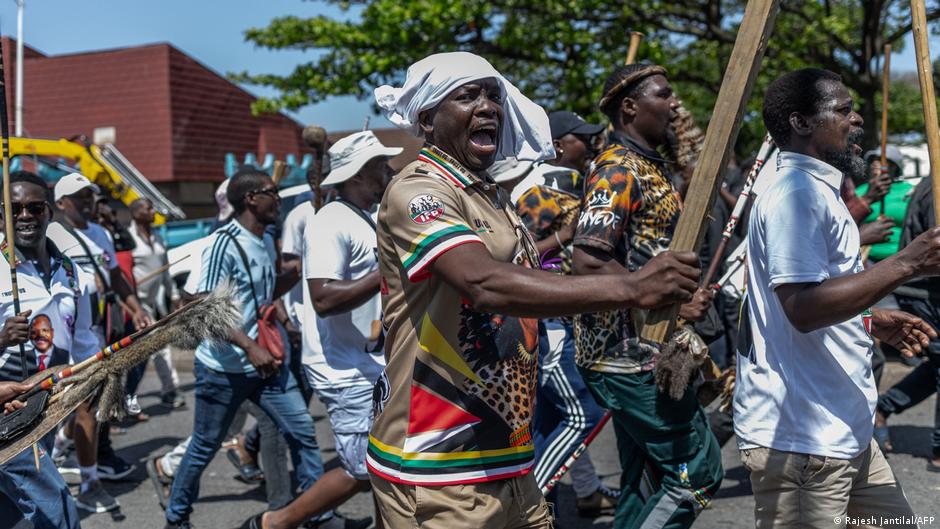
The protests showed how quickly disagreement over asylum processing became street violence. In Durban, demonstrators opposed a refugee center continuing to process asylum applications. In Soweto, residents clashed with foreign shop owners. The events reflected wider anti-migrant tensions in South Africa. Durban saw about 10 vehicles overturned and set on fire. Foreign-owned shops were also looted. In Soweto, gunshots were heard during clashes involving foreign nationals and South African nationals. Johannesburg police reported that at least nine vehicles were torched there. The violence was part of a broader wave of anti-immigrant protests. The immediate trigger was a court ruling requiring the government to resume processing asylum applications. Police said no injuries had been reported in Soweto at that time, but the burned vehicles, looting, and gunfire showed the seriousness of the unrest.
Based on reporting by DW News
What happened during the anti-migrant protests in Durban and Soweto?
The protests showed how quickly disagreement over asylum processing became street violence. In Durban, demonstrators opposed a refugee center continuing to process asylum applications. In Soweto, residents clashed with foreign shop owners. The events reflected wider anti-migrant tensions in South Africa.
Durban saw about 10 vehicles overturned and set on fire. Foreign-owned shops were also looted. In Soweto, gunshots were heard during clashes involving foreign nationals and South African nationals. Johannesburg police reported that at least nine vehicles were torched there.
The violence was part of a broader wave of anti-immigrant protests. The immediate trigger was a court ruling requiring the government to resume processing asylum applications. Police said no injuries had been reported in Soweto at that time, but the burned vehicles, looting, and gunfire showed the seriousness of the unrest.
How many vehicles were reportedly overturned or set on fire, and what other damage was reported?
The article reports separate vehicle damage in the two protest locations. In Durban, about 10 vehicles were overturned and set on fire. In Soweto, Johannesburg Metropolitan Police said at least nine vehicles were torched. These figures describe reported incidents in each place, rather than a confirmed combined total.
The damage went beyond vehicles. Foreign-owned shops were looted in Durban after a protest against a refugee center’s asylum processing. In Soweto, residents reportedly clashed with foreign shop owners, and Newzroom Afrika reported that gunshots were heard. Police said no injuries had been reported there at the time.
The incidents show the practical effects of anti-migrant hostility: property was destroyed, businesses were attacked, and confrontations escalated. The unrest followed a court order requiring the government to resume asylum processing, but it occurred within months of wider anti-immigrant protests across South Africa.
What is xenophobia, and how is it connected to hostility toward migrants?
Xenophobia means fear, dislike, or hostility toward people perceived as foreign or belonging to another nationality. The article uses the term for tensions directed at migrants in South Africa. It matters because such hostility can turn political anger into discrimination, attacks, looting, or violence against foreign nationals and their businesses.
The article gives concrete examples. In Durban, protesters targeted a refugee center and foreign-owned shops were looted. In Soweto, residents reportedly clashed with foreign shop owners, while cars were burned and gunshots were heard. These incidents connect anti-migrant attitudes with damage and confrontation.
South Africa has experienced months of anti-immigrant protests. Migrants are often blamed for taking jobs, increasing crime, and straining public services. However, social scientists cited in the article say those accusations are not supported by evidence. The continuing protests show that unsupported claims can still fuel hostility and public unrest.
What did the court rule about South Africa’s refugee policy, and why did it find parts of the policy unconstitutional?
The court ruled that certain provisions of South Africa’s refugee policy were unconstitutional. The provisions prevented people from accessing the asylum system for procedural reasons, including entering the country illegally. The decision therefore focused on access to the application process, not on deciding that every applicant deserved protection.
That distinction matters. After the ruling, hundreds of people reportedly went to government refugee centers, including some who might not qualify for asylum. The government emphasized that the judgment did not automatically give refugee status or permanent residence to anyone entering South Africa.
The ruling reignited xenophobic tensions and contributed to protests in Durban and Soweto. It requires the government to resume processing asylum applications, while individual claims still need to be considered. The article does not describe the full legal procedure, but it clearly separates the right to apply from the outcome of an application.
What is an asylum application, and why does submitting one not automatically grant refugee status or permanent residence?
An asylum application is a formal request from a person seeking protection from danger or persecution, though the article does not provide a detailed definition. Authorities must assess whether the person meets the legal requirements. That assessment is separate from allowing someone to submit an application.
The court ruling addressed access to this system. It rejected provisions that blocked people on procedural grounds, such as entering South Africa illegally. Afterward, hundreds reportedly went to government refugee centers. Some reportedly did not qualify for asylum, showing why applications still require individual review.
The government stressed that the judgment did not automatically grant refugee status or permanent residence to anyone who enters South Africa. An application begins consideration; it is not the final decision. This distinction matters because broader access can protect the right to seek asylum without guaranteeing that every claim will succeed.
What consequences can occur when a court expands access to an asylum system that is already attracting hundreds of applicants?
Expanding access to an asylum system can bring more people into the formal process. That matters because officials must handle applications fairly while separating eligible claims from applications that do not meet the requirements. The court ruling removed procedural barriers, but it did not guarantee successful outcomes.
The article reports that hundreds of people went to government refugee centers after the judgment, including some who reportedly did not qualify for asylum. The sudden demand was followed by protests against a refugee center in Durban. About 10 vehicles were burned there, and foreign-owned shops were looted. Soweto also saw clashes, gunshots, and at least nine torched vehicles.
The immediate consequence was renewed xenophobic tension and violence. The government clarified that no automatic refugee status or permanent residence followed from the ruling. Going forward, the article indicates that applications must resume processing, while authorities face public anger and the challenge of assessing claims individually.
How do unemployment, migration, and competition for jobs or public services interact—and why might migrants be blamed even when evidence does not support those accusations?
Unemployment, migration, and pressure on public services can become linked in public debate. When many people need jobs and services, newcomers may be seen as competitors for scarce opportunities. South Africa has unemployment affecting a third of its population, while its economy continues to attract migrants.
The article says migrants are often accused of taking jobs, fueling crime, and straining public services. Those claims can turn economic frustration into anti-migrant protests. Populist and anti-immigrant groups demanded that undocumented foreign nationals leave by June 30. Protests later included attacks on foreign-owned shops and vehicles.
However, social scientists said the accusations are not supported by evidence. This means public blame may reflect fear or frustration rather than proven cause and effect. The tension remains significant because South Africa is both a major destination for migrants and a country facing severe unemployment, making immigration a recurring political flashpoint.
Key Facts:
📌 About 10 vehicles were overturned and burned in Durban.
📌 Foreign-owned shops were looted during the Durban unrest.
📌 At least nine vehicles were torched in Soweto.
📌 Durban had about 10 vehicles overturned and burned.
📌 Soweto had at least nine vehicles torched.
📌 Foreign-owned shops were looted in Durban.
📌 Xenophobia means hostility toward people seen as foreigners or outsiders.