News · International Relations
US Green Card curbs ‘do not advance shared ambitions’, JD Vance remarks ‘deeply offensive’, says India
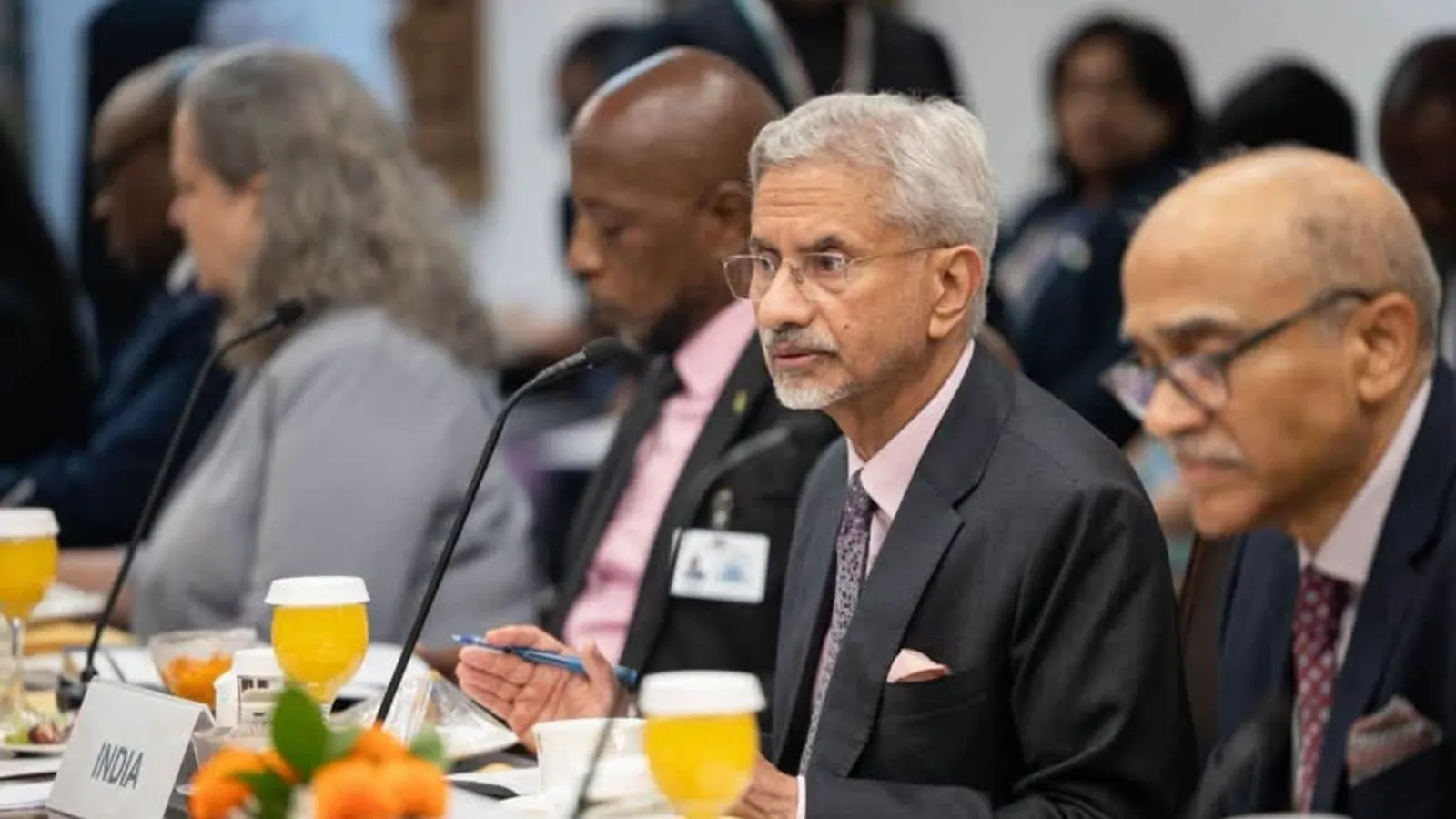
The United States suspended major Indian IT firms from participating in its Permanent Labour Certification, or PERM, programme. The move matters because PERM can be an important step for eligible employees seeking permanent residency, commonly called a Green Card. It may therefore affect some workers’ long-term immigration plans. India’s Ministry of External Affairs pushed back on the decision and on remarks by JD Vance. It said talent mobility benefits both economies. The ministry also made a crucial distinction: PERM is separate from the H-1B programme. Suspending PERM applications does not, by itself, cancel existing H-1B visas or change the status of H-1B holders and their dependents. The immediate effect is limited to the PERM and permanent-residency process for eligible employees of affected companies. India said the action does not advance the shared ambitions of the two countries. The statement leaves existing H-1B workers protected, while some future Green Card applications could face delays or complications.
Based on reporting by Indian Express
What action did the US take against major Indian IT firms, and how did India respond?
The United States suspended major Indian IT firms from participating in its Permanent Labour Certification, or PERM, programme. The move matters because PERM can be an important step for eligible employees seeking permanent residency, commonly called a Green Card. It may therefore affect some workers’ long-term immigration plans.
India’s Ministry of External Affairs pushed back on the decision and on remarks by JD Vance. It said talent mobility benefits both economies. The ministry also made a crucial distinction: PERM is separate from the H-1B programme. Suspending PERM applications does not, by itself, cancel existing H-1B visas or change the status of H-1B holders and their dependents.
The immediate effect is limited to the PERM and permanent-residency process for eligible employees of affected companies. India said the action does not advance the shared ambitions of the two countries. The statement leaves existing H-1B workers protected, while some future Green Card applications could face delays or complications.
What is the PERM programme, and what role does it play in the US employment-based immigration process?
PERM stands for Permanent Labour Certification. It is a US Department of Labor process in which an employer demonstrates that hiring a foreign worker for a permanent job will not displace qualified US workers or weaken their wages and working conditions. The process is designed to protect the domestic labour market.
Typically, an employer must define the job, test the local labour market, and document recruitment efforts before submitting a certification application. If the application is approved, the employer can generally use that certification in the next stage of an employment-based Green Card case. The worker still must meet other immigration requirements.
PERM therefore acts as a gateway, not as a visa itself. The article reports that the affected companies’ eligible employees could see an impact on their permanent-residency process. It also stresses that PERM is distinct from H-1B status, so suspending PERM applications does not itself invalidate existing H-1B visas.
How is PERM different from the H-1B visa programme and the Green Card process?
The H-1B programme provides temporary US work authorization for eligible foreign workers in qualifying jobs. It is a nonimmigrant status, meaning it does not itself grant permanent residency. PERM is different: it is a labour-certification process connected to certain employer-sponsored Green Card cases.
A typical employment-based path may involve an employer completing PERM, then pursuing an immigrant petition and later a permanent-residency application. PERM focuses on the labour market and the employer’s recruitment process. H-1B focuses on temporary employment and the worker’s authorized stay. The Green Card process is the overall route to permanent resident status.
The article highlights this separation because the US suspended PERM applications for major Indian IT firms. That suspension could affect eligible workers’ progress toward permanent residency, but it does not, by itself, cancel valid H-1B visas. Existing H-1B holders and their dependents retain their status under the stated distinction, even if their Green Card timelines face difficulty.
Which workers could be affected by the suspension, and which existing visa holders remain protected?
The workers most directly exposed are eligible employees of the major Indian IT firms covered by the US suspension. Their employers may be unable to submit PERM applications, which can interrupt or delay an employment-based permanent-residency or Green Card process. The article does not identify the companies or give a number of affected workers.
The key mechanism is the difference between a PERM filing and an H-1B visa. PERM supports certain employer-sponsored permanent-residency cases. H-1B authorizes temporary employment and is governed by a separate programme. Because the programmes are distinct, stopping PERM filings does not automatically cancel a worker’s H-1B status.
The MEA specifically said existing H-1B visas remain valid. It also said H-1B visa holders and their dependents retain their status, although eligible employees of affected companies could experience some impact on permanent residency. Thus, the immediate protection applies to current H-1B status, while the longer-term Green Card path may become less certain.
What could happen to an eligible employee’s path to permanent residency if their employer cannot file a PERM application?
If an employer cannot file PERM, an eligible employee may be unable to complete a required early step in some employment-based permanent-residency cases. The result could be a delayed Green Card process, a missed filing opportunity, or uncertainty about when the case can move forward. The exact outcome depends on the worker’s case and other immigration rules.
PERM is separate from H-1B status. It is tied to the employer’s permanent sponsorship and labour-market certification, while H-1B covers temporary employment. Without the required certification, the employer generally cannot proceed normally with later stages of that particular employment-based Green Card route. This does not automatically erase the worker’s current H-1B authorization.
The article describes this as a possible impact on eligible employees of affected companies, rather than an automatic loss of status. It confirms that existing H-1B visas and dependents’ status remain valid. The practical concern is therefore a slower or interrupted path to permanent residency, not immediate removal from the United States.
How many years can an H-1B worker generally stay in the United States before needing another immigration status?
As a general rule under US immigration law, an H-1B worker may remain in the United States for up to six years in H-1B status. The period is usually granted in stages rather than all at once. This limit concerns H-1B status, not a guaranteed route to permanent residency.
Some workers may qualify for additional time when an employment-based Green Card case has reached certain stages. For example, extensions can sometimes be available beyond six years if a required immigrant petition or permanent-residency application has been pending long enough. These exceptions depend on detailed rules and the worker’s case.
The article does not state the six-year limit or discuss extensions. It only clarifies that suspending PERM applications does not, by itself, affect existing H-1B visas or the status of H-1B holders and dependents. Therefore, affected workers may retain H-1B status while facing possible difficulty advancing their permanent-residency process.
Why does the United States require employers to complete labour certification before sponsoring some foreign workers for permanent residency?
The United States requires labour certification in some employment-based immigration cases to protect the domestic workforce. Before sponsoring a foreign worker for permanent residency, an employer generally must show that qualified US workers are not available, willing, or adversely affected by the hire. The process also supports fair wage and working-condition standards.
The employer usually tests the labour market through specified recruitment and keeps records of the results. The Department of Labor then reviews the PERM application. Approval does not itself grant a Green Card. Instead, it allows the employer to continue with later parts of an employment-based permanent-residency case, subject to separate requirements.
This safeguard explains why a PERM suspension matters. It blocks or interrupts a formal employer process for eligible workers seeking permanent residency. The article says talent mobility benefits both economies, while the MEA notes that existing H-1B visas remain valid. The debate is therefore about permanent sponsorship, not automatic cancellation of temporary H-1B status.
Key Facts:
📌 The US suspended major Indian IT firms from the PERM programme.
📌 India said the move does not advance both countries’ shared ambitions.
📌 Existing H-1B visas remain valid under the suspension.
📌 PERM means Permanent Labour Certification.
📌 Employers use PERM in some employment-based permanent-residency cases.
📌 PERM is distinct from the H-1B visa programme.
📌 H-1B is a visa programme, while PERM is labour certification.