News · Economy & Business
Indian Railways nears 100% electrification: Only 191 Route Km left across 3 states
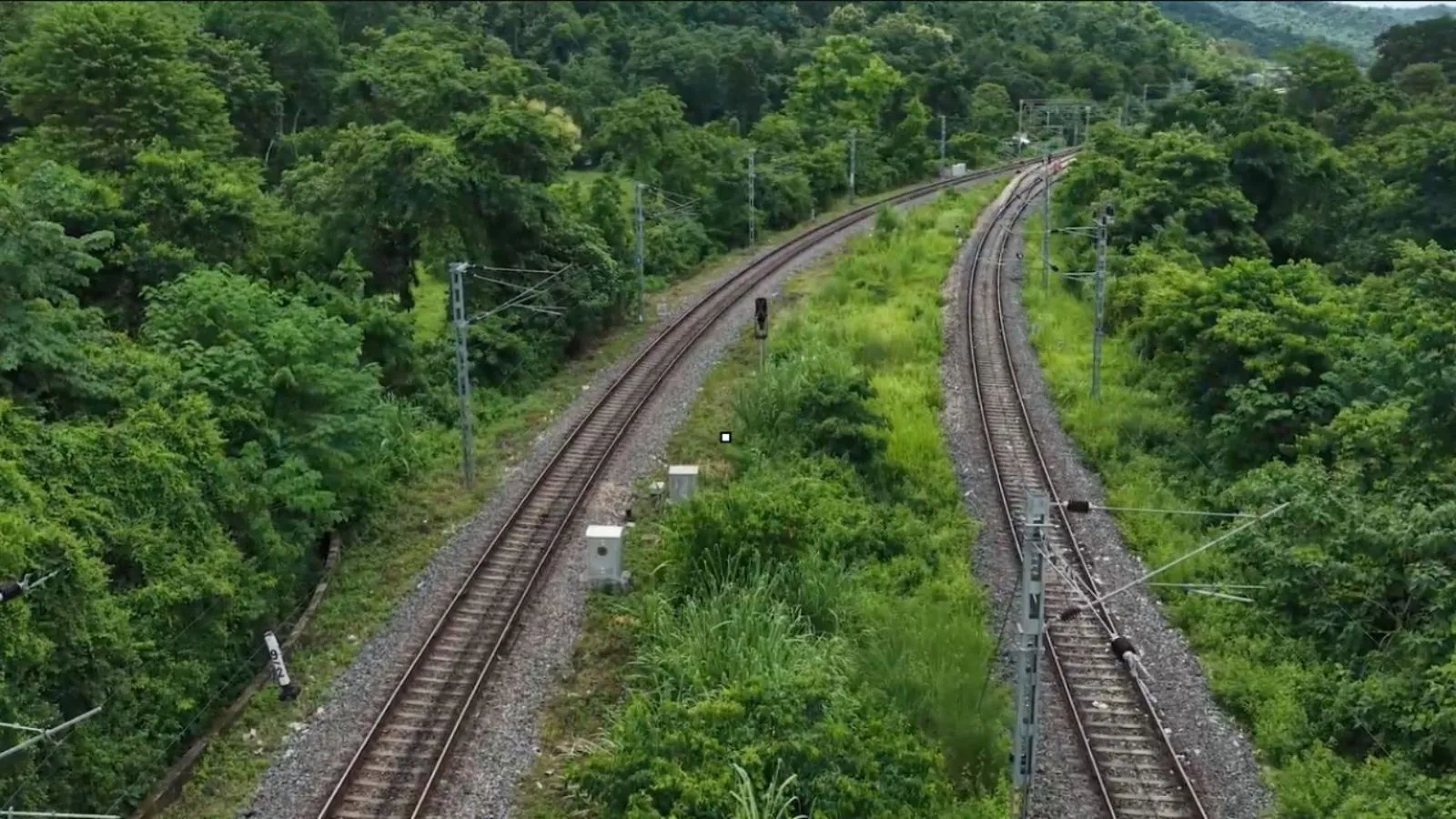
A railway route is electrified when equipment along the track supplies electricity for train movement. Trains using that route can operate with electric traction rather than diesel engines. The milestone in the article measures electrified Broad Gauge route kilometres, not simply the number of stations or trains. India began railway electrification in 1925. The first electric train ran between Bombay Victoria Terminus and Kurla Harbour in Maharashtra, using a 1,500-volt DC system. Today, electrification covers 70,311 of the country’s 70,502 Broad Gauge route kilometres. This matters because electric operation can improve train operations and reduce dependence on fossil fuels. It also supports Indian Railways’ sustainability goals. The remaining work is concentrated in Assam, Karnataka and Goa, while all new line and multi-tracking projects are being built with electrification.
Based on reporting by Indian Express
What does it mean for a railway route to be electrified?
A railway route is electrified when equipment along the track supplies electricity for train movement. Trains using that route can operate with electric traction rather than diesel engines. The milestone in the article measures electrified Broad Gauge route kilometres, not simply the number of stations or trains.
India began railway electrification in 1925. The first electric train ran between Bombay Victoria Terminus and Kurla Harbour in Maharashtra, using a 1,500-volt DC system. Today, electrification covers 70,311 of the country’s 70,502 Broad Gauge route kilometres.
This matters because electric operation can improve train operations and reduce dependence on fossil fuels. It also supports Indian Railways’ sustainability goals. The remaining work is concentrated in Assam, Karnataka and Goa, while all new line and multi-tracking projects are being built with electrification.
How much of India’s Broad Gauge railway network has been electrified, and how much remains?
Indian Railways has electrified 99.7 per cent of India’s Broad Gauge network. The total network measures 70,502 route kilometres, and 70,311 route kilometres had been electrified by September 30, 2026. That leaves only 191 route kilometres still awaiting electrification.
The progress is spread across the country. Twenty-seven of 30 listed states and Union Territories have reached 100 per cent electrification. Southern Railway also recently completed electrification across its 5,068-route-kilometre Broad Gauge network, after finishing the 71-kilometre Pattukkottai-Karaikkudi section.
The remaining 191 route kilometres are in Assam, Karnataka and Goa. Karnataka has 120 kilometres left, Assam has 55, and Goa has 16. Indian Railways is working in mission mode to complete the network, while new lines and multi-tracking projects are being sanctioned and built with electrification.
Which three states still have non-electrified sections, and how many route kilometres remain in each?
Three states still have Broad Gauge sections awaiting electrification: Assam, Karnataka and Goa. Together, their remaining stretches total 191 route kilometres. This is the small portion left after India reached 99.7 per cent electrification overall.
The state-wise figures show different levels of completion. Assam has 2,534 of 2,589 listed Broad Gauge route kilometres electrified, leaving 55 kilometres. Karnataka has electrified 3,623 of 3,743 kilometres, leaving 120. Goa has electrified 171 of 187 kilometres, leaving 16.
Karnataka therefore contains the largest remaining share, while Goa is closest to full completion in percentage terms after the fully electrified states. Once these sections are covered, the article’s stated Broad Gauge electrification target will be complete. New lines and multi-tracking projects are already being built with electrification.
What changes in train operations when a railway route switches from diesel to electric traction?
When a route switches from diesel to electric traction, trains no longer need diesel engines to provide their primary motive power on that section. Instead, electric trains receive power from railway electrification equipment connected to the route. The article directly identifies improved train operations and lower fossil-fuel dependence as benefits.
In practical terms, an electric locomotive can use the installed electrical supply while travelling on an electrified route. Diesel trains may still be used where electrification is absent, but electrification reduces that requirement across completed sections. India’s first electric train ran in 1925 between Bombay Victoria Terminus and Kurla Harbour.
The current programme covers 70,311 of 70,502 Broad Gauge route kilometres. With only 191 kilometres remaining, most Broad Gauge operations can use electrified routes. The article also connects this transition with Indian Railways’ sustainability goals, though it does not provide specific speed, cost or timetable figures.
Why are new railway lines and multi-tracking projects being built with electrification from the start?
New railway lines and multi-tracking projects are being sanctioned and constructed with electrification from the start. This means electrical infrastructure is included as part of the project rather than added later. The approach supports Indian Railways’ mission to complete electrification of its Broad Gauge network.
The article does not describe the engineering or financial reasons in detail. The clear operational logic is that newly built routes can be ready for electric traction immediately, instead of creating additional non-electrified sections. This also keeps future expansion aligned with the existing electrified network.
The policy matters because 70,311 of India’s 70,502 Broad Gauge route kilometres were already electrified by September 30, 2026. Only 191 kilometres remained, in Assam, Karnataka and Goa. Building new infrastructure with electrification helps prevent the network from falling behind as it expands and supports the stated goals of better operations, lower fossil-fuel dependence and sustainability.
What is Broad Gauge, and why is it the network used to measure this electrification milestone?
Broad Gauge is a railway track category defined by the distance between its rails. The article measures India’s electrification progress using Broad Gauge route kilometres, or RKm. It does not give the exact rail spacing or explain why this gauge was historically adopted, so those details are outside the source text.
The milestone focuses on this network because the Ministry of Railways is working to electrify its entire Broad Gauge network. As of September 30, 2026, 70,311 of 70,502 Broad Gauge route kilometres were electrified. That provides a clear national baseline for reporting progress.
Twenty-seven of 30 listed states and Union Territories had reached 100 per cent electrification. The remaining 191 route kilometres were in Assam, Karnataka and Goa. Measuring the same network category makes the percentage meaningful and shows exactly how close Indian Railways is to completing its stated Broad Gauge electrification mission.
How do electric trains receive power, and why can electrification reduce dependence on fossil fuels?
Electric trains receive power from electrical infrastructure installed along a railway route. The train collects that power through equipment designed to connect it with the railway supply. The article does not name the equipment or explain the electrical system used today, so those technical details are not specified in the source.
The article gives one historical example: India’s first electric train ran in 1925 between Bombay Victoria Terminus and Kurla Harbour in Maharashtra. It used a 1,500-volt DC system. Modern electrification allows trains to use electricity on completed sections instead of relying on diesel traction there.
That substitution can reduce dependence on fossil fuels, one benefit identified by Indian Railways. By September 30, 2026, 70,311 of 70,502 Broad Gauge route kilometres were electrified. The remaining 191 kilometres are in Assam, Karnataka and Goa, while electrification is included in new lines and multi-tracking projects.
Key Facts:
📌 Electrification allows trains to use electric traction on a railway route.
📌 India’s first electric train ran in 1925.
📌 Electric railway operation can reduce dependence on fossil fuels.
📌 70,311 of 70,502 Broad Gauge route kilometres are electrified.
📌 India’s Broad Gauge network is 99.7 per cent electrified.
📌 Only 191 route kilometres remain to be electrified.
📌 Assam has 55 route kilometres remaining.