News · Economy & Business
Malaysia’s trade grows 22.4pc in 1h 2026, MOF urges supply chain diversification
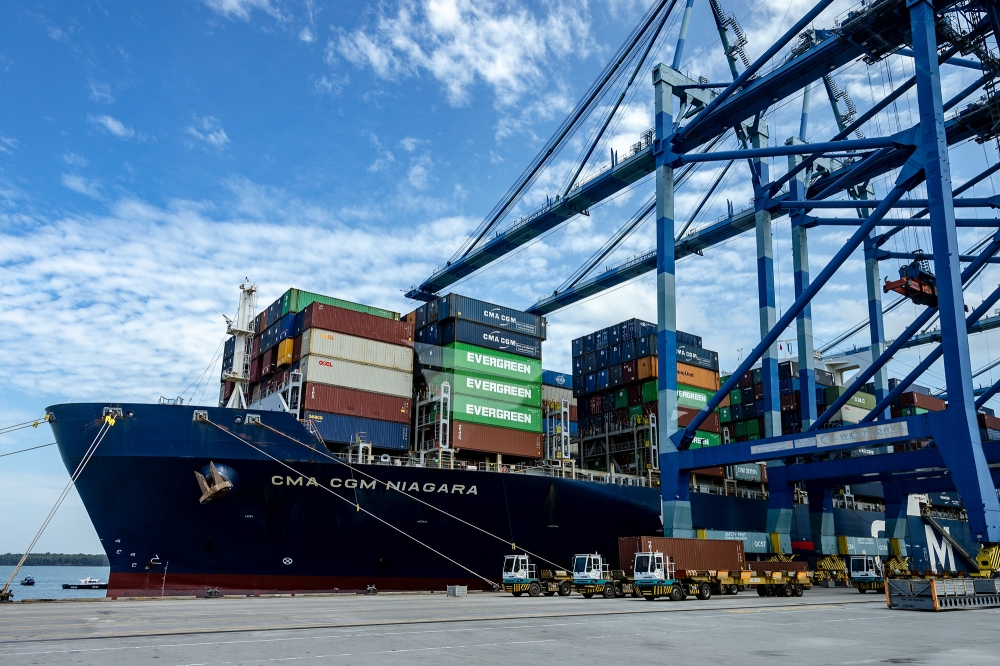
Malaysia’s total trade rose 22.4 per cent during the first half of 2026, reaching RM1.795 trillion. Total trade combines the value of goods Malaysia sells abroad and buys from other countries. This large increase shows that external commerce remained an important source of economic activity despite global disruption risks. The growth was supported by stronger trade with several major partners. China recorded 30.6 per cent growth, while Taiwan rose 34.7 per cent and Hong Kong climbed 45.8 per cent. Trade with the United States and Singapore also expanded, by 25.7 per cent and 21.5 per cent respectively. The strong figures do not remove Malaysia’s vulnerability to external shocks. The Ministry of Finance wants the country to diversify export markets and import sources, strengthen domestic supply chains, and move toward higher-value activities. These steps could make future trade more stable and resilient.
Based on reporting by Malay Mail Malaysia
How much did Malaysia’s total trade increase in the first half of 2026, and what was its total value?
Malaysia’s total trade rose 22.4 per cent during the first half of 2026, reaching RM1.795 trillion. Total trade combines the value of goods Malaysia sells abroad and buys from other countries. This large increase shows that external commerce remained an important source of economic activity despite global disruption risks.
The growth was supported by stronger trade with several major partners. China recorded 30.6 per cent growth, while Taiwan rose 34.7 per cent and Hong Kong climbed 45.8 per cent. Trade with the United States and Singapore also expanded, by 25.7 per cent and 21.5 per cent respectively.
The strong figures do not remove Malaysia’s vulnerability to external shocks. The Ministry of Finance wants the country to diversify export markets and import sources, strengthen domestic supply chains, and move toward higher-value activities. These steps could make future trade more stable and resilient.
Which major trading partners contributed to Malaysia’s trade growth, and how rapidly did trade with each grow?
Malaysia’s trade growth in the first half of 2026 was spread across several major partners. Trade with China rose 30.6 per cent, while trade with the United States increased 25.7 per cent. Taiwan recorded 34.7 per cent growth, Singapore 21.5 per cent, and Hong Kong 45.8 per cent.
Hong Kong was the fastest-growing partner among those listed. Taiwan was next, followed by China, the United States and Singapore. These figures indicate that Malaysia’s overall trade increase was supported by stronger activity across multiple important economic relationships, rather than by only one partner.
China remained particularly important because the article identifies it as Malaysia’s leading contributor among major partners. However, the Ministry of Finance still wants broader market diversification. Reaching more export destinations and using more import sources could reduce dependence on any single external relationship during future disruptions.
What is supply-chain diversification, and how would using more export markets and import sources make Malaysia less vulnerable?
Supply-chain diversification means using a wider mix of countries for imports and exports instead of depending heavily on a small number of sources or markets. It matters because disruption in one location can affect supplies, production and sales. A broader network gives Malaysia more choices when conditions change.
For example, if one overseas supplier cannot provide an important input, Malaysian businesses could seek that input from another country. If one export market weakens or closes, companies could sell to a different destination. The Ministry of Finance says diversified import sources can address immediate supply deficits and create a more flexible, resilient supply chain.
Malaysia is therefore seeking new export markets and import sources while strengthening domestic capabilities. The strategy is not to abandon existing partners. It is to reduce exposure to disruptions abroad and support national resilience, domestic sustainability and competitiveness over time.
What can happen to Malaysian businesses and consumers when a disruption abroad causes shortages or interrupts imports?
When a disruption abroad interrupts imports, Malaysian businesses may not receive the materials, components or products they need. Production can slow or stop, and companies may struggle to fulfil orders. Consumers can then face shortages because fewer goods are available through the affected supply chain.
The Ministry of Finance specifically links import-source diversification with addressing immediate supply deficits. If Malaysia has alternative suppliers, businesses can switch more easily when one source is disrupted. A flexible network can keep supplies moving while reducing reliance on a single overseas relationship.
The article does not quantify possible price increases or business losses. It does, however, warn that Malaysia needs a comprehensive, multi-layered trade resilience strategy. Stronger domestic manufacturing, technological advancement and innovation are intended to cushion exposure to external shocks and support domestic sustainability.
Why is Malaysia seeking to move further up the global value chain instead of relying mainly on lower-value manufacturing and trade?
Moving up the global value chain means taking on more sophisticated, higher-value activities in production and trade. The Ministry of Finance says Malaysia should do this to strengthen competitiveness and reduce exposure to disruptions abroad. A stronger position can also deepen local capabilities and support economic resilience.
The government is targeting high-growth, high-value investments, greater economic complexity and more skilled jobs. It also wants higher value-added supply chains supported by technological advancement and domestic innovation. These activities can expand domestic participation instead of leaving the country mainly dependent on lower-value segments.
Malaysia’s policies prioritise advanced electronics and semiconductors, alongside broader manufacturing capabilities. The aim is to strengthen the domestic supply chain while capturing a greater share of global value. This approach is being pursued under the Madani Economy framework and the 13th Malaysia Plan, 2026-2030.
How could policies supporting semiconductors, artificial intelligence, energy transition and domestic innovation strengthen Malaysia’s trade resilience?
Policies for semiconductors, artificial intelligence, energy transition and innovation can strengthen trade resilience by improving what Malaysia can design, produce and develop domestically. The article says these policies are intended to capture greater global value chain participation and reduce exposure to external shocks.
The National Semiconductor Strategy and New Industrial Master Plan 2030 prioritise local manufacturing capabilities and higher-value electronics. The National AI Action Plan supports technological advancement, while the National Energy Transition Roadmap is part of the wider policy direction. Together with domestic innovation, these efforts can deepen the country’s economic complexity.
The Ministry of Finance also links this agenda to high-growth, high-value investment and skilled jobs. Malaysia is not only seeking more trade; it is seeking more sophisticated trade. Stronger domestic supply chains could help address vulnerabilities while positioning Malaysian firms in advanced electronics and semiconductor activities.
What are imports, exports and supply chains, and how do they connect Malaysia’s economy to producers and consumers in other countries?
Imports are goods or services bought from other countries, while exports are goods or services sold to overseas customers. A supply chain is the connected network that sources inputs, makes products, moves them and delivers them to users. These three parts connect Malaysia’s economy to international producers and consumers.
For example, a Malaysian manufacturer may import components, use them in local production, and export finished products. Its supply chain can involve suppliers, factories, transport links and customers in several countries. The article’s trade figures show how strongly Malaysia is connected to major partners such as China, the United States, Taiwan, Singapore and Hong Kong.
These connections create opportunities for growth but also expose Malaysia to disruptions abroad. That is why the Ministry of Finance supports more export markets, more import sources, stronger domestic manufacturing and higher-value supply chains. The goal is continued trade with greater flexibility and resilience.
Key Facts:
📌 Malaysia’s total trade reached RM1.795 trillion in 1H 2026.
📌 Total trade increased 22.4 per cent during 1H 2026.
📌 The Ministry of Finance called for stronger, more resilient supply chains.
📌 Trade with Hong Kong grew 45.8 per cent.
📌 Trade with Taiwan increased 34.7 per cent.
📌 Trade with China rose 30.6 per cent.
📌 Malaysia should explore new export markets and import sources.