News · Politics & Governance
New Delhi locks down ahead of mass protest over India’s voter rolls
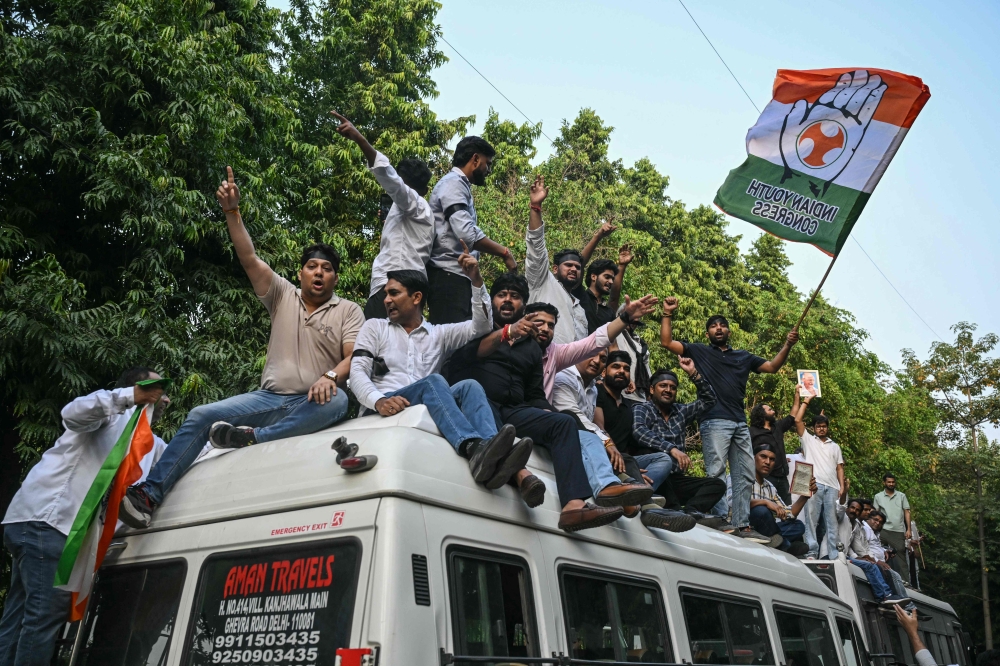
New Delhi has imposed extensive security measures before planned demonstrations over electoral-roll changes. The steps are intended to prevent what police described as possible unruly crowd movement. They also make travel and access to central government areas more difficult. More than 20,000 police and paramilitary officers have been deployed. Yellow metal barricades now restrict key roads and access to Jantar Mantar, the government-designated protest site. Police have not authorised rallies there. A police letter also asked the Delhi Metro to close entry and exit gates at 57 stations from 9:00 PM on October 9 until conditions normalise on October 10. Authorities have additionally cancelled several incoming trains at two major stations for the protest day. These measures could slow commuters, separate protesters from the planned site and limit arrivals from outside Delhi. They show that the city is preparing for a large mobilisation while trying to control movement through its roads, railways and metro system.
Based on reporting by Malay Mail Malaysia
What steps has New Delhi taken ahead of the planned protest, and how might they affect movement around the city?
New Delhi has imposed extensive security measures before planned demonstrations over electoral-roll changes. The steps are intended to prevent what police described as possible unruly crowd movement. They also make travel and access to central government areas more difficult.
More than 20,000 police and paramilitary officers have been deployed. Yellow metal barricades now restrict key roads and access to Jantar Mantar, the government-designated protest site. Police have not authorised rallies there. A police letter also asked the Delhi Metro to close entry and exit gates at 57 stations from 9:00 PM on October 9 until conditions normalise on October 10.
Authorities have additionally cancelled several incoming trains at two major stations for the protest day. These measures could slow commuters, separate protesters from the planned site and limit arrivals from outside Delhi. They show that the city is preparing for a large mobilisation while trying to control movement through its roads, railways and metro system.
What is India’s Election Commission, and what is a “special intensive revision” of electoral rolls?
The Election Commission of India, or ECI, is India’s constitutional body responsible for conducting elections. That role gives it responsibility for maintaining the electoral system, including the lists of people eligible to vote. Its decisions can therefore affect whether citizens can participate in elections.
The “special intensive revision” is an exercise to examine electoral rolls. The commission says it is meant to remove duplicate and ineligible voters. In practical terms, officials review the lists and identify entries they believe should not remain. The article does not describe the review’s detailed procedures or deadlines.
The process matters because electoral rolls determine who is recognised as a voter. Opposition parties and critics allege that eligible voters could also be removed, potentially helping Prime Minister Narendra Modi’s BJP. The ECI has rejected allegations of wrongdoing. Protests are demanding that ECI chief Gyanesh Kumar step down over the controversy.
How large is the government response, including the number of police and paramilitary officers deployed and metro stations affected?
The government response is large enough to affect much of New Delhi’s transport network. More than 20,000 police and paramilitary officers have been deployed ahead of the planned demonstrations. The presence of both police and paramilitary forces signals a major security operation around the capital.
Transport restrictions add another layer. A police letter said Delhi Metro entry and exit gates across 57 stations may close from 9:00 PM IST on October 9 until the situation normalises on October 10. Authorities also cancelled several incoming trains at two key stations. Yellow barricades were placed across important central roads.
Together, these measures could affect commuters, protesters and people travelling into the city. They may reduce access to the protest area and make large gatherings harder to organise. The article does not give the exact number of cancelled trains or identify every affected station, so the full transport impact remains unclear.
Who is protesting, what do they want, and which political groups are involved?
The protests bring together India’s main Opposition Congress party and the youth-led Cockroach Janta Party, or CJP, movement. Rahul Gandhi, Congress leaders and other Opposition figures have joined demonstrations this month. Gandhi, the leader of the Opposition in parliament, was briefly detained during rallies this week.
The protesters are challenging the Election Commission’s “special intensive revision” of electoral rolls. They allege that the exercise could disenfranchise voters and benefit the ruling Bharatiya Janata Party. Gandhi and other Opposition leaders are expected to meet President Droupadi Murmu to complain about ECI chief Gyanesh Kumar. Protesters are also demanding that Kumar step down.
The CJP has called for mass mobilisation and an intended march to Jantar Mantar. Its chief, Abhijeet Dipke, said he would join the march. The movement emerged online in May as a satirical political group and previously helped campaign to oust an education minister.
Why do opponents argue that removing duplicate or ineligible names could also disenfranchise eligible voters and benefit the ruling BJP?
Removing duplicate or ineligible names can make voter lists more accurate. The concern is that a broad or poorly checked review might also remove eligible citizens. If legitimate voters disappear from the rolls, they could lose their opportunity to participate in an election, even though they qualify.
The article gives no evidence that eligible voters have already been removed. Instead, Opposition parties and critics allege that the revision could disenfranchise voters. Their argument is political as well as administrative: if removals are concentrated among communities or areas more likely to support Opposition parties, the ruling Bharatiya Janata Party could gain an advantage.
That alleged risk explains the protests and demands for accountability from ECI chief Gyanesh Kumar. The Election Commission rejects allegations of wrongdoing and says the exercise targets duplicate and ineligible voters. The dispute therefore centres on whether the review is a neutral list-cleaning process or one that could unfairly change participation.
How are electoral rolls used on election day, and what happens to a qualified citizen whose name is missing?
Electoral rolls are official voter lists used by election authorities and polling staff to verify eligible voters. On election day, a citizen generally needs to appear on the relevant roll before receiving a ballot or using a voting machine. This makes accurate lists essential to meaningful participation.
The article does not explain the detailed voting procedure or correction process. As a general democratic principle, a qualified citizen whose name is missing may be refused a vote at that polling station. The person would normally need to seek correction or inclusion through the election authority, subject to the applicable rules and deadlines.
That possibility gives the current dispute its practical importance. The ECI says its revision is intended to remove duplicate and ineligible voters. Critics fear the process could also exclude eligible citizens. If names are removed incorrectly, the harm occurs at the moment of voting: a person may remain legally qualified but still be unable to participate.
Why does the independence of a constitutional election body matter in a democracy, especially when it is accused of helping one political party?
An election body must be trusted by competing political parties and voters. Its independence matters because it manages core parts of the electoral process, including the voter lists that determine participation. If decisions appear controlled by the government or one party, people may question whether elections are genuinely fair.
The article describes the ECI as India’s constitutional body responsible for conducting elections. Opposition parties and critics accuse its voter-roll revision of potentially disenfranchising people to benefit Prime Minister Narendra Modi’s BJP. They are demanding that ECI chief Gyanesh Kumar step down. The ECI rejects allegations of wrongdoing and says the review targets duplicate and ineligible voters.
The immediate consequence is a dispute over legitimacy, not only administration. Protesters are seeking political intervention and plan rallies in New Delhi. If confidence falls, future election results and voter participation could face greater suspicion. If the ECI can demonstrate that the process is neutral and accurate, it may help restore trust, though the article does not say how that will happen.
Key Facts:
📌 More than 20,000 police and paramilitary officers were deployed.
📌 Barricades restricted access to Jantar Mantar.
📌 Metro gates at 57 stations could close.
📌 The ECI is India’s constitutional election body.
📌 The revision targets duplicate and ineligible voters.
📌 Opposition parties allege the process could disenfranchise voters.
📌 More than 20,000 police and paramilitary officers were deployed.