News · Defence & Security
Hindustan Shipyard Launches First Fleet Support Ship ‘Surya’ for Indian Navy
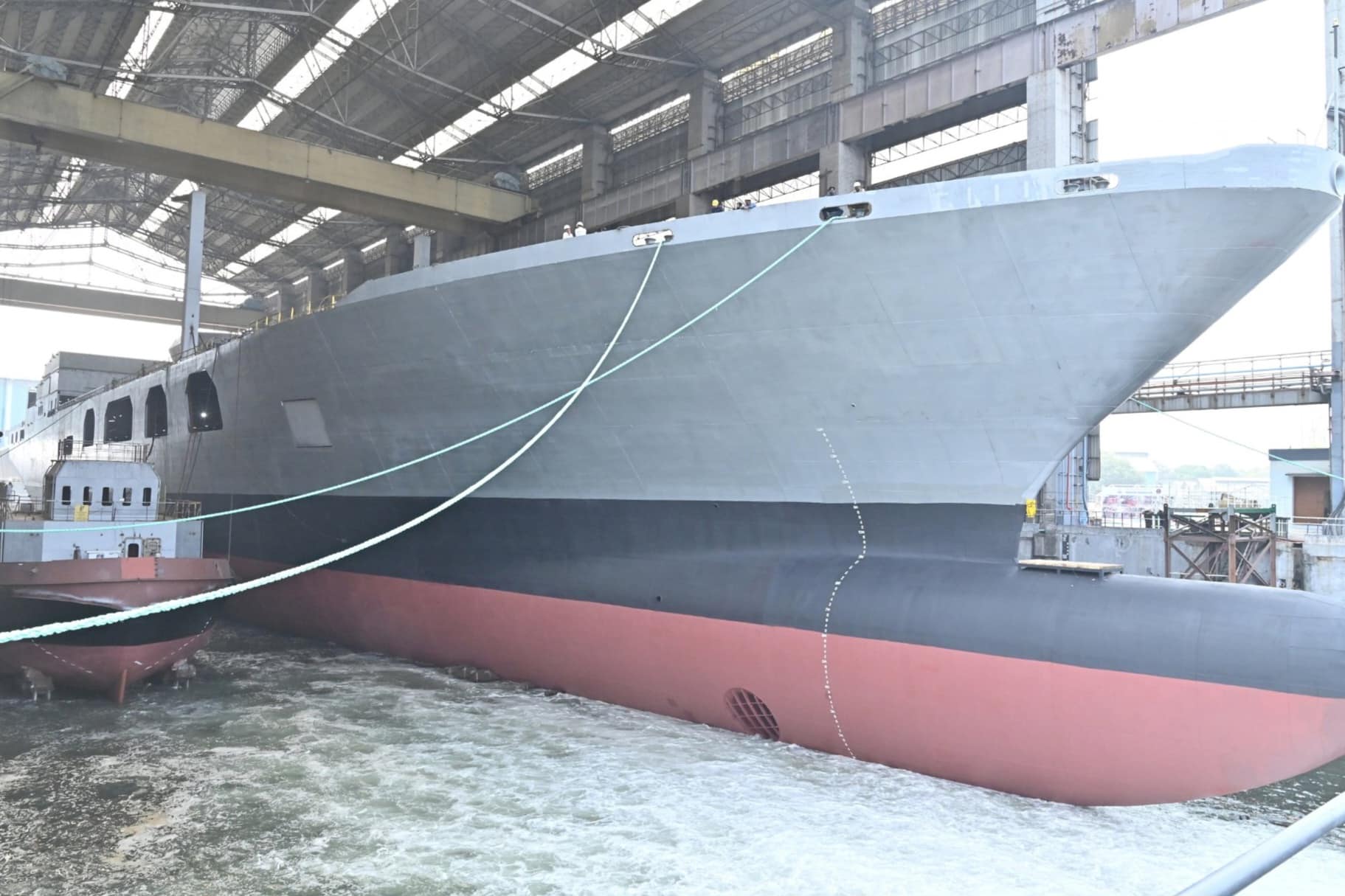
The ceremony marked two milestones in India’s five-ship Fleet Support Ship program. Hindustan Shipyard Limited launched Surya, or FSS-1, with Defence Minister Rajnath Singh as chief guest. The company also laid the keel of FSS-5 and opened upgraded shipbuilding facilities in Visakhapatnam. A keel is the central structural foundation of a ship. In traditional construction, it forms the ship’s backbone. Laying it signals that the vessel’s permanent hull-building work has begun. FSS-1’s keel was laid in November 2024, while FSS-5’s keel was laid during the October 2026 ceremony. The launch means Surya has moved from construction toward fitting out, testing, and eventual naval acceptance. It is expected to enter service in mid-2027. The upgraded slipway and 300-tonne crane should also help HSL handle larger ships and heavier construction blocks.
Based on reporting by Naval News Defence
What happened when Hindustan Shipyard launched Surya on October 6, 2026, and what does it mean to lay a ship’s keel?
The ceremony marked two milestones in India’s five-ship Fleet Support Ship program. Hindustan Shipyard Limited launched Surya, or FSS-1, with Defence Minister Rajnath Singh as chief guest. The company also laid the keel of FSS-5 and opened upgraded shipbuilding facilities in Visakhapatnam.
A keel is the central structural foundation of a ship. In traditional construction, it forms the ship’s backbone. Laying it signals that the vessel’s permanent hull-building work has begun. FSS-1’s keel was laid in November 2024, while FSS-5’s keel was laid during the October 2026 ceremony.
The launch means Surya has moved from construction toward fitting out, testing, and eventual naval acceptance. It is expected to enter service in mid-2027. The upgraded slipway and 300-tonne crane should also help HSL handle larger ships and heavier construction blocks.
What is a Fleet Support Ship, and how does it replenish warships while they are at sea?
A Fleet Support Ship is a naval logistics vessel built to sustain warships during operations. Its purpose is to provide at-sea replenishment and logistical support. This allows combat vessels to remain deployed for longer instead of returning frequently to port for supplies or basic support.
The Surya class will have enhanced cargo and fluid capacity. In practice, a support ship can position alongside another vessel and transfer needed stores and liquids using dedicated handling equipment. Its onboard first-line maintenance workshops can also help address routine equipment problems during a deployment.
The ships will add a helicopter deck capable of supporting Multi-Role Helicopter operations. That creates another route for moving people, equipment, or supplies. Surya is expected to be inducted in mid-2027, after which the class will provide this support as part of India’s naval operations.
How large and capable will the Surya-class ships be compared with other Indian Navy vessels?
The Surya-class ships will be exceptionally large naval support vessels. They will measure 222.8 metres long, 31.5 metres wide, and have a 9.5-metre draught. Their displacement will exceed that of the Indian Navy’s aircraft carriers, making them the service’s largest class by this measure.
They will carry a complement of 214 and have substantial endurance. The reported range is 12,000 nautical miles at 16 knots, or 9,000 nautical miles at 20 knots. Their design also includes enhanced cargo and fluid capacity, maintenance workshops, a helicopter deck, and self-defence systems.
The ships will carry combat management, communications, and electronic warfare systems supplied by Bharat Electronics Limited. Their size reflects the support mission: they need space for stores, fluids, workshops, handling equipment, and aviation facilities. FSS-1 is expected to enter service in mid-2027.
How could at-sea refuelling, cargo transfer, maintenance workshops, and helicopter operations change the Indian Navy’s ability to conduct long-distance missions?
At-sea support extends a navy’s operational reach. Warships can remain with a task group or patrol area longer when a support vessel replenishes them instead of sending them back to port. This matters especially for long-distance operations, where port access may be limited or far away.
The Surya class combines several support functions. Its enhanced cargo and fluid capacity can support replenishment. Its first-line maintenance workshops can handle some repairs aboard the ship. A helicopter deck capable of supporting Multi-Role Helicopter operations adds an aviation route for moving personnel, equipment, or supplies between vessels.
These features could make Indian naval deployments more persistent and flexible. The ships are designed for sustained logistical support, not frontline combat. Their self-defence systems and electronic systems supplied by BEL are intended to help them operate with the fleet while performing that support role.
What roles do Hindustan Shipyard, the Ministry of Defence, BEL, L&T, and SEDS each play in designing and building the ships?
Hindustan Shipyard Limited is the central builder. It designed the Fleet Support Ships and is building them indigenously in Visakhapatnam. The Ministry of Defence is supporting the yard’s performance by upgrading facilities, including the slipway and a 300-tonne Goliath crane.
Bharat Electronics Limited is supplying the Combat Management System, communications systems, and electronic warfare systems. L&T’s shipbuilding arm is a major subcontractor under the program. It is building components for two ships under a contract with HSL. These roles divide construction, electronics, and industrial support across several Indian organisations.
SEDS serves as the prime consultant for HSL’s design. A planned partnership with Türkiye’s TAIS was put on hold after relations deteriorated. The upgraded slipway can handle ships up to 45,000 DWT, while the crane will help move heavier blocks during modern block construction.
What is ship displacement, and why can a support ship be larger by displacement than an aircraft carrier even though it is not designed to carry aircraft?
Ship displacement is the weight of a vessel, including its structure, machinery, crew, fuel, stores, and other carried loads. It is commonly determined from the amount of water the ship displaces. A larger displacement generally reflects a larger or more heavily loaded vessel, though it does not describe the ship’s combat role.
An aircraft carrier devotes much of its design to aviation. A support ship instead needs room and carrying capacity for cargo, fluids, maintenance workshops, handling systems, and a helicopter deck. The Surya class will also have a complement of 214 and self-defence equipment. Those requirements can produce a very large hull.
The article states that the Fleet Support Ships will become the Indian Navy’s largest class by displacement, exceeding even its aircraft carriers. That comparison describes size and loaded mass, not air power. The ships remain logistics vessels designed to sustain naval operations.
Why is naval logistics—the ability to supply, repair, and sustain forces away from home ports—so important to a navy’s power and reach?
Naval logistics is the system that supplies, repairs, and sustains forces during operations. Ships need fuel, fluids, stores, spare parts, and technical support. Without those resources, even powerful warships must pause or return to port. Logistics therefore turns a fleet’s equipment into usable, sustained capability.
The Fleet Support Ships are designed to provide that support at sea. Their enhanced cargo and fluid capacity can support replenishment. First-line maintenance workshops can address some problems aboard the support ship. A helicopter deck capable of Multi-Role Helicopter operations adds another way to move people and material between vessels.
This matters because sustained logistics can support longer-distance missions and reduce reliance on shore facilities. The Surya class will also carry self-defence systems and electronic systems from BEL. Once commissioned, these ships will be the Indian Navy’s largest class by displacement and a major part of its indigenous support capacity.
Key Facts:
📌 Surya launched on October 6, 2026, at Hindustan Shipyard Limited.
📌 FSS-5’s keel was laid during the same ceremony.
📌 Keel-laying marks the ship’s structural construction beginning.
📌 Fleet Support Ships provide at-sea replenishment and sustained logistical support.
📌 Surya-class ships will carry enhanced cargo and fluid capacity.
📌 Their workshops provide onboard first-line maintenance.
📌 Surya-class ships will be 222.8 metres long.