News · Politics & Governance
103 Million Voters: Will Africa’s Largest Electorate Show Up In 2027?
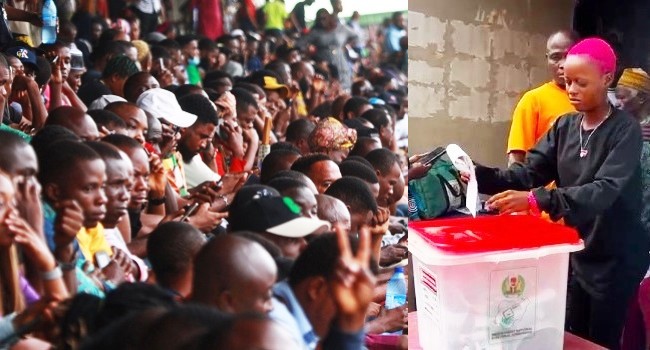
INEC has announced that Nigeria’s National Register of Voters now contains 103 million people. The figure came after the commission completed a three-phase Continuous Voter Registration exercise and a final biometric cleanup. INEC chairman Joash Amupitan said the exercise recorded 10,772,421 new registrations. This gives political parties a much larger pool of registered voters, but it does not guarantee that people will vote. The three registration phases produced 2,611,266 registrations, 4,121,835 registrations and 3,867,997 registrations. These records remain subject to verification through the Automated Biometric Identification System. The process is intended to improve the accuracy of the register and identify duplicate or questionable entries. The announcement also begins an important public-checking period. INEC scheduled nationwide display of the register from October 9 to 16, 2026, while collection of newly issued Permanent Voter Cards starts October 9. Voters can inspect their details, raise objections and correct discrepancies before election day.
Based on reporting by Channels TV
What has INEC announced about Nigeria’s National Register of Voters ahead of the 2027 elections?
INEC has announced that Nigeria’s National Register of Voters now contains 103 million people. The figure came after the commission completed a three-phase Continuous Voter Registration exercise and a final biometric cleanup. INEC chairman Joash Amupitan said the exercise recorded 10,772,421 new registrations. This gives political parties a much larger pool of registered voters, but it does not guarantee that people will vote.
The three registration phases produced 2,611,266 registrations, 4,121,835 registrations and 3,867,997 registrations. These records remain subject to verification through the Automated Biometric Identification System. The process is intended to improve the accuracy of the register and identify duplicate or questionable entries.
The announcement also begins an important public-checking period. INEC scheduled nationwide display of the register from October 9 to 16, 2026, while collection of newly issued Permanent Voter Cards starts October 9. Voters can inspect their details, raise objections and correct discrepancies before election day.
What is a National Register of Voters, and what role does it play in an election?
A National Register of Voters is an official list of citizens who have completed the process required to vote. It records eligible voters and their registration details. Election officials use it to plan polling arrangements, prepare voter materials and determine whether a person can receive a ballot. A reliable register supports confidence in the election because voters can check that their information is present and accurate.
Nigeria’s register reached 103 million after Continuous Voter Registration and biometric cleanup. INEC will display the register publicly from October 9 to 16, 2026. During that period, voters can inspect their details and submit claims or objections. Newly issued Permanent Voter Cards also become available for collection from October 9.
The register is a starting point, not a measure of actual turnout. In 2023, only 24,025,940 valid presidential votes were recorded. For 2027, accurate records, successful verification and accessible voting procedures will determine how many registered citizens can convert registration into valid ballots.
How large is Nigeria’s registered electorate, and how does that compare with the number of valid presidential votes cast in 2023?
Nigeria’s registered electorate now stands at 103 million, according to INEC. This is the number of people listed on the National Register of Voters after new registrations and biometric cleanup. It places Nigeria among the world’s largest electoral democracies and gives the 2027 election enormous potential reach. However, registration describes eligibility, not how many people will vote.
The clearest comparison comes from the 2023 presidential election. Only 24,025,940 valid votes were recorded then. That total was far below the current register of 103 million. The difference reflects the crucial mechanism between registration and electoral power: voters must attend, complete the process and cast ballots that are accepted as valid.
The 2027 election could therefore produce a much larger voting total, but only if participation improves. INEC has scheduled public register display and PVC collection from October 9, 2026. Checking details and resolving discrepancies may help eligible voters avoid preventable problems before election day.
Which age groups and states make up the largest portions of Nigeria’s electorate?
The largest age group is voters aged 35 to 49. They number 43,265,946 and represent 41.83 percent of the electorate. Voters aged 18 to 34 form the next largest group, with 29,777,576 people, or 28.79 percent. Together, these younger and middle-aged voters hold substantial numerical weight in the 2027 contest.
Older voters remain an important part of the register. Those aged 50 to 69 number 22,982,900, or 22.22 percent. Voters aged 70 and above number 7,402,291, representing 7.16 percent. Geographically, Lagos has the largest registered electorate, with 7,488,633 voters. Kano follows with 6,570,276, while Kaduna has 4,662,640.
Katsina, Rivers, Oyo, Delta, Benue, Ogun and Bauchi complete the top 10 states. These differences matter because parties must seek support across the federation. Still, large registration totals alone cannot decide the result; turnout and valid voting remain decisive.
What could happen to the 2027 election results if a large share of registered voters does not turn out or cannot cast a valid ballot?
If many registered voters do not turn out, the election result will be decided by a smaller share of the electorate. If voters attend but their ballots are invalid, those votes will not count toward candidates’ totals. In both cases, the winner may receive strong support among participating voters while representing a much smaller portion of everyone registered.
The 2023 presidential election illustrates the scale of this risk. Nigeria had a far smaller voting total than its current register: only 24,025,940 valid votes were recorded, compared with 103 million registered voters now reported by INEC. Registration therefore creates potential participation, but turnout and valid ballots determine the result.
For 2027, voters need to understand the process, check their registration details and collect their PVCs. INEC will display the register from October 9 to 16, 2026, and begin PVC collection on October 9. Clear communication and removal of avoidable obstacles could help more eligible citizens cast valid ballots.
Besides choosing a president, what other offices and levels of government will Nigerians vote for in 2027?
The 2027 elections will determine leadership at several levels of Nigeria’s government. The presidential election is scheduled for January 16, 2027, alongside elections for the National Assembly. Governorship and State Houses of Assembly elections will follow on February 6. These contests decide who makes national laws, leads states and represents communities in state legislatures.
The National Assembly race includes 4,408 candidates on INEC’s final lists. Of these, 1,195 are contesting Senate seats and 3,213 are seeking seats in the House of Representatives. The successful candidates will help shape the laws and decisions that affect daily life across Nigeria. Voters will also choose governors and state lawmakers in the later election.
The presidential race has 18 candidates on INEC’s published list, including Bola Tinubu, Atiku Abubakar and Peter Obi. This wider ballot means voters are making choices about national leadership, parliamentary representation and state government. Participation in each contest will influence how representative the resulting government becomes.
Why is broad voter participation important for representative government, and what barriers can prevent eligible citizens from voting?
Broad participation matters because representative government should reflect the choices of eligible citizens, not only those who manage to vote. A large and active electorate gives elected leaders a wider mandate. It also brings more citizens’ priorities into decisions about the presidency, Parliament, state governments and community representation. A growing register matters only when people can turn registration into valid ballots.
The article identifies several practical barriers. Voters may not understand the electoral process or know what is required. Their registration details may contain discrepancies, or their records may still need biometric verification. They may also face problems collecting Permanent Voter Cards. INEC’s public register display is designed to help citizens find and address some of these issues.
For 2027, participation will depend on more than political enthusiasm. Voters need accurate information, functioning registration records, accessible PVC collection and clear communication. Civil society will assess whether INEC distributes cards and explains procedures efficiently. Removing avoidable obstacles can help eligible citizens exercise their franchise.
Key Facts:
📌 INEC says the National Register of Voters has reached 103 million.
📌 The registration exercise recorded 10,772,421 new registrations.
📌 Register display and PVC collection begin nationwide on October 9, 2026.
📌 The register records people eligible to vote.
📌 INEC will display the register for public scrutiny from October 9 to 16, 2026.
📌 Registration numbers do not guarantee actual voter turnout.
📌 Nigeria’s registered electorate has reached 103 million.