News · Environment & Climate
Malaysia shuts schools amid toxic haze from Indonesian fires
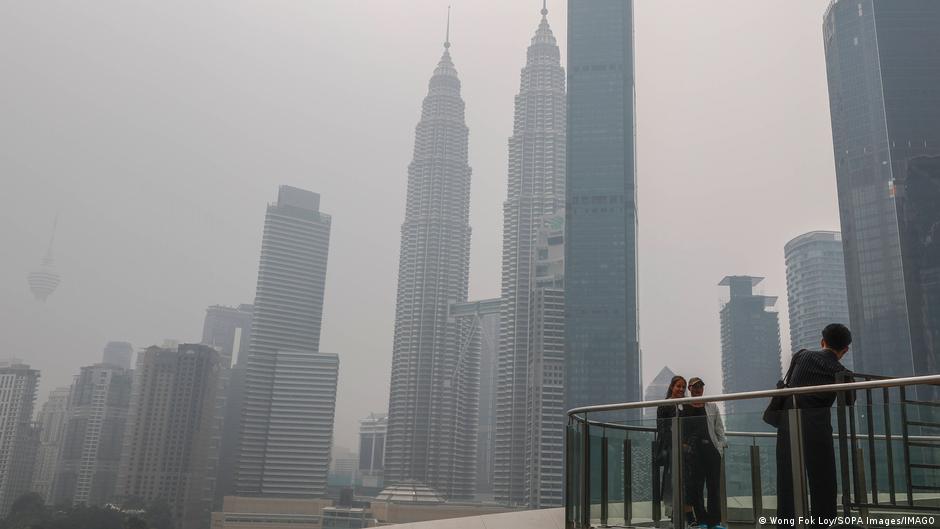
Malaysia closed some schools to reduce students' exposure to unhealthy haze linked to forest fires in Indonesia. The decision matters because polluted outdoor air can make normal school activities unsafe, especially when readings rise beyond official limits. The closures covered Kuala Lumpur and other affected locations across five states and two federal territories. Education Minister Fadhlina Sidek said some schools would close fully, while others would continue operating partially. Officials were told to keep monitoring conditions and act immediately when necessary. Kuala Lumpur recorded an Air Pollutant Index reading of 170 on Friday. Malaysia's King Sultan Ibrahim said schools should close whenever readings reach 150 or higher. Fadhlina also promised that future closure decisions would be communicated earlier, giving parents more time to prepare.
Based on reporting by DW News
Why did Malaysia close some schools, and which areas were affected?
Malaysia closed some schools to reduce students' exposure to unhealthy haze linked to forest fires in Indonesia. The decision matters because polluted outdoor air can make normal school activities unsafe, especially when readings rise beyond official limits.
The closures covered Kuala Lumpur and other affected locations across five states and two federal territories. Education Minister Fadhlina Sidek said some schools would close fully, while others would continue operating partially. Officials were told to keep monitoring conditions and act immediately when necessary.
Kuala Lumpur recorded an Air Pollutant Index reading of 170 on Friday. Malaysia's King Sultan Ibrahim said schools should close whenever readings reach 150 or higher. Fadhlina also promised that future closure decisions would be communicated earlier, giving parents more time to prepare.
What is haze, and how is it produced by forest fires?
Haze is polluted air that reduces air quality and can make the atmosphere look smoky or murky. The article links Malaysia's haze to forest fires in nearby Indonesia. It matters because pollution can travel beyond the place where fires start and affect communities, schools, and daily activities elsewhere.
When forests burn, flames consume trees, grasses, and other plant material. The fire releases smoke and fine particles into the air. Large fires can produce enough pollution to form a broad haze layer. Winds can then move that polluted air away from the burning area.
The article reports that Indonesian forest fires have affected millions of people since August. Kuala Lumpur's air remained at unhealthy levels, while IQAir ranked it among the world's most polluted cities. Singapore was ranked more polluted at the time of reporting.
How severe was Kuala Lumpur's air pollution, and what do API readings of 150, 200, 300, and 500 mean?
Kuala Lumpur's air pollution was serious enough for school closures. The city recorded an Air Pollutant Index reading of 170 on Friday, and IQAir ranked it among the world's most polluted cities. This matters because the API provides a shared way to judge when pollution threatens normal activities.
Malaysia's King Sultan Ibrahim said schools should close at an API reading of 150 or higher. Readings above 200 are considered very unhealthy. Levels above 300 are hazardous, while readings exceeding 500 are the threshold for declaring a local emergency. These levels describe increasingly dangerous air conditions.
The reported reading of 170 was above the king's suggested closure point but below the article's very unhealthy threshold of 200. Conditions remained serious, however, and Malaysian education authorities continued monitoring the haze for possible further action.
What can happen to people's health and daily life when air quality reaches unhealthy or hazardous levels?
Unhealthy or hazardous air means people are breathing polluted air that can threaten health and make ordinary activities harder. The article focuses on school closures, showing that poor air quality can interrupt education and force families to change their plans. It also describes increasingly serious API categories, from very unhealthy to hazardous.
When pollution worsens, authorities may limit exposure by closing schools or reducing outdoor activity. Malaysia's King Sultan Ibrahim said schools should close at API readings of 150 or higher. Kuala Lumpur recorded 170, so officials closed some schools fully and allowed others to operate partially.
The article does not list specific medical symptoms or health outcomes. It does show wider disruption: parents need time to prepare, schools must monitor conditions, and governments must coordinate responses. If readings rise above 300 or 500, the official concern becomes more severe, reaching hazardous conditions or a local-emergency threshold.
How can fires in Indonesia create dangerous haze in Malaysia and Singapore, even though Kuala Lumpur is about 1,200 kilometers away?
Cross-border haze happens when smoke and fine pollution from fires are carried through the atmosphere beyond the country where the fires burn. National borders do not stop moving air. This matters because one country's fires can affect public health, schools, and city life in neighboring countries.
The article gives a clear example. Forest fires in Indonesia affected millions of people from August onward, while Kuala Lumpur, about 1,200 kilometers away, recorded an API reading of 170. IQAir ranked Kuala Lumpur the world's second most polluted city, behind neighboring Singapore, at the time of reporting.
The article does not specify the exact wind direction or weather pattern involved. It does show the regional effect: Malaysia experienced unhealthy haze, and Singapore was also heavily polluted. Indonesian President Prabowo Subianto agreed to take measures to tackle the haze, according to Malaysia's prime minister.
What responsibilities do Indonesia and Malaysia have for preventing, monitoring, and responding to cross-border haze?
Indonesia's central responsibility is to reduce the forest fires that generate the cross-border haze. Malaysia's responsibility is to monitor air quality, warn the public, and protect people through measures such as school closures. The issue requires cooperation because pollution from fires in one country affects people in another.
Malaysia's Education Minister Fadhlina Sidek instructed state education departments and district offices to keep monitoring haze and take immediate action when conditions required it. She announced closures across five states and two federal territories. Prime Minister Anwar Ibrahim said Indonesian President Prabowo Subianto had agreed to take measures to tackle the haze.
The article does not describe Indonesia's specific measures or assign a detailed legal duty to either government. It does show the practical response: Indonesia is expected to address the fires, while Malaysia tracks readings and limits exposure. Earlier communication about closures was also promised for parents.
Why do forest and peatland fires produce so much smoke, and how do wind and weather carry fine particles across borders?
Forest fires produce smoke because flames consume trees, leaves, and other organic material. Peatlands can also contain deep, carbon-rich material that burns and smolders, producing prolonged smoke. The article identifies forest fires as the source of Malaysia's haze, but it does not specifically discuss peatlands or explain their chemistry.
Fine particles released by burning can remain suspended in the air. Winds and wider weather patterns can move them far from the fire zone. That mechanism allows pollution to cross national borders, although the article does not give the exact wind direction or weather conditions in this episode.
The reported effects show the scale. Indonesian fires affected millions of people from August onward. Kuala Lumpur, about 1,200 kilometers away, recorded an API reading of 170, and Singapore was also heavily polluted. The distance did not prevent haze from affecting Malaysian schools and public decisions.
Key Facts:
📌 Schools closed because Indonesian fires caused unhealthy haze in Malaysia.
📌 Closures affected five states and two federal territories.
📌 Kuala Lumpur recorded an API reading of 170.
📌 Haze is polluted air linked here to Indonesian forest fires.
📌 Burning vegetation releases smoke and fine particles.
📌 Indonesian fires have affected millions since August.
📌 Kuala Lumpur's API reading was 170 on Friday.