News · Social Issues
Over 8,000 Palestinians remain missing 3 years into Gaza genocide
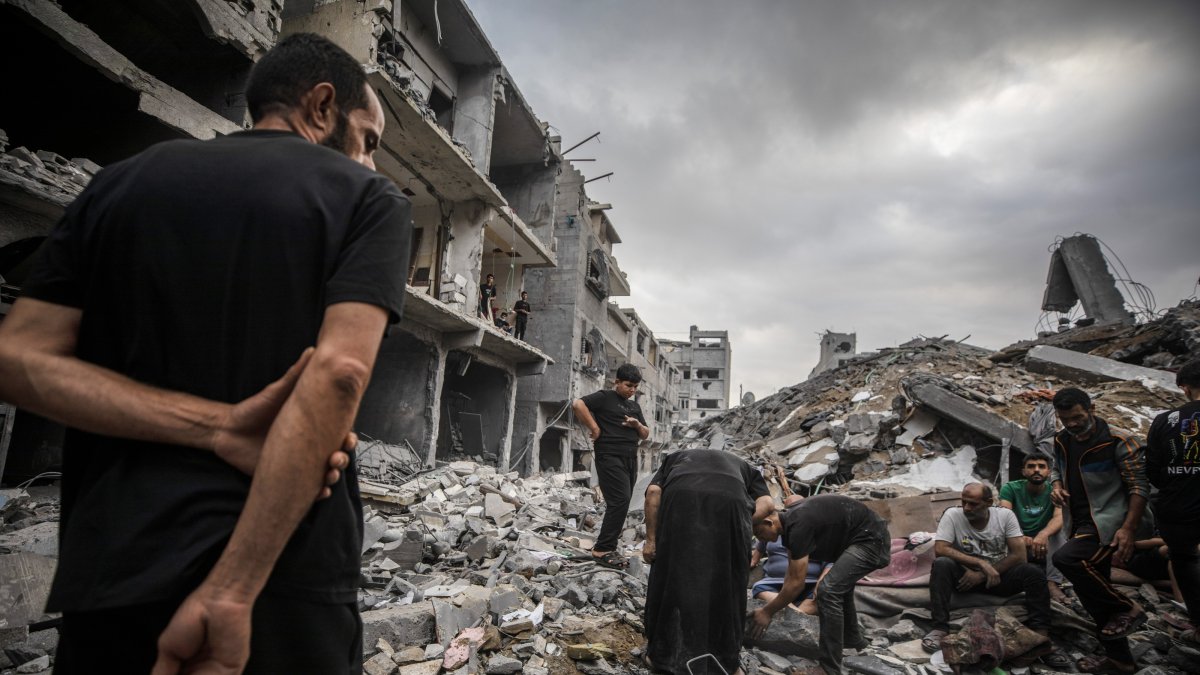
In Gaza, being missing can mean a person disappeared during an attack, may lie beneath destroyed buildings, may have been detained, or may remain elsewhere without contact. The central problem is that families cannot establish whether the person is alive or dead. Restricted access and widespread destruction block searches and communication. Families may know only where someone was last seen, sometimes inside a particular building or room. Recovery teams have little heavy machinery, and DNA testing is unavailable in Gaza. Investigators therefore cannot quickly connect remains to a named person. Some relatives later recognize missing people in photographs or videos from Israeli prisons, while others assume death without confirmation. This uncertainty leaves thousands in limbo. Families gather at hospitals when released detainees arrive, carrying photographs and hoping for answers. They also repeatedly contact the ICRC, even when no information is available. Searches may continue for decades as rubble shifts, remains decompose and access remains restricted.
Based on reporting by Daily Sabah Turkey
What does it mean for a person to be missing in Gaza, and why might families not know whether that person is dead, detained, or alive?
In Gaza, being missing can mean a person disappeared during an attack, may lie beneath destroyed buildings, may have been detained, or may remain elsewhere without contact. The central problem is that families cannot establish whether the person is alive or dead. Restricted access and widespread destruction block searches and communication.
Families may know only where someone was last seen, sometimes inside a particular building or room. Recovery teams have little heavy machinery, and DNA testing is unavailable in Gaza. Investigators therefore cannot quickly connect remains to a named person. Some relatives later recognize missing people in photographs or videos from Israeli prisons, while others assume death without confirmation.
This uncertainty leaves thousands in limbo. Families gather at hospitals when released detainees arrive, carrying photographs and hoping for answers. They also repeatedly contact the ICRC, even when no information is available. Searches may continue for decades as rubble shifts, remains decompose and access remains restricted.
How many people are still reported missing, and how much rubble must recovery teams search through?
The reported scale is enormous: more than 8,000 people remain missing beneath the rubble, according to Palestinian Civil Defense. Separately, an April 2026 assessment by the European Union, United Nations and World Bank estimated that Gaza contains more than 68 million metric tons of debris. These figures show why individual searches are so difficult.
The debris is not simply a large pile of broken concrete. It may contain human remains, unexploded ordnance and evidence relevant to investigations into alleged international crimes. Recovery teams must first reach dangerous sites, identify likely locations and work carefully enough to avoid losing remains or evidence. Families help by describing the last known location, sometimes down to a building or room.
Yet teams may have only one or two rented excavators, with much work done by hand or using small equipment. Managing the debris is estimated to cost more than $1.7 billion. Restricted access further delays searches and leaves many families without answers.
Why is it so difficult to recover and identify people beneath Gaza’s rubble?
Recovering people beneath Gaza’s rubble is difficult because the destruction is vast, dangerous and hard to reach. The debris may contain unexploded remnants of war, so teams cannot safely enter every area. Some sites are beyond the Israeli military deployment line, known as the yellow line. Restricted access prevents recovery teams from reaching large areas at all.
Equipment is another obstacle. Teams sometimes rely on only one or two excavators rented from private suppliers, while much work is done by hand or with smaller machinery. Families must point investigators toward the places where relatives were last seen. Moving rubble can separate remains from their original locations and may destroy evidence.
Identification is complicated because DNA testing is unavailable in Gaza. Specialists must use age, height, dental details, clothing, previous injuries and personal belongings. As time passes, remains decompose, locations become less reliable and identification becomes harder. Searches may therefore continue for decades.
What is “ambiguous loss,” and how does prolonged uncertainty affect the families of missing people?
“Ambiguous loss” describes grief when families cannot establish whether a missing loved one is alive or dead. In Gaza, relatives may not know whether someone was killed, buried under rubble, detained or simply unreachable. The uncertainty prevents a clear ending. Families cannot confidently mourn, reunite or begin rebuilding their lives.
The ICRC described families gathering at hospitals when released detainees arrived. Some carried photographs, hoping to identify their relatives among those freed. Families also repeatedly approached the ICRC, sometimes knowing that no answer was available but needing somewhere to share their anguish. Others began accepting that relatives had died without receiving confirmation.
The emotional effects can last for years. One woman interviewed by the U.N. Human Rights Office believed her husband remained beneath rubble but could not reach the site. She felt unable to help their son recover because there was no grave to visit. For her, the war would not be over until he was found.
What roles do the ICRC, Palestinian Civil Defense, hospitals, and United Nations bodies play in searching for missing people and documenting their cases?
The ICRC serves as a contact point for families seeking information about missing relatives. Its staff receive repeated requests, listen to anguish and support the rental of two excavators. The organization also observes families gathering at hospitals when buses carrying released Palestinian detainees arrive. Those families bring photographs, hoping for identification.
Palestinian Civil Defense provides a key scale estimate, reporting that more than 8,000 people remain missing beneath rubble. Hospitals do not conduct the entire search, but they become important meeting points when detainees are released. Families use those arrivals to look for information. U.N. bodies contribute assessments and documentation: the U.N., European Union and World Bank estimated debris volumes, while the U.N. Human Rights Office interviewed affected families.
The U.N. special rapporteur also warned that rubble removal could destroy evidence. Together, these actors record cases, support searches, document damage and highlight risks, but limited access and resources leave many cases unresolved.
Why could moving or crushing rubble make it harder to investigate alleged war crimes and determine how people died?
Gaza’s rubble is simultaneously a recovery site and a potential crime scene. It may contain human remains, unexploded ordnance and evidence relevant to investigations into alleged international crimes. That evidence can help establish what happened, where people were located and whether deaths resulted from particular attacks or conditions.
Removing, crushing or relocating debris can break that chain of information. It may destroy physical evidence, scatter remains or separate them from the buildings and rooms where people were last seen. Once material is moved, investigators may lose the original context needed to connect a body or object with an event. Francesca Albanese warned specifically about these risks in areas under Israeli military control.
The danger is increased by the enormous volume of debris and the shortage of safe access and machinery. Recovery teams must search while managing unexploded ordnance and trying to preserve evidence. If rubble disappears before careful examination, families may lose both answers about relatives and proof relevant to alleged crimes.
How do forensic investigators identify human remains when DNA testing is unavailable, and why does time make that process harder?
When DNA testing is unavailable, forensic specialists identify remains by combining other details. They may compare estimated age and height, dental information, clothing, previous injuries and personal belongings with descriptions supplied by families. No single clue necessarily proves identity, so investigators depend on several matching details and accurate information about where someone was last seen.
The method is especially difficult in collapsed buildings. Remains may be mixed with debris or moved away from their original locations as rubble shifts. Families must identify particular buildings and rooms, but recounting those details can force them to relive the moment they could not rescue loved ones. Restricted access may prevent teams from reaching the suspected site.
Time reduces the chance of a clear identification. Remains decompose, clothing and belongings may deteriorate, and location evidence becomes less certain. The ICRC warns that the longer searches continue, the harder identification becomes. Similar searches after conflicts in Syria, Iraq, Afghanistan and the Balkans have lasted decades.
Key Facts:
📌 Missing people may be buried, detained, alive elsewhere, or entirely unaccounted for.
📌 Families often know only where relatives were last seen.
📌 Some relatives recognize missing people in prison photographs or videos.
📌 More than 8,000 people remain missing beneath Gaza’s rubble.
📌 Gaza has more than 68 million metric tons of debris.
📌 Debris removal and management was estimated to cost over $1.7 billion.
📌 Unexploded remnants of war make many rubble sites dangerous.