News · Social Issues
UN warns over police force as French student protests intensify
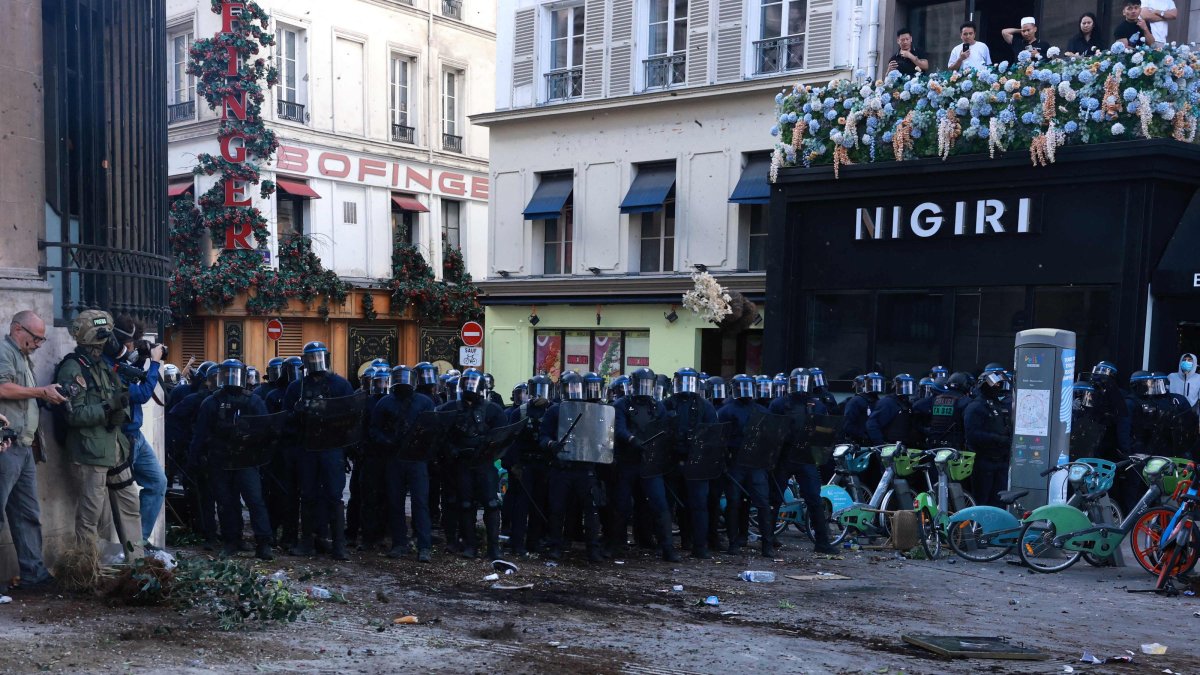
The U.N. warned France because police tactics may have used disproportionate force during student protests. The concern matters because peaceful assembly is a protected right, even when demonstrations disrupt schools. Violence by protesters does not justify unchecked force by authorities. Police used tear gas, batons, stun grenades and water cannon to clear blockades. A 15-year-old student lost a hand after police fired a stun grenade, leading the government to suspend that weapon. Police also opened 18 internal investigations into alleged misconduct. The U.N. called on all sides to remain peaceful and urged law enforcement to avoid disproportionate force. More than 6,800 people have been detained, though the article also reports vandalism, fires and clashes. The dispute now includes both demands for better schools and questions about police conduct.
Based on reporting by Daily Sabah Turkey
Why has the United Nations warned France about police use of force during the student protests?
The U.N. warned France because police tactics may have used disproportionate force during student protests. The concern matters because peaceful assembly is a protected right, even when demonstrations disrupt schools. Violence by protesters does not justify unchecked force by authorities.
Police used tear gas, batons, stun grenades and water cannon to clear blockades. A 15-year-old student lost a hand after police fired a stun grenade, leading the government to suspend that weapon. Police also opened 18 internal investigations into alleged misconduct.
The U.N. called on all sides to remain peaceful and urged law enforcement to avoid disproportionate force. More than 6,800 people have been detained, though the article also reports vandalism, fires and clashes. The dispute now includes both demands for better schools and questions about police conduct.
What does the right to peaceful assembly mean, and why does it apply to these protests?
The right to peaceful assembly protects people who gather to express concerns, campaign for change or criticize government decisions. It matters because protest gives students and supporters a public way to demand better education. The protection covers peaceful demonstrations, not violence or attacks.
These protests began over teacher shortages, overcrowded timetables, poor buildings and classrooms struggling with rising temperatures. Students blocked school entrances and held demonstrations. Some events also involved fires, vandalism, projectiles and clashes, creating a separate need for authorities to protect people and property.
The U.N. urged all sides to keep demonstrations peaceful and said the assembly right must be upheld. It also warned against disproportionate force. That means police may address genuine violence, but their response should match the danger. The article reports concerns about tear gas, grenades and other tactics, plus 18 internal investigations.
How large are the protests and disruptions, in terms of people detained, schools affected and teaching hours lost?
The protests are nationwide and substantial, involving tens of thousands of students, university students, teachers and supporters. Their scale is also visible in arrests and school closures. More than 6,800 people have been detained since the demonstrations began, and minors make up 86% of those arrested.
School disruption has fallen but not ended. The Education Ministry reported that 141 of about 3,700 high schools remained closed Friday, compared with roughly 800 a week earlier. Police also cleared a blockade at Assas University, while nearby Mines Paris and Institut Catholique faced disruptions.
The article does not state how many teaching hours have been lost, so that figure cannot be calculated from the available information. The continuing closures, blockades and online classes show that disruption extends beyond high schools. Student unions are planning another nationwide strike wave, suggesting the effects may continue.
What problems in French schools led students, teachers and supporters to protest?
The protests grew from everyday failures in French schools. Students say teacher shortages leave classes struggling, while overloaded timetables make learning harder. They also want better classrooms and improved learning conditions. These demands matter because they affect both the quality of education and students’ daily safety and comfort.
The article gives several concrete examples. Schools face deteriorating buildings, water leaks and insulation problems. Classrooms are struggling with rising temperatures, and one student said she had sometimes seen rats inside her former school. The movement has attracted teachers, university students and other supporters who share concerns about education.
Students rejected the government’s first concession as too narrow. About 3,000 qualified teachers will be sent to 114 high schools most affected by staffing shortages, but unions say wider problems remain. They continue to demand more teachers, better facilities and stronger learning conditions, with further strikes planned.
What could happen if the government’s concessions fail to satisfy the protesters?
If concessions fail to satisfy protesters, the campaign is likely to continue through strikes, blockades and demonstrations. The immediate issue is not only staffing. Students also demand better classrooms and improved learning conditions, so a limited response may not resolve the wider dispute.
The government announced about 3,000 qualified teachers for 114 high schools with the greatest shortages. Student unions welcomed the move but called it insufficient. Marius Mesnil said another nationwide wave of school strikes was planned for Tuesday. Other students said they were saving their energy for the following week.
Continued protests could keep schools and universities disrupted and maintain pressure over police conduct. The government has promised a broader plan by the end of October. Education Minister Edouard Geffray’s staffing measure is therefore an immediate step, while the next test is whether the promised wider plan addresses buildings, schedules and learning conditions.
Who is responsible for deciding how police respond to protests and how education money is spent?
Police responses are decided by public authorities responsible for law enforcement, while education funding is set through government decisions and the national budget. The article does not identify one individual who personally approves every police tactic. It does show that the government is accountable for how authorities handle the demonstrations.
Police used tear gas, batons, stun grenades and water cannon to clear blockades. The government suspended stun-grenade use after a student lost a hand, and police opened 18 internal investigations. On education, Minister Edouard Geffray announced 3,000 teachers, while Prime Minister Sébastien Lecornu promised a broader plan.
Economy Minister Roland Lescure said education demands could still be considered despite the proposed 2027 budget’s constraints. The draft raises education funding 1.4%, to 90.9 billion euros. Thus, police conduct involves law enforcement and government oversight, while spending reflects cabinet and budget decisions rather than students alone.
Why do governments have to balance demands for better public services with limits on taxation, budgets and public debt?
Governments must balance public-service demands because money is limited. More teachers, safer buildings and better classrooms require spending, but governments also have to manage taxation, budgets and public debt. A promise to improve one service can affect how much remains for other priorities.
France’s proposed 2027 budget would raise education funding by 1.4%, to 90.9 billion euros. Education would receive the second-largest increase among spending categories after defense. Economy Minister Roland Lescure nevertheless said education demands must be considered despite constraints in the draft budget.
This balance shapes the protest’s next stage. The government has offered teachers for the 114 high schools most affected, costing several dozen million euros, but unions want broader changes. Prime Minister Sébastien Lecornu promised a wider plan by the end of October. Its credibility will depend on matching school needs with available funds.
Key Facts:
📌 The U.N. warned against disproportionate police force.
📌 A 15-year-old lost a hand after a stun grenade was fired.
📌 Police opened 18 internal investigations into alleged misconduct.
📌 Peaceful assembly allows people to gather and express demands.
📌 The protests seek better teachers, buildings and learning conditions.
📌 The U.N. urged police to avoid disproportionate force.
📌 More than 6,800 people have been detained.