News · Environment & Climate
Finland orders Google to stop work on two AI data centers over alleged deforestation
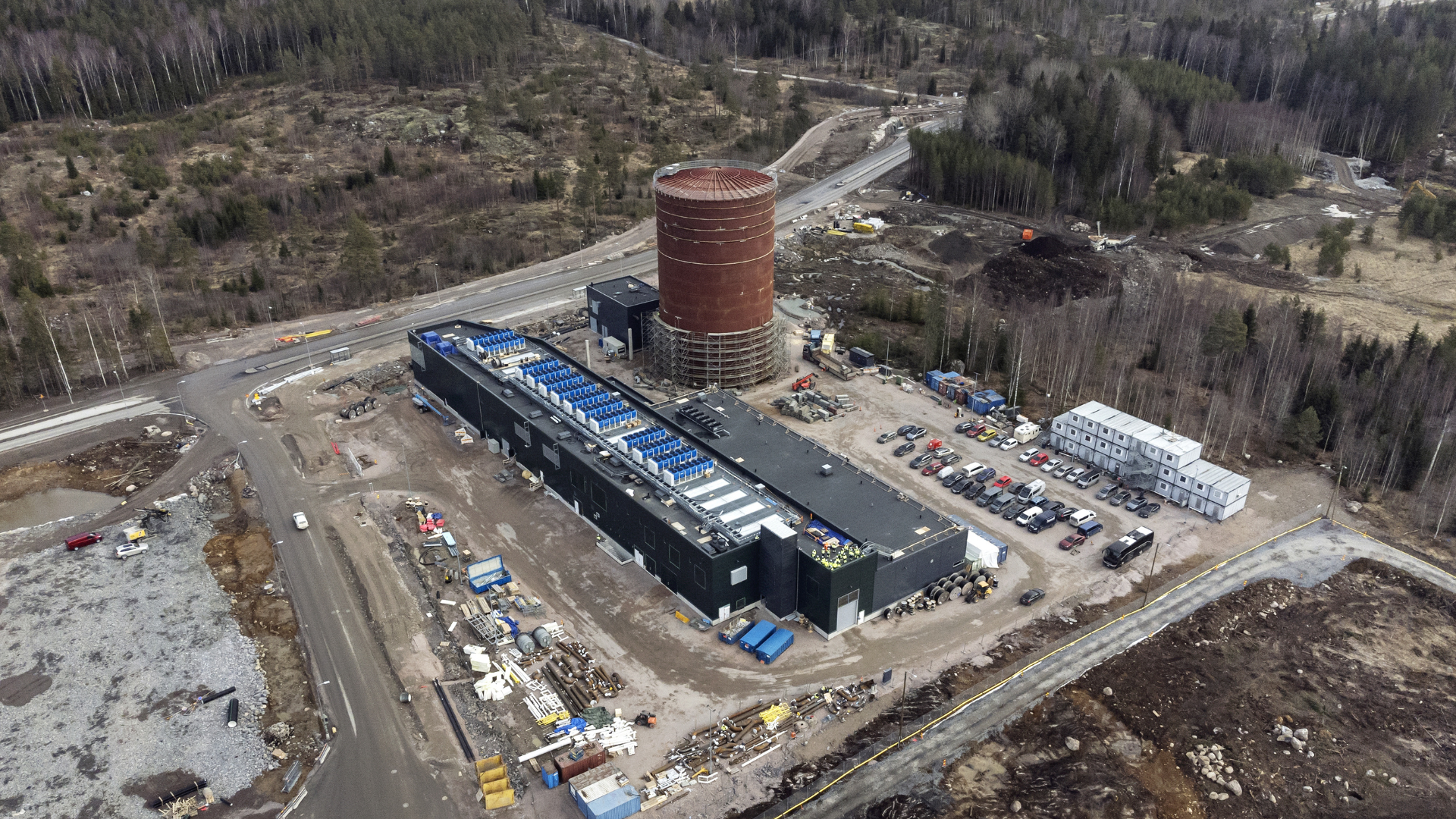
Finland’s order temporarily stops major construction work at two Google-related data-center sites, in Muhos and Kajaani. The immediate issue is not electricity supply, but alleged forest clearing and other environmental changes made before the required environmental review was complete. The decision puts expansion on hold while authorities examine the projects’ effects. The Finnish Licensing and Supervision Agency, known as LVV, ordered Tuike Finland Oy to stop removing trees and topsoil. It also prohibited excavation, quarrying, crushing, soil transfers, ditching, and road and storage construction. These activities could significantly alter the sites and surrounding environment. Tuike can still perform planning, measurements, soil surveys, and other work expected to have minimal environmental effects. Google acknowledged that it fell short of its own standards and said it would continue biodiversity planning, including tree planting across 130 hectares at Muhos.
Based on reporting by Toms Hardware
What did Finland order Google’s subsidiary Tuike Finland Oy to stop doing at the Muhos and Kajaani data-center sites?
Finland’s order temporarily stops major construction work at two Google-related data-center sites, in Muhos and Kajaani. The immediate issue is not electricity supply, but alleged forest clearing and other environmental changes made before the required environmental review was complete. The decision puts expansion on hold while authorities examine the projects’ effects.
The Finnish Licensing and Supervision Agency, known as LVV, ordered Tuike Finland Oy to stop removing trees and topsoil. It also prohibited excavation, quarrying, crushing, soil transfers, ditching, and road and storage construction. These activities could significantly alter the sites and surrounding environment.
Tuike can still perform planning, measurements, soil surveys, and other work expected to have minimal environmental effects. Google acknowledged that it fell short of its own standards and said it would continue biodiversity planning, including tree planting across 130 hectares at Muhos.
What is an environmental impact assessment, and why must it be completed before these projects continue?
An environmental impact assessment, or EIA, is a structured review of a proposed project’s likely effects on the environment. It examines changes such as forest loss, altered soil, drainage, roads, and other construction impacts. The process helps authorities understand risks before allowing work that could permanently change a site.
LVV said the Muhos and Kajaani activities would change the environment. Its environmental department head, Tommi Muilu, said identifying and assessing those impacts is a key objective of the EIA procedure. That is why the agency ordered a stop to major physical work while the assessment remains unresolved.
The EIA requirement does not block every activity. Tuike may continue planning, measurement, soil surveys, and other work with minimal impacts. Construction can resume only after the required environmental review allows the projects to proceed.
How much Finnish forest was allegedly cleared for the two data-center projects?
The projects in Muhos and Kajaani are under investigation for allegedly clearing more than 740 acres of Finnish forest. This is the central environmental concern behind the stop-work orders. The alleged clearing is significant because data-center construction requires large areas for buildings, roads, storage, utilities, and prepared ground.
The investigation covers more than tree removal alone. LVV also halted topsoil removal, excavation, quarrying, crushing, soil transfers, ditching, and road and storage construction. The agency said these activities could change the environment in ways that must be identified and assessed through the EIA process.
Google said it acted in good faith under the Forestry Act and conducted nature surveys. It also said it is advancing landscaping and biodiversity plans, including tree planting across 130 hectares at Muhos. The projects remain restricted while environmental questions are examined.
Which Finnish agency issued the order, and what environmental concerns did it say needed investigation?
The Finnish Licensing and Supervision Agency, abbreviated LVV, issued the stop-work notice to Google subsidiary Tuike Finland Oy. The agency oversees the environmental issue at the Muhos and Kajaani data-center sites. Its order requires major construction activities to pause until environmental impact assessments are completed.
LVV environmental department head Tommi Muilu said the activities would change the environment. He identified the need to determine and assess those impacts as a central purpose of the EIA procedure. The concerns include alleged forest clearing, removal of trees and topsoil, excavation, quarrying, crushing, soil movement, ditching, and construction of roads and storage areas.
The agency did not ban every site activity. Tuike may continue planning, measurement, soil surveys, and similar work expected to have minimal effects. The order therefore pauses physical transformation of the sites while allowing limited preparation and investigation to continue.
What construction activities are prohibited, and what limited work can Google still carry out while the investigation continues?
LVV’s order targets work that physically transforms the two sites. Tuike Finland Oy must stop removing trees and topsoil, excavating, quarrying, crushing materials, transferring soil masses, ditching, and constructing roads or storage areas. These restrictions prevent further major site preparation while the environmental impacts are reviewed.
The key mechanism is the EIA process. LVV said the listed measures could change the environment, so their effects must be identified and assessed before construction continues. The agency is not treating every activity as equally harmful. It distinguishes between large-scale ground disturbance and lower-impact preparation.
Tuike may continue planning, measurement, soil surveys, and other activities expected to have minimal impacts. Google also said it is advancing landscaping and biodiversity plans. Those plans include tree planting across 130 hectares at Muhos, but the main construction restrictions remain in place.
Why has Finland become an attractive location for data centers compared with places that face tighter land or electricity constraints?
Finland attracts data-center developers because it has readily available land and electricity. The article identifies both resources as major bottlenecks for data-center construction elsewhere. A suitable supply of land makes large facilities easier to site, while dependable power supports the infrastructure’s heavy energy needs.
This combination has led some people to call Finland the “Texas of Europe” for data centers. The country is positioned within Europe’s broader push to expand AI infrastructure. Europe is described as pursuing a $30 billion investment and targeting 100,000 AI GPUs for each site, increasing demand for suitable locations.
Other countries show why Finland’s resources matter. Denmark paused new data-center connection requests after demand reached 60GW, more than eight times its roughly 7GW peak consumption. Amazon projects elsewhere in Europe reportedly face connection delays of up to seven years.
Why do AI data centers require so much electricity, and how do GPUs and large computing facilities turn electricity into AI services?
AI data centers need substantial electricity because AI workloads involve huge numbers of mathematical calculations. GPUs are specialized processors that perform many calculations in parallel, making them useful for training and running AI models. Large facilities also need power for networking, storage, cooling, and other supporting systems.
The basic mechanism is straightforward: electricity runs the GPUs and the surrounding infrastructure. During training, GPUs process large datasets repeatedly to adjust a model’s parameters. During use, they process prompts or other inputs and generate outputs. More GPUs and faster processing can support more users, larger models, or shorter response times.
The article links this demand to Europe’s infrastructure race, including a target of 100,000 AI GPUs for each site. It also describes power constraints in Denmark and delays for Amazon projects. These pressures make electricity availability a major factor in choosing locations, alongside land and environmental approvals.
Key Facts:
📌 LVV ordered Tuike Finland Oy to stop construction at Muhos and Kajaani.
📌 The sites must complete environmental impact assessments before construction continues.
📌 Google said it fell short of its own high standards.
📌 An EIA identifies and assesses a project’s potential environmental impacts.
📌 LVV said the projects would change the environment.
📌 Major construction must wait for the environmental review.
📌 Over 740 acres of Finnish forest were allegedly cleared.