News · Politics & Governance
Orbán-Critical Media Receive More than €100,000 in EU Funding Ahead of Elections
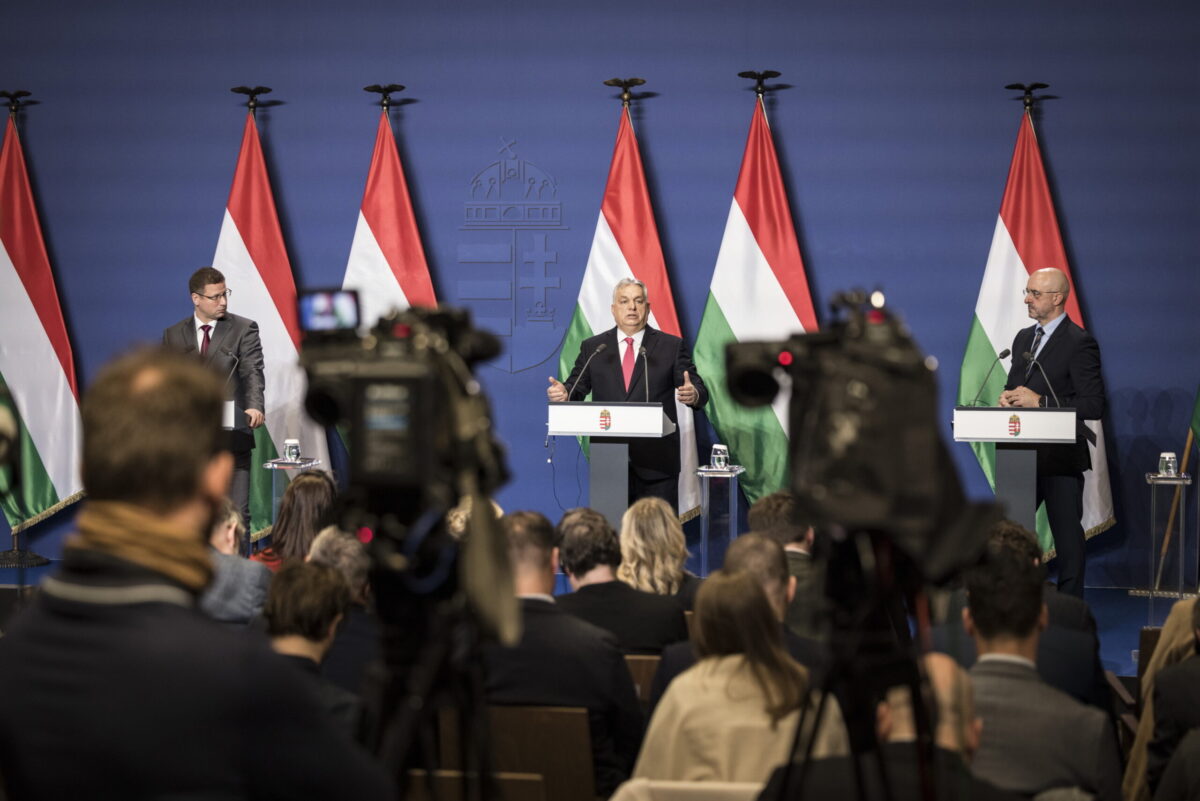
Two high-reach Hungarian news outlets received support linked to a European Parliament communications program. HVG secured a project valued at €95,065. Telex received a larger project worth €149,618. The figures describe the total value of each approved project, not necessarily the amount paid directly by Parliament. Both outlets were successful in the European Parliament’s 2025 call for proposals for communication activities. The funded projects belong to a program covering multimedia work about the Parliament’s legislative and political processes. Its stated goals include improving institutional visibility, encouraging democratic engagement and giving citizens neutral, reliable facts. The grants are notable because they were approved ahead of Hungary’s April 2026 parliamentary election. The article notes that both outlets are critical of Viktor Orbán. Parliament says funded newsrooms keep editorial independence, but the timing and recipients have prompted controversy over whether EU support could affect democratic debate.
Based on reporting by Hungary Today
Which Hungarian news outlets received EU-backed support, and how much was each project worth?
Two high-reach Hungarian news outlets received support linked to a European Parliament communications program. HVG secured a project valued at €95,065. Telex received a larger project worth €149,618. The figures describe the total value of each approved project, not necessarily the amount paid directly by Parliament.
Both outlets were successful in the European Parliament’s 2025 call for proposals for communication activities. The funded projects belong to a program covering multimedia work about the Parliament’s legislative and political processes. Its stated goals include improving institutional visibility, encouraging democratic engagement and giving citizens neutral, reliable facts.
The grants are notable because they were approved ahead of Hungary’s April 2026 parliamentary election. The article notes that both outlets are critical of Viktor Orbán. Parliament says funded newsrooms keep editorial independence, but the timing and recipients have prompted controversy over whether EU support could affect democratic debate.
What is the European Parliament’s communication funding program, and who administers it?
The European Parliament’s communication funding program is a multiannual work program for public communication. It supports projects intended to strengthen Parliament’s institutional visibility, promote democratic engagement and provide citizens with neutral, reliable facts. It is not limited to one type of publisher or activity.
The program has two main funding streams. One co-finances independent, objective and pluralistic reporting on the Parliament’s legislative and political processes. The other supports European values, cooperation among nongovernmental organizations and civil-society participation through events, consultations and information campaigns.
The European Parliament’s Directorate-General for Communication, or DG COMM, administers the program. Applicants submit proposals transparently through the European Union’s central Funding & Tenders Portal. Eligible media can include news agencies, broadcasters, print publishers, online outlets and social-media content creators. The rules state that editorial independence remains unaffected.
How much of the projects’ costs is the European Parliament expected to cover, and approximately how much funding could HVG and Telex receive altogether?
The European Parliament’s contribution is set at 60 percent of the total cost for both approved projects. This means the outlets are expected to provide or secure the remaining 40 percent. The percentage applies separately to HVG’s project and Telex’s project.
HVG’s project is valued at €95,065, so 60 percent equals €57,039. Telex’s project is worth €149,618, making the corresponding 60 percent €89,770.80. Added together, the projects have a total value of €244,683, and the potential Parliament contribution is approximately €146,810.
These calculations describe the maximum share implied by the published project values and the stated co-financing rate. The article identifies both outlets as successful beneficiaries, but it does not provide payment dates or confirm the exact amount already disbursed. The financial support has drawn attention because it comes before Hungary’s April 2026 election.
What kinds of media and civil-society activities is this funding intended to support?
The program supports two broad kinds of activity. The first funds multimedia journalism about the European Parliament’s legislative and political work. The reporting must be objective, independent and pluralistic, and should show how parliamentary decisions affect people’s everyday lives.
Eligible media include news agencies, broadcasters, print publishers, online outlets and digital creators on social media. The second stream supports national and pan-European nonprofit organizations, citizen groups and youth networks. Their projects can include online or in-person events, discussion forums, consultations and information campaigns. These activities often aim to increase voter turnout.
The program also says supported communication should strengthen society’s resilience against targeted false information and disinformation campaigns. In this way, the funding is designed to connect institutional information with public participation. The article presents the goals as democratic engagement, European values, public discussion and clearer understanding of parliamentary decisions.
What rules are meant to preserve transparency and editorial independence when a newsroom receives this funding?
The funding rules use disclosure and responsibility requirements to make the arrangement visible to audiences. Media content produced through the programs must carry a standardized legal disclaimer. This tells readers or viewers that the project received financial support from the European Union.
The disclaimer also states that editorial responsibility belongs solely to the respective authors. It adds that the views expressed do not represent the official position of the European Parliament. Separately, the program rules say that the editorial independence of funded newsrooms remains unaffected. Applications are also submitted transparently through the EU’s central Funding & Tenders Portal.
Together, these measures separate financial support from formal editorial control. Audiences can see the funding relationship, while the newsroom remains responsible for its own content. The article says these safeguards are part of the program’s design, although the timing of the awards and the recipients has still prompted political controversy.
Why does providing this support shortly before Hungary’s April 2026 parliamentary election create controversy about the possible effect on democratic debate?
The controversy arises from the combination of money, timing and politics. HVG and Telex received approved support shortly before Hungary’s April 2026 parliamentary election. The article also describes the outlets as explicitly critical of Viktor Orbán. That makes the funding politically sensitive, even though the program is presented as support for communication and democratic engagement.
The possible concern is that public funding from an EU institution could affect how voters receive information during an election period. The article does not establish that the grants changed reporting or influenced voters. It reports that Parliament says funded newsrooms retain full editorial independence and that their content must disclose the financial support.
The question therefore remains contested rather than settled. Supporters can point to published criteria, transparent applications and required disclaimers. Critics can focus on the proximity to the election and the outlets’ political orientation. The article leaves readers to decide whether the arrangement amounts to undue interference in Hungary’s democratic will-formation process.
What does editorial independence mean, and how can a media organization receive public money without the funder formally controlling its reporting?
Editorial independence means a newsroom makes its reporting and publishing decisions without instructions from its funder. Editors and authors decide what to cover, how to investigate it and what conclusions to present. The funder may support a project, but it does not formally direct the newsroom’s journalism.
In this program, the European Parliament says funded newsrooms’ editorial independence remains unaffected. The required disclaimer reinforces that separation. It says editorial responsibility rests solely with the authors and that expressed views do not represent Parliament’s official position. The funding relationship is disclosed rather than hidden.
This arrangement does not mean the newsroom receives no public money. It means financial support and editorial control are treated as separate. The article also points to transparent applications through the Funding & Tenders Portal. Whether these safeguards fully reassure the public is part of the controversy, especially because the support was approved before Hungary’s election.
Key Facts:
📌 HVG’s project was valued at €95,065.
📌 Telex’s project was valued at €149,618.
📌 Both outlets succeeded in the European Parliament’s 2025 call.
📌 DG COMM administers the European Parliament’s communication funding program.
📌 The program is a multiannual work program.
📌 Applications go through the EU’s central Funding & Tenders Portal.
📌 The European Parliament covers 60 percent of both projects’ costs.