News · Defence & Security
Ukrainian forces strike Russian facilities involved in missile launches, rocket fuel production
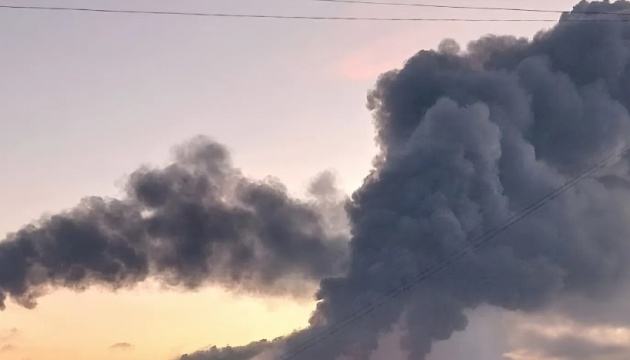
Ukrainian forces struck three facilities in Russia, according to Ukraine’s General Staff. Their importance lies in supporting missile operations rather than representing only battlefield launch sites. The targets were linked to launch-complex development and maintenance, rocket-fuel production, and intercontinental-ballistic-missile disposal. One target was a V.P. Barmin Research Institute facility near Dalneye Konstantinovo-5. It belongs to TsENKI, which develops, maintains, and operates launch complexes, fueling equipment, and missile-control systems. Another was the Redkino Experimental Plant in Tver region. It makes components of Decilin-M fuel for Kh-55 and Kh-101 cruise missiles. The third was the Center for the Elimination of Intercontinental Ballistic Missiles near Surovatikha. The article does not report the damage or operational downtime at any site. It says Ukraine viewed the strikes as self-defense and as an effort to reduce Russia’s military, economic, and technological potential. Their future effect therefore depends on how much work each facility can resume or replace.
Based on reporting by Ukrinform English
What Russian facilities did Ukrainian forces strike, and what role does each facility play?
Ukrainian forces struck three facilities in Russia, according to Ukraine’s General Staff. Their importance lies in supporting missile operations rather than representing only battlefield launch sites. The targets were linked to launch-complex development and maintenance, rocket-fuel production, and intercontinental-ballistic-missile disposal.
One target was a V.P. Barmin Research Institute facility near Dalneye Konstantinovo-5. It belongs to TsENKI, which develops, maintains, and operates launch complexes, fueling equipment, and missile-control systems. Another was the Redkino Experimental Plant in Tver region. It makes components of Decilin-M fuel for Kh-55 and Kh-101 cruise missiles. The third was the Center for the Elimination of Intercontinental Ballistic Missiles near Surovatikha.
The article does not report the damage or operational downtime at any site. It says Ukraine viewed the strikes as self-defense and as an effort to reduce Russia’s military, economic, and technological potential. Their future effect therefore depends on how much work each facility can resume or replace.
What is a launch complex, and how does it support the preparation and control of missiles or rockets?
A launch complex is a connected set of facilities and equipment used to prepare and launch a rocket or missile. It can include launch structures, fueling systems, testing equipment, and controls. These parts help move a vehicle from storage or preparation toward launch. The article identifies launch-complex work as one reason the targeted institute matters.
The V.P. Barmin Research Institute of Launch Complexes is a branch of TsENKI. The article describes TsENKI as responsible for developing, maintaining, and operating launch complexes, fueling equipment, and missile-control systems. In practical terms, that means supporting the infrastructure and systems needed before launch, during fueling, and for controlling missile operations. The article does not specify a particular launch vehicle at this facility.
Disrupting such support could create delays or maintenance problems, but the article does not measure any damage or effect. It also does not establish that the institute itself launches missiles. Its stated role is broader: research and support for launch complexes and related equipment.
How much of Russia's missile capability could these facilities affect: individual components, particular missile types, or entire launch systems?
The facilities could affect different layers of Russia’s missile capability, but the article provides no scale estimate. It identifies support for launch complexes, components of fuel used by two cruise-missile types, and the elimination of intercontinental ballistic missiles. That evidence points to specific systems and production chains, not automatically to the whole arsenal.
The Redkino Experimental Plant manufactures components of Decilin-M fuel for Kh-55 and Kh-101 cruise missiles. The V.P. Barmin institute supports launch-complex development, maintenance, and operation through TsENKI. The Center for the Elimination of Intercontinental Ballistic Missiles is connected to ICBM disposal operations. These are distinct functions, so disruption could affect different parts of missile activity.
The article does not say how much production or launch capacity the sites represent. It gives no inventory, replacement timeline, damage assessment, or percentage. Therefore, the strongest supported conclusion is that the strikes targeted important components and support infrastructure, while their effect on Russia’s overall missile capability remains unquantified.
Why is the Redkino plant important to the production of Kh-55 and Kh-101 cruise missiles?
The Redkino Experimental Plant is important because it supplies a component used in the fuel chain for two named cruise missiles. The article identifies those missiles as the Kh-55 and Kh-101. This places the plant inside a production network supporting weapons used by Russia’s military-industrial complex. Its role is specialized rather than described as complete missile assembly.
Specifically, the plant manufactures components of Decilin-M fuel. That fuel is associated in the article with Kh-55 and Kh-101 cruise missiles. Redkino also produces additives for diesel fuel and aviation kerosene. The article says the enterprise is subject to international sanctions, adding that it is already treated as a restricted part of the military-industrial system.
A disruption there could complicate access to the named fuel components or require alternative suppliers. However, the article does not state the plant’s production volume, whether other facilities can replace it, or whether the strike stopped output. Its confirmed importance is its position in the production chain.
What military consequences could result if missile fuel production, launch-complex support, or intercontinental-ballistic-missile disposal operations are disrupted?
If these facilities were disrupted, Russia could face problems in several supporting stages of missile activity. Fuel production affects the availability of materials used by particular missiles. Launch-complex support affects preparation, fueling equipment, maintenance, and control systems. ICBM disposal operations could face interruptions in a separate process. These are potential consequences, not confirmed outcomes in the article.
The Redkino plant makes Decilin-M fuel components for Kh-55 and Kh-101 cruise missiles. The V.P. Barmin institute’s parent organization, TsENKI, develops and operates launch complexes, fueling equipment, and missile-control systems. A third site is the Center for the Elimination of Intercontinental Ballistic Missiles. Together, the targets cover production, launch support, and missile elimination.
Possible effects include slower production, maintenance backlogs, or the need to find substitute facilities and materials. The article gives no damage assessment, recovery time, or evidence that missile launches fell. It presents the strikes as intended to reduce Russia’s military, economic, and technological potential.
Why would Ukraine describe strikes inside Russia as self-defense under Article 51 of the UN Charter?
Ukraine’s General Staff characterized the strikes as an exercise of Ukraine’s inherent right to self-defense under Article 51 of the UN Charter. In the article’s framing, the targets were connected to Russia’s military capability, including missile launches, fuel production, launch-complex support, and ICBM operations. Ukraine therefore presented attacks on those facilities as part of its response to Russian aggression.
The statement specifically said the strikes were aimed at reducing the aggressor state’s military, economic, and technological potential. This explains why facilities inside Russia were included, rather than only sites near the battlefield. The article does not provide a separate legal analysis, describe other governments’ views, or assess whether the strikes meet every legal requirement.
The article also reports that Ukraine’s Defense Forces recently struck the Seshcha airfield in Russia’s Bryansk region. That event provides additional context about operations against Russian facilities. Beyond Ukraine’s stated justification, the article does not say how the strikes affected Russia or what legal consequences followed.
What are cruise missiles and intercontinental ballistic missiles, and how do their range, flight paths, and strategic purposes differ?
A cruise missile is generally an unmanned aircraft-like weapon that flies through the atmosphere under its own propulsion and follows a guided route toward a target. An intercontinental ballistic missile, or ICBM, is designed for extremely long-range travel and follows a primarily ballistic path after a powerful launch phase. The article names both categories but does not give ranges or trajectories.
The Redkino plant makes components of Decilin-M fuel for the Kh-55 and Kh-101 cruise missiles. Separately, the Center for the Elimination of Intercontinental Ballistic Missiles was targeted near Surovatikha. This shows that the article connects cruise missiles with fuel production and ICBMs with an elimination operation, but it does not describe their technical performance.
In general, cruise missiles are commonly associated with precise attacks against selected targets, while ICBMs are strategic weapons linked to long-distance deterrence. These are established background distinctions, not details stated in the article. The reported strikes targeted supporting facilities, and no effect on either weapon category’s range or flight path was given.
Key Facts:
📌 Three Russian facilities linked to missile activity were targeted.
📌 Redkino makes fuel components for Kh-55 and Kh-101 missiles.
📌 Another target handles intercontinental-ballistic-missile elimination.
📌 Launch complexes support missile or rocket preparation and launch.
📌 TsENKI operates launch complexes, fueling equipment, and control systems.
📌 The article does not identify a specific launch vehicle there.
📌 Redkino is tied to fuel components for two named cruise-missile types.