News · Sports
UEFA looks to field challenger as Infantino counts on Africa
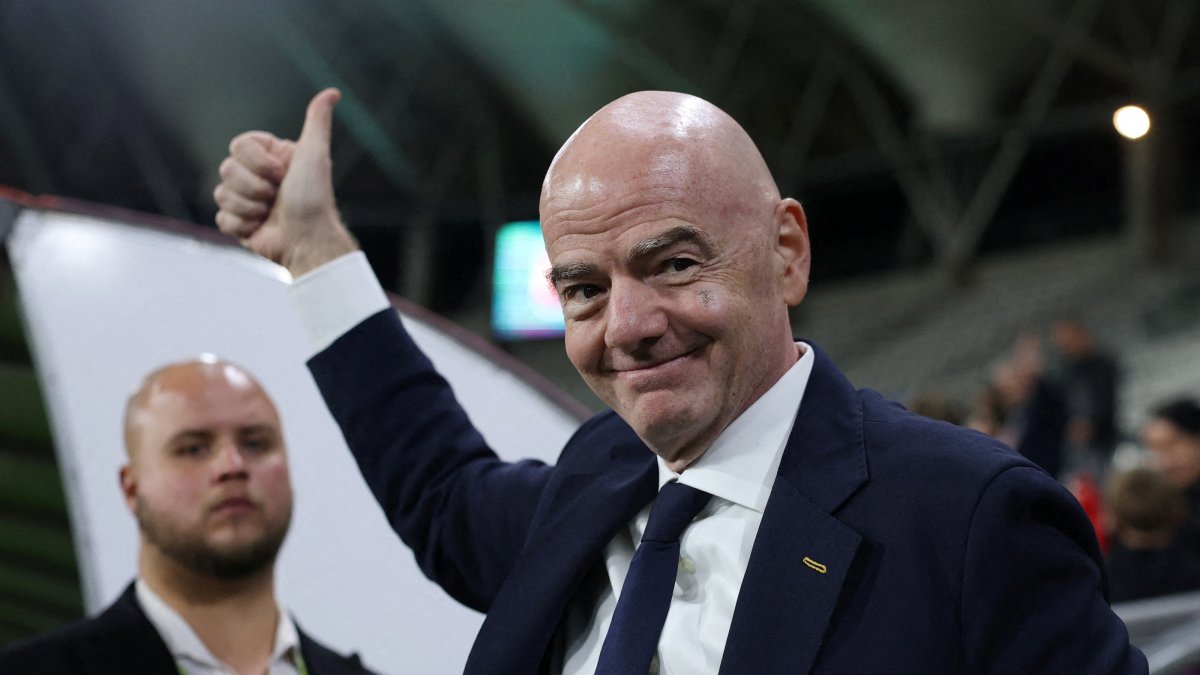
UEFA seeking a challenger means Europe’s 55 football associations want an alternative to incumbent FIFA President Gianni Infantino in the March 18 election. UEFA has not named a candidate. It is searching for a leader with deep football roots who can unite FIFA’s 211 members and protect the organization’s independence. The proposed leader would represent FIFA globally without running its daily administration. UEFA also wants stronger safeguards for oversight bodies and says FIFA resources must not serve personal or electoral interests. UEFA President Aleksander Ceferin has criticized Infantino’s executive-style leadership but ruled himself out of the FIFA race. The search may reach beyond Europe because Africa’s 54 associations unanimously support Infantino. Ceferin will instead seek a fourth and final UEFA term. If no challenger emerges, Infantino’s position strengthens; if one does, the election could become a wider contest over FIFA’s governance and priorities.
Based on reporting by Daily Sabah Turkey
What does it mean for UEFA to seek a challenger to Gianni Infantino in the FIFA presidential election?
UEFA seeking a challenger means Europe’s 55 football associations want an alternative to incumbent FIFA President Gianni Infantino in the March 18 election. UEFA has not named a candidate. It is searching for a leader with deep football roots who can unite FIFA’s 211 members and protect the organization’s independence.
The proposed leader would represent FIFA globally without running its daily administration. UEFA also wants stronger safeguards for oversight bodies and says FIFA resources must not serve personal or electoral interests. UEFA President Aleksander Ceferin has criticized Infantino’s executive-style leadership but ruled himself out of the FIFA race.
The search may reach beyond Europe because Africa’s 54 associations unanimously support Infantino. Ceferin will instead seek a fourth and final UEFA term. If no challenger emerges, Infantino’s position strengthens; if one does, the election could become a wider contest over FIFA’s governance and priorities.
What are FIFA and UEFA, and how do their roles in world and European football differ?
FIFA is the global governing body for football, bringing together 211 national member associations. It leads worldwide football governance and oversees global tournaments, development programs and the presidential election. UEFA is the governing body for European football, representing 55 national federations and shaping the sport across Europe.
Their roles overlap through FIFA’s global decisions, but their reach differs. UEFA works regionally and can coordinate Europe’s voting bloc. FIFA works across all regions, including Africa, and its president represents the worldwide organization. The article describes UEFA pressing FIFA to improve governance, oversight and financial priorities.
That difference matters in the election. UEFA can influence 55 votes, while FIFA’s 211-member structure includes many regions. Africa’s 54 associations have already pledged unconditional support for Infantino. The contest therefore reflects both European concerns and the broader global balance of football’s national associations.
How large are the voting blocs involved: how many member associations do FIFA, UEFA and African football represent?
The election involves three important voting blocs. FIFA has 211 member federations worldwide. UEFA represents 55 European federations. The Confederation of African Football, or CAF, includes 54 member associations. These figures show the global scale of the vote and the size of the main regional groupings described in the article.
Europe’s 55 members met in Berlin and backed proposed FIFA reforms, except Azerbaijan. Africa’s 54 associations took the opposite collective position, pledging unconditional support for Infantino. The mechanism is regional coordination: national associations can align their votes before the FIFA presidential election.
The remaining FIFA members are outside these two blocs, so the final result depends on wider support. Africa’s unified position gives Infantino a major base. UEFA’s search for a challenger matters because Europe’s bloc is slightly larger, but it cannot decide the election alone without support from other associations.
Why have all 54 African football associations pledged unconditional support for Infantino?
All 54 African football associations pledged unconditional support for Infantino because they credit his presidency with supporting African football. CAF President Patrice Motsepe announced the unanimous decision in Cape Verde. He linked the backing directly to Infantino’s investment and assistance since Infantino took office in February 2016.
Infantino highlighted FIFA’s Forward development program. He said it invested $1 billion in Africa over 10 years, including $500 million during the last four years. He also cited 124 different projects and other actions. Those investments give African associations a concrete reason to view his leadership favorably.
The pledge gives Infantino a powerful electoral boost before the March 18 election. It contrasts sharply with UEFA’s concerns about governance, independence and financial priorities. Africa’s unified support does not settle the global vote by itself, but it secures a large, coordinated regional base for the incumbent.
What could happen to the election if Europe remains divided while Africa votes as a unified bloc?
If Europe remains divided while Africa votes together, Infantino could gain a decisive early advantage. Africa’s 54 associations have pledged unconditional support, while UEFA has only outlined the qualities of a challenger and has not named one. Europe’s votes could therefore be split among candidates or fail to produce a coordinated alternative.
The key mechanism is coalition building across FIFA’s 211 members. UEFA controls a large 55-member regional bloc, but it needs support beyond Europe. Africa’s unified position gives Infantino a dependable base, while the remaining associations become especially important to the outcome.
The article does not state that Infantino will win. It shows that his support is strengthening outside Europe, particularly in Africa. A credible challenger would need to unite European voters and persuade associations in other regions. Without that wider coalition, UEFA’s governance concerns may not translate into enough election support.
Why did FIFA's proposal to sell private investors stakes in its tournaments intensify concerns about governance and independence?
FIFA’s proposal to sell private investors stakes in the World Cup and other tournaments intensified governance concerns because it raised questions about who would control football’s most valuable competitions. UEFA already worried about FIFA’s decision-making and Infantino’s increasingly executive-style leadership.
The proposal was quickly abandoned after a backlash, but the controversy exposed the sensitivity of allowing outside financial interests into tournament ownership. UEFA responded by demanding reforms, including stronger protection for oversight bodies against interference from the president or senior executives. It also said FIFA resources must not serve personal or electoral interests.
The episode became part of a wider dispute over FIFA’s independence, transparency and financial priorities. UEFA officials are due to meet Infantino in Zurich, where the investment controversy and decision-making independence may be discussed. The abandoned proposal did not end the disagreement; it helped trigger the search for alternative leadership.
How does FIFA's one-member-one-vote election system give smaller national associations influence over who leads global football?
FIFA’s one-member-one-vote system means each national member association receives one vote in the presidential election, regardless of population, wealth or football size. This gives smaller associations formal influence over the leader of the 211-member global organization. The article’s regional blocs show why those votes matter.
The mechanism rewards coalition building rather than simple population totals. If 54 African associations coordinate behind Infantino, they act as a substantial voting bloc. UEFA’s 55 federations can likewise increase their influence by agreeing on a candidate. Individual associations can therefore matter both alone and as members of regional alliances.
The article does not provide the election’s detailed voting procedure, but it identifies FIFA’s 211 member associations as the global electorate. In this system, a challenger needs support across regions, not only from Europe’s larger football nations. Smaller associations can help determine whether a candidate’s coalition succeeds.
Key Facts:
📌 - UEFA wants a unifying alternative to incumbent FIFA President Gianni Infantino.
📌 - UEFA has not identified a potential challenger.
📌 - Aleksander Ceferin ruled himself out of the FIFA race.
📌 - FIFA has 211 member associations worldwide.
📌 - UEFA represents 55 European member federations.
📌 - FIFA governs globally; UEFA governs European football.
📌 - FIFA has 211 member associations.