News · Defence & Security
Montenegro Arrests Founder of Influential Russian Pro-War Blog Rybar
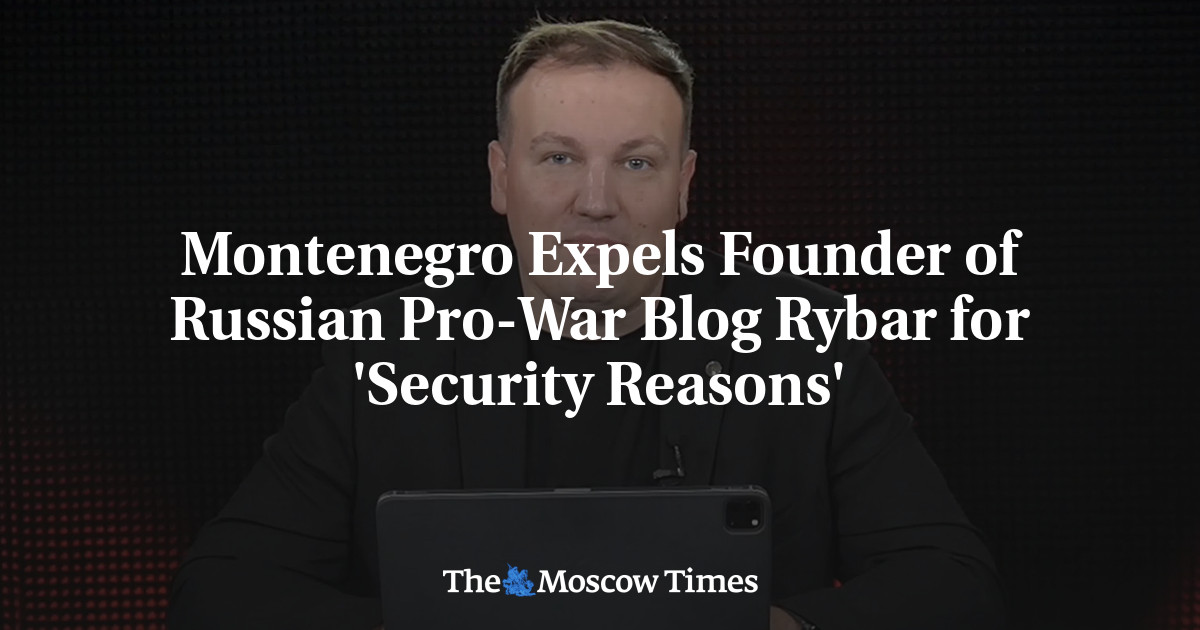
Montenegrin police and the National Security Agency detained Mikhail Zvinchuk, founder of the Russian Telegram channel Rybar, along with his wife, Valeria Zvinchuk, and three associates. Officials described the operation as targeting suspected Russian information networks and “hybrid activities.” Montenegro’s prime minister confirmed Zvinchuk’s detention. The group had arrived to film material in Montenegro. Russian reporting said intelligence agencies monitored them for several days. Unconfirmed reporting claimed officers detained Zvinchuk at a hotel in Risan, then moved the group to Podgorica. Their phones and passports were reportedly confiscated. Rybar said the team was legally filming a local monastery and expected quick release. Russian officials, including Maria Zakharova, said the embassy was investigating. The article does not state whether Montenegro formally charged anyone or how long the detention lasted.
Based on reporting by Moscow Times
What happened to Mikhail Zvinchuk, his wife, and the other Rybar associates in Montenegro?
Montenegrin police and the National Security Agency detained Mikhail Zvinchuk, founder of the Russian Telegram channel Rybar, along with his wife, Valeria Zvinchuk, and three associates. Officials described the operation as targeting suspected Russian information networks and “hybrid activities.” Montenegro’s prime minister confirmed Zvinchuk’s detention.
The group had arrived to film material in Montenegro. Russian reporting said intelligence agencies monitored them for several days. Unconfirmed reporting claimed officers detained Zvinchuk at a hotel in Risan, then moved the group to Podgorica. Their phones and passports were reportedly confiscated.
Rybar said the team was legally filming a local monastery and expected quick release. Russian officials, including Maria Zakharova, said the embassy was investigating. The article does not state whether Montenegro formally charged anyone or how long the detention lasted.
What is Rybar, and why is its Telegram channel considered influential?
Rybar is an influential Russian Telegram channel founded by Mikhail Zvinchuk, who previously worked as a Russian Defense Ministry press officer. The article describes it as pro-war and says it publishes daily military analysis about Russia’s invasion of Ukraine. That makes Rybar part of Russia’s wider online information environment.
Its influence comes mainly from its substantial audience and regular commentary on the war. Rybar does not merely publish occasional reports; it provides continuing analysis through Telegram. The channel’s founder is also subject to Western sanctions, adding to its importance in the authorities’ concerns about Russian influence networks.
The article links Rybar to the Montenegro operation because officials suspected the group’s activities involved more than ordinary filming. Rybar denied wrongdoing and said its team was legally filming a monastery. The detention placed the channel’s work under direct scrutiny outside Russia.
How large is Rybar’s audience, and what kind of information does it publish?
Rybar’s stated audience is about 1.5 million Telegram subscribers. That figure gives the channel a powerful distribution network for its material and helps explain why officials view it as influential. A message reaching that many people can shape how audiences understand fast-moving military and political events.
The channel publishes daily military analysis focused on Russia’s invasion of Ukraine. Its regular output gives followers a continuing stream of battlefield commentary rather than isolated updates. The article also identifies Mikhail Zvinchuk as its founder and notes that he is subject to Western sanctions.
The channel’s size matters in the Montenegro case because authorities were investigating suspected Russian information networks and “hybrid activities.” The article does not establish that every Rybar post is an influence operation. It reports that officials suspected the group’s filming could harm Montenegro’s tourism industry, economy, and national interests.
Why did Montenegrin authorities suspect that the group’s filming could be part of a Russian influence operation rather than ordinary journalism?
Montenegrin authorities did not treat the filming as routine journalism because the visitors were connected to Rybar, a large pro-war Russian channel. Police and the National Security Agency were targeting suspected Russian information networks and “hybrid activities.” That wider investigation shaped how officials interpreted the group’s work.
The group had reportedly arrived to film material about Montenegro’s alignment with European Union visa policies. Russian reporting said intelligence agencies watched them for several days. Authorities suspected the material was designed to undermine Montenegro’s tourism industry, economy, and national interests. Those alleged aims would make the filming part of an influence effort rather than simple travel coverage.
Rybar rejected that interpretation. It said the team was legally in Montenegro to film a local monastery and expected prompt release. The article presents the suspected purpose as an official concern, not a proven conclusion. It also reports no final finding about the content’s intended impact.
Why is Montenegro’s movement toward European Union membership relevant to this case?
Montenegro’s EU ambition makes the alleged filming politically sensitive. Prime Minister Milojko Spajić’s government is seeking to bring the country into the European Union by 2028. Material about Montenegro’s alignment with EU visa policies could therefore affect a major foreign-policy direction and domestic political objective.
The reported mechanism is influence over public perceptions. Authorities suspected the filmed material could undermine Montenegro’s tourism industry, economy, and national interests. If content portrayed EU-related choices as harmful, it could weaken support for the country’s European path. The article does not prove that the group intended this result, but it explains why officials treated the activity as potentially threatening.
Spajić confirmed Zvinchuk’s detention and wrote that Montenegro would protect its interests and ensure that nobody endangered its European future. The case therefore connects a security investigation with Montenegro’s stated European integration timeline. The article does not say whether the detention changed that policy.
What consequences could the detention have for relations between Montenegro and Russia, and for other Russian journalists or media figures traveling in Europe?
The detention could worsen already tense relations between Montenegro and Russia. Montenegro presented the operation as protecting its interests and European future, while Russian officials sought information about the circumstances. Maria Zakharova said Russia’s embassy in Podgorica was working to establish what happened.
The sharpest response came from Dmitry Medvedev. He said Russia might need to “top up” its prisoner exchange fund with European and U.S. citizens to free Russians held in Europe. His comments introduced the possibility of retaliatory pressure, although the article does not report any exchange or concrete action.
The case may also affect Russian journalists and media figures traveling in Europe. Medvedev said Russians were potentially being hunted down and warned that traveling in European countries was a mistake. That message could discourage travel or increase fears of detention. The article does not establish broader legal consequences for other Russian journalists.
What is a hybrid influence operation, and how can online media, political messaging, and alleged election interference work together in one operation?
A hybrid influence operation is a coordinated effort that uses several kinds of pressure or persuasion at once. Online media can spread a chosen narrative, political messaging can frame events for public audiences, and alleged election interference can try to affect voting or trust in institutions. The article uses “hybrid activities” for suspected Russian information-network operations.
The mechanisms can reinforce one another. A Telegram channel might publish analysis or filmed material, while political statements repeat its themes. Audiences may then change their views about a government, an alliance, or an election. In Montenegro, officials suspected filmed content could undermine tourism, the economy, national interests, and support for the country’s EU direction.
The article also says the U.S. State Department alleges Zvinchuk and other Rybar staff were involved in election interference and malign influence operations. Those are allegations, not findings established in the report. Rybar said the team was legally filming a monastery, and no final judgment is described.
Key Facts:
📌 Montenegro detained Mikhail Zvinchuk during an operation targeting suspected Russian influence activities.
📌 Valeria Zvinchuk and three associates were also detained.
📌 The group was reportedly taken to Podgorica for questioning.
📌 Rybar was founded by former Russian Defense Ministry press officer Mikhail Zvinchuk.
📌 The channel is described as influential and pro-war.
📌 Rybar publishes daily military analysis of Russia’s invasion of Ukraine.
📌 Rybar has about 1.5 million Telegram subscribers.