News · Defence & Security
Russian KAB strikes on Zaporizhzhia at dawn kill one person and injure nine others
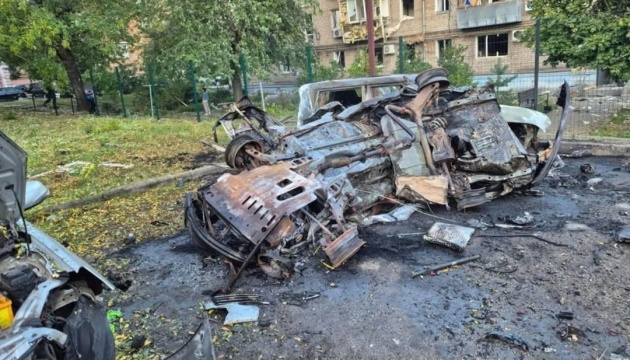
Russian forces struck Zaporizhzhia before sunrise, targeting civilian infrastructure. One person died and nine others were injured. The attack matters because it affected homes, an education facility, and vehicles rather than only a clearly identified military position. The strikes occurred between 4:50 a.m. and 5:59 a.m. Apartment buildings, an extracurricular education facility, and vehicles were damaged. The dead man was 48 years old. The injured included a 14-year-old girl. Officials were still verifying information about the victims at 7:45 a.m. The Zaporizhzhia Regional Prosecutor’s Office reported the casualties and damage. Law enforcement opened a pretrial investigation into a war crime resulting in death. The report also noted that a Russian FPV drone had struck the regional council building on October 8. Further details about victims and the investigation may follow.
Based on reporting by Ukrinform English
What happened in Zaporizhzhia, and when did the strikes occur?
Russian forces struck Zaporizhzhia before sunrise, targeting civilian infrastructure. One person died and nine others were injured. The attack matters because it affected homes, an education facility, and vehicles rather than only a clearly identified military position.
The strikes occurred between 4:50 a.m. and 5:59 a.m. Apartment buildings, an extracurricular education facility, and vehicles were damaged. The dead man was 48 years old. The injured included a 14-year-old girl. Officials were still verifying information about the victims at 7:45 a.m.
The Zaporizhzhia Regional Prosecutor’s Office reported the casualties and damage. Law enforcement opened a pretrial investigation into a war crime resulting in death. The report also noted that a Russian FPV drone had struck the regional council building on October 8. Further details about victims and the investigation may follow.
What is a KAB, and how is it different from an unguided bomb?
KAB is a Russian term commonly used for guided aerial bombs. These weapons have control surfaces and guidance systems that help them travel toward a selected target. An unguided bomb follows a ballistic path after release, shaped mainly by its launch speed, angle, gravity, and wind.
Guidance can use satellite navigation, inertial sensors, or other systems, depending on the bomb. The guidance system sends corrections to the bomb’s control surfaces during flight. This generally improves accuracy and allows aircraft to attack from greater distances. It does not guarantee a precise hit, especially around dense buildings or when systems are disrupted.
The article describes KAB strikes that damaged apartment buildings, an extracurricular education facility, and vehicles. It does not identify the specific KAB model or guidance system used. Even a guided weapon can kill civilians if the target is near homes, the bomb misses, or its explosive effects spread beyond the aim point.
How many people were killed or injured, and what civilian buildings and property were damaged?
The immediate human toll was one death and nine injuries. The dead victim was a 48-year-old man. A 14-year-old girl was among those injured. These figures were reported as of 7:45 a.m., while officials continued verifying information about the victims.
The strikes damaged several kinds of civilian property. Apartment buildings were hit, putting residential areas at risk. An extracurricular education facility was also damaged, as were vehicles. The article identifies civilian infrastructure as the attackers’ target, but it does not provide a total number of damaged buildings or vehicles.
The damage shows how an attack in a city can affect homes, community services, and personal property at once. The casualty count may change if authorities confirm additional information. The prosecutor’s office opened a pretrial investigation into a war crime resulting in a death, making the damage and deaths part of a formal legal inquiry.
Why are strikes on civilian infrastructure potentially investigated as war crimes?
International humanitarian law protects civilians and civilian objects during armed conflict. It requires military forces to distinguish military targets from civilian people and property. Attacks may not deliberately target civilians or civilian infrastructure. They must also be directed at a lawful military objective and follow rules intended to limit civilian harm.
The article reports that the attackers targeted civilian infrastructure in Zaporizhzhia. Apartment buildings, an extracurricular education facility, and vehicles were damaged. One 48-year-old man died, and nine people were injured. Those facts can raise questions about whether the target was lawful, whether precautions were taken, and whether expected civilian harm was excessive.
The strike is not automatically proven to be a war crime merely because civilians were harmed. Investigators must establish what was targeted, what commanders knew, and how the attack was planned and carried out. Ukraine’s law enforcement officials launched a pretrial investigation under Part 2 of Article 438 of the Criminal Code of Ukraine.
Where is Zaporizhzhia, and what role does the city play in the Russia-Ukraine war?
Zaporizhzhia is a major city in southeastern Ukraine, on the Dnipro River, and the administrative center of Zaporizhzhia Region. It is an important industrial and transport center. Its position in southeastern Ukraine places it within the wider theater of the Russia-Ukraine war.
The article focuses on an attack inside the city. Russian KAB strikes hit civilian infrastructure at dawn, damaging apartment buildings, an extracurricular education facility, and vehicles. It also reports that a Russian FPV drone struck the Zaporizhzhia Regional Council building on October 8. These incidents show that the city’s urban spaces and public institutions remain exposed.
Zaporizhzhia’s role in the war includes serving as a regional administrative center and a major population center. Attacks there can affect residents, local services, and public institutions. The article does not provide a detailed military explanation for why this particular city was targeted, so the attackers’ specific objective remains unconfirmed.
What does international humanitarian law require when military forces attack targets near civilians?
When military forces attack near civilians, international humanitarian law requires distinction, proportionality, and feasible precautions. They must identify a lawful military objective and distinguish it from homes, schools, hospitals, and other civilian objects. They must not deliberately attack civilians or civilian infrastructure.
Before and during an attack, forces should verify the target, choose means and methods that reduce civilian danger, and cancel or suspend the attack if the expected harm becomes excessive compared with the anticipated military advantage. Warnings may also be required when circumstances allow. These rules apply even when a military target is located in a populated area.
The Zaporizhzhia case illustrates why these duties matter. The reported strikes damaged apartment buildings and an extracurricular education facility, killed a 48-year-old man, and injured nine people. The article does not establish whether the attack violated every legal requirement. Ukraine’s pretrial investigation is intended to examine the circumstances and possible criminal responsibility.
How do guided aerial bombs locate and strike targets, and why can their use still cause widespread harm in cities?
A guided aerial bomb usually combines a navigation system with control surfaces. Satellite signals, inertial sensors, or another seeker help estimate the bomb’s position and direction. An onboard computer compares that position with the intended target and commands small course corrections during flight.
Guidance improves accuracy, but it cannot remove every risk. Signals may be unavailable or disrupted. Coordinates may be wrong. The bomb may miss, or the target may be close to homes and public facilities. A large warhead also produces blast, fragments, falling debris, fires, and structural damage beyond the exact point of impact.
The Zaporizhzhia strikes demonstrate this urban danger. The article reports damage to apartment buildings, an extracurricular education facility, and vehicles. One man was killed and nine people were injured, including a 14-year-old girl. Thus, a weapon can be guided toward a chosen point while still causing widespread harm in a densely populated city.
Key Facts:
📌 Russian strikes hit Zaporizhzhia between 4:50 a.m. and 5:59 a.m.
📌 One 48-year-old man was killed.
📌 Nine people, including a 14-year-old girl, were injured.
📌 A KAB is a guided aerial bomb.
📌 Unguided bombs cannot steer toward targets after release.
📌 Guidance improves aim but does not prevent urban harm.
📌 The attack killed one person and injured nine others.