News · Environment & Climate
After 44 years, J&K gets its Ravi water. But an ageing canal now stands in the way
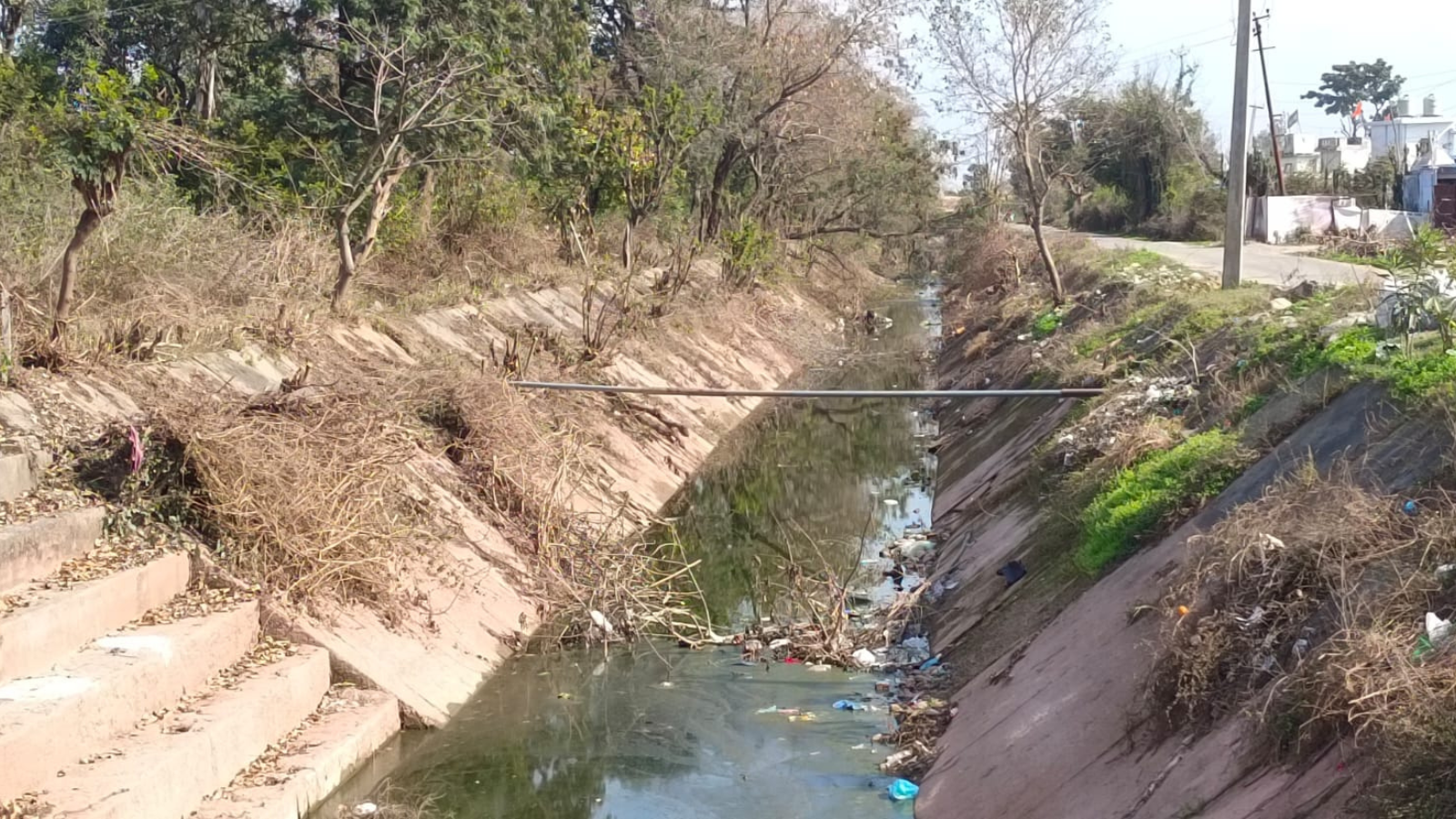
The Ravi Canal is a 79.8-kilometre waterway within the Ravi-Tawi Irrigation Canal network. It was built to carry Jammu and Kashmir’s 1,150-cusec share of Ravi water toward the arid Kandi lands of Kathua and Samba. Its condition matters because the Shahpur Kandi Dam now supplies water through gravity, but the canal must still transport and distribute it. Officials say wild growth and deterioration have reduced the canal’s carrying capacity. The canal and its distribution network can now handle only about 400 cusecs, far below the designed 1,150. Damage and neglect also affect the channels that move water beyond the main canal. This means J&K cannot use all the water made available by the dam. The government has sought Rs 534 crore from the Central Water Commission for restoration. Repairs and renovation could take as long as two years, so irrigation gains will remain limited meanwhile.
Based on reporting by Indian Express
What is the Ravi Canal, and why is its ageing condition preventing Jammu and Kashmir from using all the water now available from the Shahpur Kandi Dam?
The Ravi Canal is a 79.8-kilometre waterway within the Ravi-Tawi Irrigation Canal network. It was built to carry Jammu and Kashmir’s 1,150-cusec share of Ravi water toward the arid Kandi lands of Kathua and Samba. Its condition matters because the Shahpur Kandi Dam now supplies water through gravity, but the canal must still transport and distribute it.
Officials say wild growth and deterioration have reduced the canal’s carrying capacity. The canal and its distribution network can now handle only about 400 cusecs, far below the designed 1,150. Damage and neglect also affect the channels that move water beyond the main canal.
This means J&K cannot use all the water made available by the dam. The government has sought Rs 534 crore from the Central Water Commission for restoration. Repairs and renovation could take as long as two years, so irrigation gains will remain limited meanwhile.
By how much has the canal’s water-carrying capacity fallen—from its designed 1,150 cusecs to what it can carry today—and what does that difference mean in practice?
The Ravi Canal was designed to carry 1,150 cusecs of water, matching J&K’s share from the Ravi supplied through the Shahpur Kandi Dam. Officials now estimate that it can carry only 400 cusecs. The shortfall is therefore 750 cusecs, meaning the canal can handle roughly one-third of its original design flow.
This difference is not merely a technical figure. Less water can move through the canal toward Kathua, Samba and connected distribution channels. The system was intended to irrigate dry Kandi land, where natural water resources are scarce and agricultural productivity is low. Reduced flow limits how much land can receive reliable irrigation.
The immediate effect is uneven supply. The government said continuous water availability in Ramgarh cannot be ensured, so water is supplied there for two days each week under the approved Warabandi schedule. Restoration has been estimated to take up to two years.
Why was the Shahpur Kandi Dam built, and how does it allow J&K to receive Ravi water through gravity instead of expensive pumping?
The Shahpur Kandi Dam was developed to help India use its share of the Ravi’s waters under the 1960 Indus Waters Treaty. It also serves multiple purposes, including power generation through seven planned hydro-generating sets. For J&K, its most important benefit is a dependable route for sending Ravi water to dry agricultural areas.
The dam allows J&K to receive its 1,150-cusec share through gravity. Water can move from the dam into the Ravi Canal without being mechanically lifted at every stage. This replaces the expensive lift-irrigation system J&K had relied on for decades. The canal was built to carry that water toward Kathua and Jammu’s arid Kandi lands.
The project was finally completed in 2025, and water was released in May. However, the ageing Ravi Canal now carries only about 400 cusecs. The gravity connection is therefore operating, but its benefits remain restricted until the canal and distribution network are restored.
How much land could the Ravi-Tawi canal system irrigate, and how much of that potential is currently being used?
The Ravi-Tawi canal system has a combined distribution network of 600 kilometres. Officials say it could irrigate 75,652 hectares across the arid lands of Jammu, Samba and Kathua districts. This potential matters because the region has scarce natural water resources and low agricultural productivity, especially in the Kandi lands.
The system includes the Ravi Canal and the Tawi Canal, which join in the Vijaypur area of Samba district. The Shahpur Kandi Dam was expected to improve supply by sending J&K’s Ravi share through gravity. Yet officials say only half of the system’s irrigation potential is currently being used.
The gap reflects both limited discharge and damaged infrastructure. The Ravi Canal’s capacity has fallen from 1,150 to 400 cusecs because of wild growth and deterioration. The government has sought Rs 534 crore for restoration, but repairs may take up to two years, delaying full use of the irrigation potential.
What happens to places such as Ramgarh, Kathua and Samba when the canal cannot deliver its full flow, and why is water being supplied there only two days a week?
When the canal cannot deliver its full flow, downstream areas receive less reliable irrigation. Ramgarh is the clearest example: the J&K government acknowledged that continuous water availability there cannot be ensured. Kathua and Samba also face reduced benefits because the Ravi Canal was designed to serve their arid Kandi lands.
The approved Warabandi schedule now supplies Ramgarh for two days a week. Warabandi is the scheduled distribution system identified in the government’s response. The restriction follows the limited discharge received from Shahpur Kandi Dam and the canal’s reduced carrying capacity, which officials link to wild growth and deterioration.
The government still reported an overall improvement in the Ravi Canal system after the dam’s water supply was commissioned. But only about half of the wider irrigation potential is being used. Until restoration is completed, areas such as Ramgarh cannot count on continuous water, and farming expansion will remain constrained.
What alternatives did J&K use during the dam’s long delay, and why did pumping water from the Ravi still fail to reach the canal’s tail end?
J&K turned to pumping because the Shahpur Kandi Dam remained unfinished for decades. In 1994-95, it installed pumping stations at Basantpur and Lakhanpur. These stations lifted water directly from the Ravi River and put it into the already-built Ravi Canal, creating a temporary alternative to the delayed dam connection.
The mechanism had a clear limitation. Pumping could introduce water into the canal, but it could not overcome the wider condition and distribution problems along the 79.8-kilometre route. The article states that even with the pumps, water could not reach the canal’s tail end. Downstream users therefore remained without a dependable supply.
The dam’s completion in 2025 finally enabled gravity-based delivery, but the ageing canal still restricts results. Its capacity has fallen to 400 cusecs, compared with 1,150 by design. Restoration is now the next requirement, with the government seeking Rs 534 crore and estimating up to two years for repairs.
What is a cusec, and why do canals need carefully maintained channels and distribution networks to move water efficiently across long distances?
A cusec is a unit of water flow: one cubic foot passing a point each second. It measures how quickly water moves through a canal, not the total amount stored. The Ravi Canal was designed for 1,150 cusecs but is now reported to carry only 400 cusecs, showing a major reduction in flow capacity.
Canals need maintained channels because water must travel long distances while remaining within the intended route. Wild growth, deterioration and damaged distribution networks can obstruct movement or reduce how much water passes through. The Ravi Canal is 79.8 kilometres long, and its wider Ravi-Tawi network extends across 600 kilometres.
If the main channel or distribution links fail, water may not reach downstream areas. That happened even when J&K used pumps: water could not reach the canal’s tail end. Today, Ramgarh receives water only two days a week, while restoration is expected to take up to two years.
Key Facts:
📌 The Ravi Canal is 79.8 kilometres long.
📌 Its designed capacity is 1,150 cusecs.
📌 Wild growth and deterioration reduced capacity to 400 cusecs.
📌 Capacity fell from 1,150 cusecs to 400 cusecs.
📌 The canal lost 750 cusecs of carrying capacity.
📌 Ramgarh receives water two days a week.
📌 The dam helps India use its Ravi-water share.