News · Economy & Business
From Pashupatinath offerings to supermarket tills, Indian tourists go cashless in Nepal
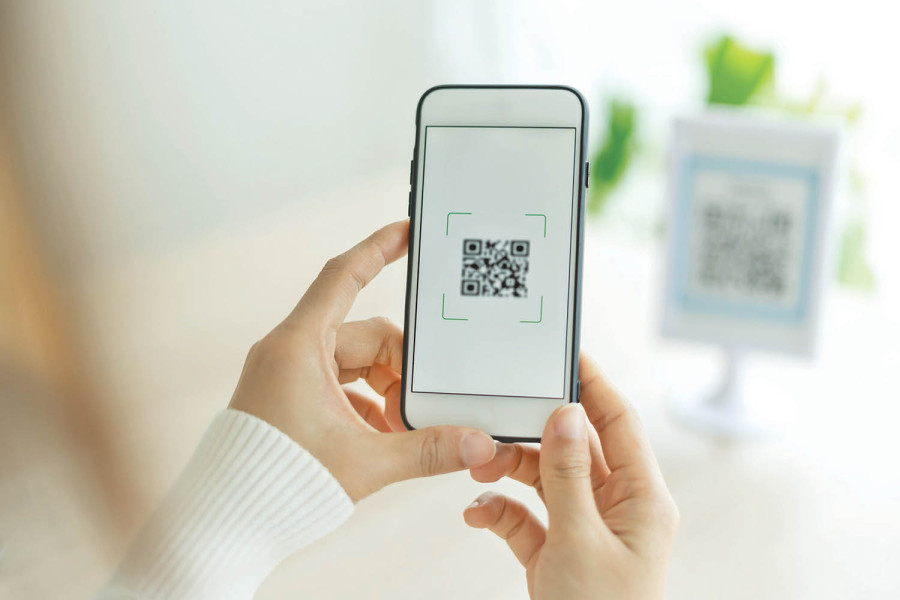
UPI, or Unified Payments Interface, is India’s digital payment system for sending money directly between bank accounts. For Indian visitors in Nepal, it removes much of the need to withdraw cash or exchange currency before travelling. The phone and banking app handle the payment request through a QR code. At Pashupatinath, NPCI International chief Ritesh Shukla used his Indian Google Pay app to scan a Fonepay QR code. The app debited his Indian bank account, while the Nepalese merchant received payment through the connected payment network. The tourist therefore used a familiar Indian payment method in Nepal. UPI QR payments have been available to Indian visitors in Nepal since March 2024. They can now scan codes at more than two million merchants. The article does not explain the precise exchange-rate or fee calculation, but the central benefit is direct, phone-based payment without carrying Nepalese cash.
Based on reporting by Kathmandu Post Nepal
What is UPI, and how does scanning a QR code let an Indian tourist pay directly from an Indian bank account in Nepal?
UPI, or Unified Payments Interface, is India’s digital payment system for sending money directly between bank accounts. For Indian visitors in Nepal, it removes much of the need to withdraw cash or exchange currency before travelling. The phone and banking app handle the payment request through a QR code.
At Pashupatinath, NPCI International chief Ritesh Shukla used his Indian Google Pay app to scan a Fonepay QR code. The app debited his Indian bank account, while the Nepalese merchant received payment through the connected payment network. The tourist therefore used a familiar Indian payment method in Nepal.
UPI QR payments have been available to Indian visitors in Nepal since March 2024. They can now scan codes at more than two million merchants. The article does not explain the precise exchange-rate or fee calculation, but the central benefit is direct, phone-based payment without carrying Nepalese cash.
Where can Indian visitors use UPI in Nepal, and what kinds of things are they buying?
UPI is spreading beyond tourist landmarks into ordinary daily spending. Indian visitors can use QR payments at religious sites, restaurants, supermarkets, resorts, entertainment venues, retailers and service providers across Nepal. This matters because travel spending no longer depends as heavily on finding an ATM or exchanging cash.
The article lists offerings at Pashupatinath, meals at KFC and Pizza Hut, and visits to Chandragiri Hills, The Cliff, LOD and Catwalk. Visitors also shop at Bhat-Bhateni, Big Mart and SalesBerry. Other payments cover Drishti Eye Hospital, handicrafts and souvenirs. Around Pashupatinath, nearby rudraksha shops, hotels, eateries and guesthouses also see QR activity.
These examples show that Indian tourists combine religious travel with leisure, sightseeing, accommodation and shopping. UPI is therefore becoming part of the wider tourism economy, not merely a way to make small temple donations.
How large is this trend: how many Indian tourists visit Nepal, how many merchants accept UPI, and what share of visitors do Indians represent at places such as Pashupatinath and Chandragiri Hills?
The trend is large, but Nepal’s official visitor count is incomplete. In 2025, Nepal recorded 1.162 million foreign tourists, including 293,000 Indians who arrived by air. Indians represented about 25 percent of all foreign tourist arrivals. Road crossings are not systematically recorded, so the actual number of Indian visitors is considerably higher.
UPI data shows where this audience spends. Indian visitors can scan QR codes at more than two million merchants across Nepal. At Pashupatinath, Indians made up about 60 percent of visitors during the previous six months. At Chandragiri Hills, they accounted for about 29 percent of visitors, with the attraction receiving more than 2,500 people daily on average.
These figures show strong concentration at major attractions and a broad merchant footprint. Indian arrivals peaked at Chandragiri from mid-March to mid-June, especially among visitors from Uttar Pradesh and Bihar. Digital payments make this expanding market easier to serve.
What changes for tourists, businesses and Nepal’s tourism industry when visitors can pay digitally instead of exchanging cash?
For tourists, QR payments make spending faster and more familiar. An Indian visitor can use a phone and an existing payment app instead of withdrawing cash in India and exchanging currency before flying. This was the problem Anujeet Verma described as cumbersome and time-consuming on his earlier trip.
For businesses, accepting QR payments can make it easier to serve Indian customers at temples, restaurants, retailers, hotels and attractions. Pashupatinath’s surrounding rudraksha shops, eateries, guesthouses and hotels are already seeing visible QR activity. The same pattern appears at supermarkets, hospitals, resorts and entertainment venues. More payment locations can help visitors spend beyond one destination.
For Nepal’s tourism industry, the system connects religious travel with shopping, sightseeing, nightlife and accommodation. It may support wider visitor spending and reduce friction for India’s large market. The article records growing use, but it does not quantify additional sales, business costs or the overall economic effect.
How do NPCI International, Nepal’s Fonepay network, Indian banks and apps such as Google Pay work together to make a cross-border payment possible?
The cross-border payment involves several layers. NPCI International operates India’s international payments network and enables UPI to work outside India. Fonepay provides the Nepalese QR network used by participating merchants. An Indian bank holds the customer’s account, while an app such as Google Pay provides the payment interface.
Ritesh Shukla demonstrated the process at Pashupatinath on August 18. He scanned a Fonepay QR code and used his Indian Google Pay app. The app debited his Indian bank account, showing how an Indian customer and a Nepalese merchant can transact through linked payment systems.
The article confirms the participants and the transaction, but does not describe the detailed routing, settlement timetable, exchange rate or fee split. In practical terms, the networks must authenticate the customer, communicate the payment instruction, and pass value to the merchant’s Nepalese payment account. Their cooperation makes the familiar UPI experience available abroad.
Why might Indian tourists still use cash, cards or currency exchange in Nepal even when UPI is available?
UPI is convenient, but it is not universal or guaranteed to work every moment. A visitor may still need cash where a merchant has no compatible QR code, where mobile connectivity is weak, or where a phone battery, app or bank service fails. Road travellers and visitors to remote areas may encounter fewer participating merchants than tourists in major destinations.
Cash can also suit small informal purchases or situations where a merchant prefers notes. Cards may remain useful for deposits, hotels or businesses that already process card payments. A traveller might also exchange currency to control spending, avoid a payment limit, or keep a backup method. These are practical reasons rather than patterns quantified in the article.
The article shows why UPI is attractive: Verma avoided carrying cash, and Shukla paid at Pashupatinath from his Indian bank account. Yet it does not report UPI’s coverage gaps, failure rates, fees or limits. Those details would determine how often visitors choose UPI over cash, cards or exchange.
How do QR payments move money between two countries, and how are currency conversion, payment settlement and fees handled in a cross-border transaction?
In a cross-border QR payment, the customer scans a merchant’s code and approves a payment in an Indian app. The customer’s bank authorises the debit, while connected payment networks communicate with the Nepalese merchant’s payment provider. The merchant is then credited through the Nepalese side of the arrangement. This is the basic mechanism behind the transaction described.
Currency conversion is normally handled within the linked banking and payment arrangements. The customer may see an Indian-rupee amount, while the merchant receives Nepalese rupees. Banks or payment providers calculate the exchange rate and reconcile the two currencies during settlement. Fees, if charged, can be divided among banks, networks, apps or merchants, depending on their agreements.
The article does not provide those operational details. It only records that Shukla’s Indian Google Pay app debited his Indian bank account after scanning a Fonepay QR code. Therefore, the exact rate, settlement timing and fee structure cannot be established from the source.
Key Facts:
📌 UPI has enabled Indian visitors to pay by scanning QR codes in Nepal since March 2024.
📌 An Indian Google Pay app debited an Indian bank account at Pashupatinath.
📌 More than two million Nepalese merchants accept UPI QR payments.
📌 UPI payments cover religious sites, restaurants, retailers, resorts and nightlife venues.
📌 Indian visitors use UPI at KFC, Pizza Hut and Chandragiri Hills.
📌 Spending also includes hospitals, handicrafts, souvenirs and temple offerings.
📌 Nepal received 293,000 Indian air arrivals in 2025.