News · Defence & Security
West Bank: Almost 20 Israeli settler attacks target Palestinians in day of mass violence
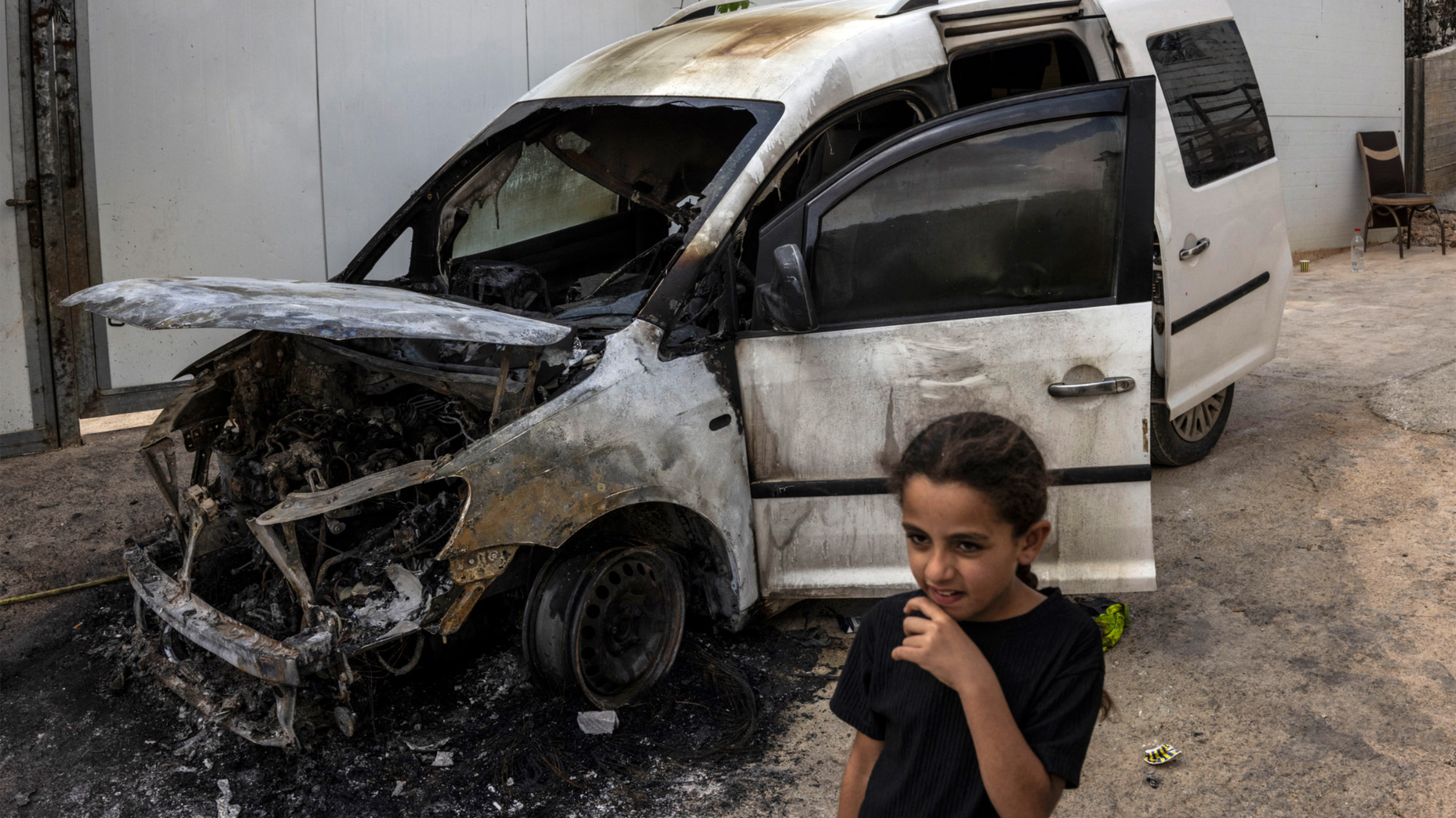
The reported violence covered both people and property. Settlers attacked olive harvesters, burned trees and vehicles, stole crops and livestock, damaged vehicles, and assaulted Palestinian residents. The incidents mattered because they struck communities during the olive harvest, a crucial period for household income and land use. Examples came from many parts of the West Bank. In Tell, settlers burned a vehicle during an assault on farmers. In Qusra, they uprooted more than 50 olive trees. Harvesters were attacked in Jurish, Beita, An-Nakura, Birzeit, Deir Ibzi and Fara'ata. Other incidents included gunfire in Deir Ballut, a wounded farmer in Kafr ad-Dik, and an attack involving dogs in Birin. The reported locations also included Ein Qiniya, Yabrud, Sarada and Al-Rayhan. In Yabrud, settlers allegedly beat a man and his son and stole their vehicle. The commission said such attacks increasingly restrict Palestinians' access to their land and ability to cultivate it.
Based on reporting by Middle East Eye
What kinds of attacks against Palestinians were reported across the West Bank, and where did they occur?
The reported violence covered both people and property. Settlers attacked olive harvesters, burned trees and vehicles, stole crops and livestock, damaged vehicles, and assaulted Palestinian residents. The incidents mattered because they struck communities during the olive harvest, a crucial period for household income and land use.
Examples came from many parts of the West Bank. In Tell, settlers burned a vehicle during an assault on farmers. In Qusra, they uprooted more than 50 olive trees. Harvesters were attacked in Jurish, Beita, An-Nakura, Birzeit, Deir Ibzi and Fara'ata. Other incidents included gunfire in Deir Ballut, a wounded farmer in Kafr ad-Dik, and an attack involving dogs in Birin.
The reported locations also included Ein Qiniya, Yabrud, Sarada and Al-Rayhan. In Yabrud, settlers allegedly beat a man and his son and stole their vehicle. The commission said such attacks increasingly restrict Palestinians' access to their land and ability to cultivate it.
What is the occupied West Bank, and who are Israeli settlers?
The West Bank is a Palestinian territory captured and controlled by Israel since 1967, but it is not internationally recognized as part of Israel. “Occupied” describes a situation in which a foreign power exercises effective control over territory without acquiring sovereignty over it. The article also refers to East Jerusalem in the same context.
Israeli settlers are Israeli civilians who live in settlements established in the West Bank and East Jerusalem. The article reports that settlers carry out attacks on Palestinian towns and villages, including arson, vandalism, physical assaults and forced displacement. It also says these attacks often occur under Israeli military protection.
This distinction matters because settlers and the Israeli military are different actors, although the article reports cooperation or protection at several locations. The Palestinian commission says the attacks create pressure intended to prevent Palestinians from benefiting from their land and push them to abandon it.
How widespread was the violence, both on this day and compared with previous years?
The violence was widespread both geographically and numerically. Field reports recorded at least 19 settler attacks by midday on Friday, across many West Bank communities. The incidents included injuries, shootings, arson, theft, beatings and destruction of olive trees, crops, livestock and vehicles.
The broader figures show a sustained pattern. Ocha recorded 51 attacks causing Palestinian casualties or property damage between 15 and 21 September. From the beginning of January through the end of September, more than 1,600 such attacks were recorded. The article says this equals an average of 6.7 attacks per day.
That pace exceeded the five-per-day average reported for 2025, when 1,836 attacks were recorded. The article gives about 1,500 attacks in 2024 and 853 in 2022. It presents the escalation as especially serious during the olive harvest and as part of a wider rise in settler violence.
Why is the olive harvest especially important to Palestinian families and communities?
Olive harvesting matters because it provides vital income for many Palestinian families. It is also a central activity for agricultural communities across the West Bank. The harvest typically takes place around October, making this period especially important for household finances and seasonal work.
The reported attacks directly target that activity. Settlers assaulted harvesters in several villages, burned trees, and uprooted more than 50 olive trees in Qusra. Ocha also reported that at least 800 olive, fruit and palm trees were damaged, uprooted or burned during one week in September. Such destruction can reduce the harvest available to families.
The consequences extend beyond one season. The Palestinian commission warned that repeated attacks make it harder for people to access and cultivate their land. It said targeting the harvest violates rights to land, work and security. If access remains dangerous, families may lose income and face pressure to abandon agricultural property.
What role do Israeli military forces and Israeli government policies reportedly play in enabling or protecting settler attacks?
The article describes Israeli military forces and government policies as factors that can enable or protect settler violence. The Palestinian commission said occupation forces participated in or protected attacks at several locations. It argued that this creates an environment of coercion, making it harder for Palestinians to use their land safely.
The UN Independent International Commission of Inquiry reported that the Israeli government supports attacks through financial backing, logistical assistance and military protection. Its chair, Srinivasan Muralidhar, said settler violence was the direct outcome of policies that support, enable and protect settlers. The article also says attacks often occur under military protection.
These reports suggest that the problem is not limited to individual assaults. Protection, resources and lack of effective restraint can allow repeated attacks to continue. The article presents this system as contributing to forced displacement, reduced land access and pressure on Palestinians to abandon their property.
What happens to Palestinian livelihoods, land access and ability to remain in their communities when olive trees, crops, livestock and vehicles are attacked?
Attacks on trees, crops and livestock strike the foundations of Palestinian rural livelihoods. Destroyed olive trees can reduce future harvests, while stolen crops and sheep remove income immediately. Damaged or stolen vehicles can also prevent farmers from reaching fields, transporting goods or moving safely between communities.
The article gives several examples. Settlers uprooted more than 50 olive trees in Qusra, stole sheep in Ein Qiniya, and stole a vehicle after beating a Palestinian man and his son in Yabrud. Ocha reported damage to at least 800 olive, fruit and palm trees in one week. These acts affect both current earnings and future production.
The Palestinian commission warned that repeated attacks make it increasingly difficult to access and cultivate land during harvest. It said coercion is intended to stop Palestinians benefiting from their property and push them to abandon it. Over time, that can weaken community ties, reduce employment and encourage displacement.
What does military occupation mean under international law, and how can control over land and movement shape Palestinians' rights to work and cultivate their property?
Under international humanitarian law, military occupation exists when a foreign power exercises effective control over territory without gaining lawful sovereignty over it. The occupying power must protect civilians and maintain public order, while the territory's people retain protections under occupation law. The article identifies the West Bank as occupied territory.
Control over roads, checkpoints, security and access permits can shape whether farmers reach fields, harvest crops or transport goods. If settlers attack people or property and military forces participate in or protect attacks, Palestinians may be unable to use land safely. The article says this occurred during the olive harvest.
The commission described the pattern as coercion designed to prevent Palestinians benefiting from their land and push them to abandon it. It said targeting the harvest violates rights to land, work and security. Thus, occupation affects rights not only through formal rules, but also through practical control over movement and protection.
Key Facts:
📌 At least 19 settler attacks were recorded by midday.
📌 More than 50 olive trees were uprooted in Qusra.
📌 Settlers attacked farmers and vehicles across numerous West Bank communities.
📌 The occupied West Bank is Palestinian territory under Israeli control.
📌 Israeli settlers are Israelis living in West Bank settlements.
📌 The article also describes attacks in occupied East Jerusalem.
📌 At least 19 attacks were reported by midday on Friday.