News · International Relations
President Erdoğan slams global silence on Gaza, urges accountability
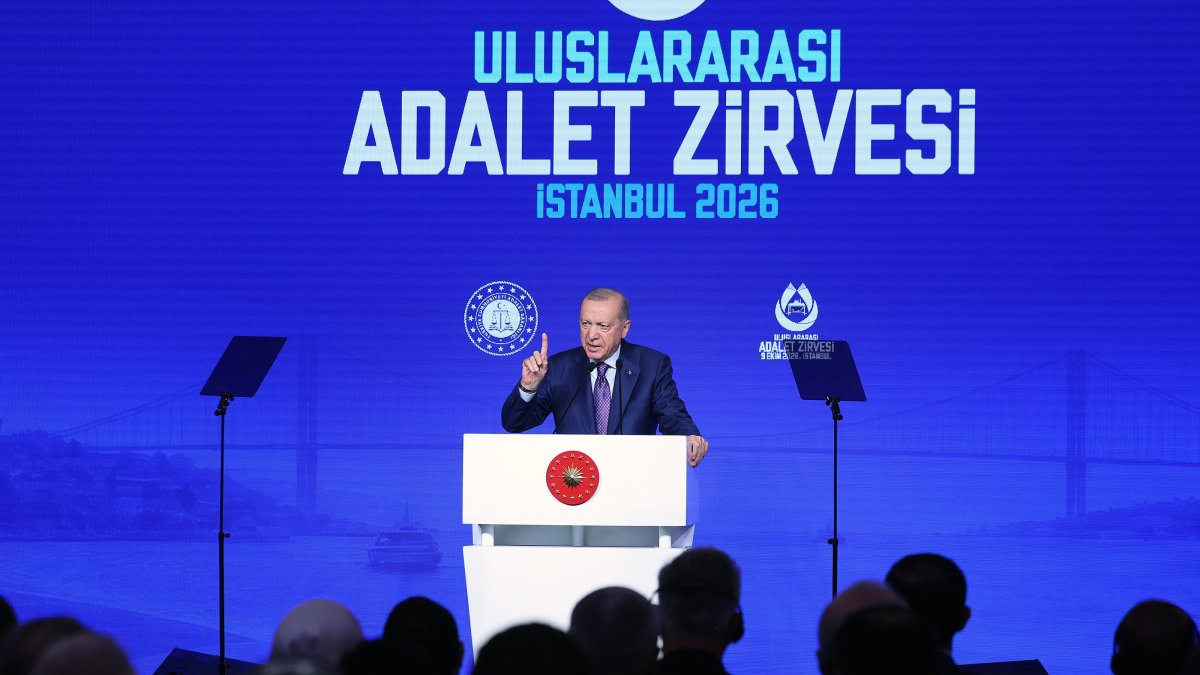
Erdoğan accused the international community of failing to respond effectively to Israel's actions in Gaza. He said courts, sanctions systems, and other enforcement mechanisms had not delivered accountability for civilian deaths, destruction, or alleged violations of international law. He described this failure as a test of humanity and legal commitment. He pointed to Gaza's reported death toll, destroyed schools and hospitals, and thousands of injured children. He also accused Israel of repeatedly violating a cease-fire established with Türkiye's support. Since that cease-fire began on October 10, 2025, Gaza authorities and international nongovernmental organizations reported 1,454 additional deaths and 5,090 injuries. Erdoğan argued that legal decisions and international agreements were increasingly being ignored. He highlighted Türkiye's application to intervene in the genocide case at the International Court of Justice, its trade suspension with Israel, and legal action connected to the Global Sumud Flotilla. He said stronger enforcement was needed to make accountability meaningful.
Based on reporting by Daily Sabah Turkey
What exactly did President Erdoğan accuse the international community, courts, and sanctions systems of failing to do in Gaza?
Erdoğan accused the international community of failing to respond effectively to Israel's actions in Gaza. He said courts, sanctions systems, and other enforcement mechanisms had not delivered accountability for civilian deaths, destruction, or alleged violations of international law. He described this failure as a test of humanity and legal commitment.
He pointed to Gaza's reported death toll, destroyed schools and hospitals, and thousands of injured children. He also accused Israel of repeatedly violating a cease-fire established with Türkiye's support. Since that cease-fire began on October 10, 2025, Gaza authorities and international nongovernmental organizations reported 1,454 additional deaths and 5,090 injuries.
Erdoğan argued that legal decisions and international agreements were increasingly being ignored. He highlighted Türkiye's application to intervene in the genocide case at the International Court of Justice, its trade suspension with Israel, and legal action connected to the Global Sumud Flotilla. He said stronger enforcement was needed to make accountability meaningful.
How many Palestinians does the article say have been killed in Gaza, and how many additional deaths and injuries have been reported since the cease-fire began?
The article gives a cumulative Palestinian death toll of more than 74,000 in Israel's war in Gaza. It says most of those killed were women and children. This figure is presented as the total after three years of conflict and includes deaths reported by the Gaza Health Ministry.
The article separately reports what happened after the cease-fire took effect on October 10, 2025. Gaza authorities and international nongovernmental organizations said Israeli actions had killed 1,454 Palestinians and injured 5,090 others since then. These figures describe additional casualties, not a replacement for the overall toll.
The numbers show why Erdoğan described the cease-fire as repeatedly violated and Gaza's conditions as unlivable. The article also reports widespread destruction of schools, universities, hospitals, and places of worship. It says thousands of children suffered life-changing injuries, while Gaza remained cut off from the rest of the world.
What are the International Court of Justice, the United Nations Security Council, and international sanctions, and how do their roles differ?
The International Court of Justice, or ICJ, is the United Nations' main court for legal disputes between countries and certain legal questions. The United Nations Security Council is a political body responsible for international peace and security. International sanctions are restrictions, such as trade or financial measures, designed to pressure a state, organization, or individual.
These tools work differently. The ICJ issues legal rulings in cases within its jurisdiction. The Security Council can adopt resolutions and, in some circumstances, authorize measures or sanctions. Sanctions are imposed by countries or international bodies and can limit trade, banking, travel, or access to resources. They are not court verdicts.
The article connects all three areas to Gaza. Erdoğan said courts and sanctions mechanisms had failed to respond adequately. He also called for United Nations reform, saying the world is bigger than the Security Council's five permanent members. Their political influence can shape whether collective action is adopted or blocked.
What does it mean legally for Türkiye to intervene in the genocide case against Israel at the International Court of Justice?
Legally, intervention means a country seeks permission to participate in an existing case before the International Court of Justice. Türkiye could present its interpretation of relevant legal rules and explain how it believes the genocide convention applies. It would not automatically become the main claimant or respondent, and intervention would not itself decide the case.
The key mechanism is a formal application to the court. The ICJ must consider whether the legal requirements for intervention are met. If permitted, Türkiye could submit written arguments and possibly take part in later proceedings within the court's rules. The article specifically says Türkiye applied to intervene; it does not report a final decision on that request.
Erdoğan presented the application as part of Türkiye's wider accountability effort. He also cited suspended trade with Israel and legal measures involving people accused of attacking the Global Sumud Flotilla. These actions seek pressure or legal participation, but they do not replace an ICJ judgment.
What practical consequences can a court ruling, a cease-fire agreement, or trade sanctions have in a war—and what can happen when they are ignored?
A court ruling can clarify legal responsibility and require parties to follow legally binding orders within the court's authority. A cease-fire can pause hostilities, protect civilians, and open space for aid or negotiations. Trade sanctions can restrict commerce and raise the economic cost of conduct a country is accused of carrying out.
Their practical effect depends on enforcement. Courts rely on states and international institutions to comply. Cease-fires need monitoring and consequences for violations. Sanctions require governments, banks, companies, and border authorities to apply restrictions. None works fully if states ignore obligations or other countries do not enforce them.
The article says Erdoğan accused Israel of repeatedly violating a cease-fire supported by Türkiye. It reports 1,454 Palestinian deaths and 5,090 injuries since the cease-fire began. He also said courts and sanctions systems had failed to respond adequately. He warned that ignored rules weaken confidence in international justice.
Besides court cases and sanctions, what other tools can countries use to pursue accountability across borders, such as extradition, diplomatic pressure, or investigations?
Accountability does not depend only on international courts or sanctions. Countries can investigate alleged crimes, share evidence, prosecute suspects under national law, seek extradition, and use diplomatic pressure. They can also suspend relations or trade, support fact-finding bodies, and cooperate on arrests and financial tracking.
The main mechanism is cooperation across borders. A suspect who leaves one country may be located through international alerts or other search systems. The country where that person is found can arrest and extradite them if legal conditions are met. Prosecutors can then examine evidence, while courts decide whether charges are proved. Cooperation helps prevent safe havens.
Erdoğan said Türkiye secured the extradition of 294 individuals during the first nine months of 2026. He said another 736 people were brought into Türkiye through various international search mechanisms. He also cited trade suspension and legal measures concerning the Global Sumud Flotilla as accountability tools.
Why is international law difficult to enforce when there is no single world government, and how does power in the five permanent seats of the U.N. Security Council shape that problem?
International law is difficult to enforce because countries remain the main authorities over their own territory and institutions. There is no single world government that automatically arrests suspects, enforces every court order, or compels all states to obey. Enforcement therefore depends on national governments, cooperation, political will, and available international mechanisms.
The Security Council adds a power imbalance. Its five permanent members hold special status and can block substantive council decisions through vetoes. This can make unified action harder when major powers disagree. The council may still debate crises, but political disagreement can limit resolutions, sanctions, or other collective measures.
Erdoğan called for United Nations reform and said “the world is bigger than five,” referring to the permanent members. He argued that legal principles and court rulings were increasingly disregarded. He linked this problem to Gaza and other conflicts, including Russia-Ukraine, Lebanon, Yemen, Somalia, and Sudan.
Key Facts:
📌 - Erdoğan said international mechanisms failed to uphold justice in Gaza.
📌 - He called the crisis a test of humanity and legal commitment.
📌 - Türkiye applied to intervene in the genocide case against Israel.
📌 - More than 74,000 Palestinians were reported killed in Gaza.
📌 - 1,454 Palestinians were reported killed after the cease-fire began.
📌 - 5,090 people were reported injured after the cease-fire began.
📌 - The ICJ handles legal disputes between states.