News · Space
October’s night sky is full of cosmic tricks and treats
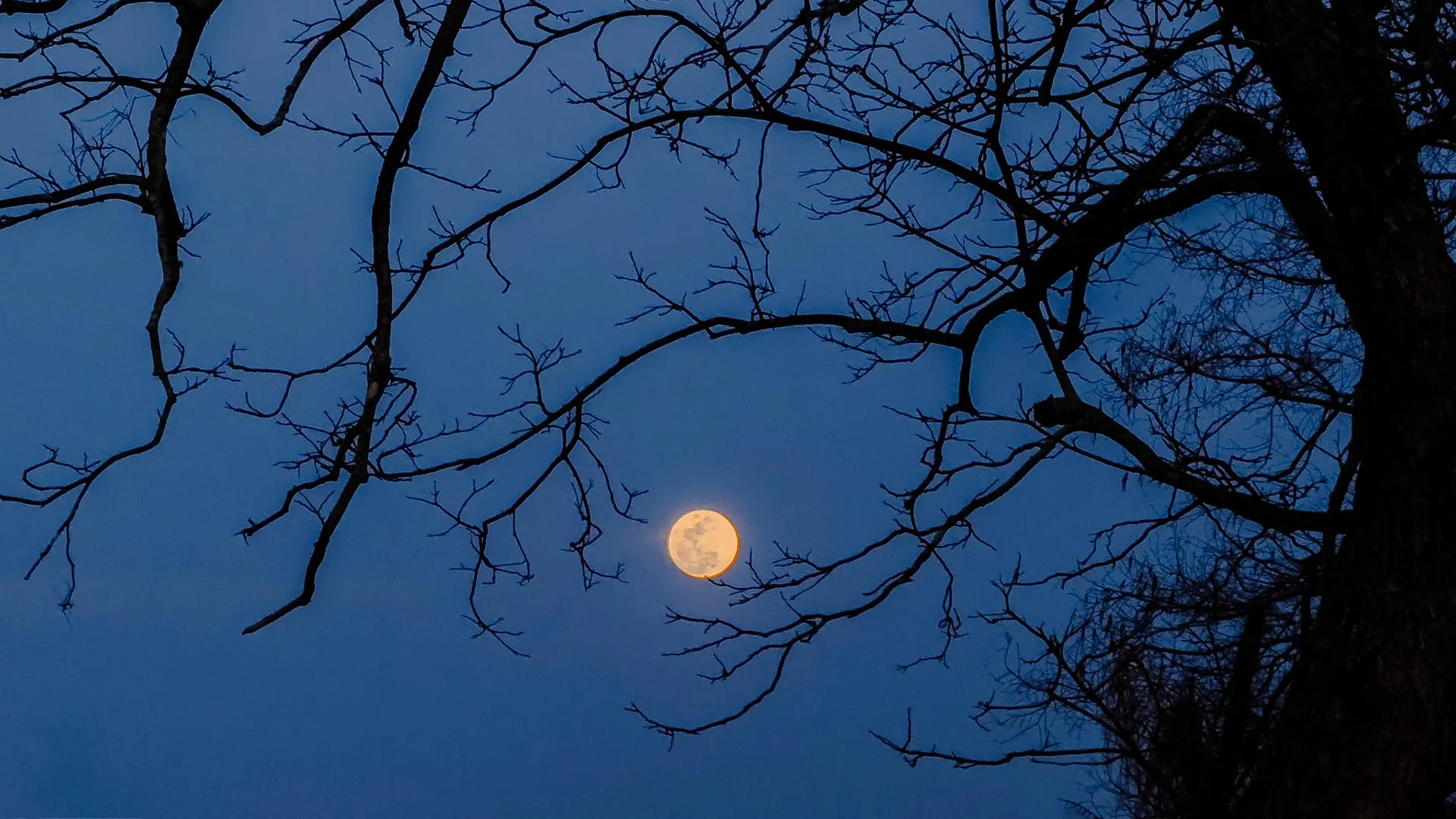
NASA highlights four October sky events: Jupiter slipping behind the Moon on October 6, the Draconid meteor shower peaking October 8 and 9, the Orionid meteor shower peaking October 21, and the Hunter’s Moon appearing just before Halloween. Together, they offer several chances to observe the sky during autumn’s longer nights. The Jupiter event occurred before sunrise in parts of eastern and central North America. The Draconids were expected to be visible from about 9 p.m. EDT into early October 9. The Orionids peak on October 21, while the Hunter’s Moon provides a bright full-Moon display near Halloween. Viewing depends on location, darkness, and Moon brightness. The Draconids benefit from a Moon approaching its new phase. The Orionids may improve after the Moon sets around 3 a.m. local time. Many of these events can be enjoyed without special equipment, although binoculars can add detail.
Based on reporting by ScienceDaily
What four celestial events does NASA highlight for October, and when can they be seen?
NASA highlights four October sky events: Jupiter slipping behind the Moon on October 6, the Draconid meteor shower peaking October 8 and 9, the Orionid meteor shower peaking October 21, and the Hunter’s Moon appearing just before Halloween. Together, they offer several chances to observe the sky during autumn’s longer nights.
The Jupiter event occurred before sunrise in parts of eastern and central North America. The Draconids were expected to be visible from about 9 p.m. EDT into early October 9. The Orionids peak on October 21, while the Hunter’s Moon provides a bright full-Moon display near Halloween.
Viewing depends on location, darkness, and Moon brightness. The Draconids benefit from a Moon approaching its new phase. The Orionids may improve after the Moon sets around 3 a.m. local time. Many of these events can be enjoyed without special equipment, although binoculars can add detail.
What is a lunar occultation, and how did the Moon temporarily hide Jupiter?
A lunar occultation is an alignment in which the Moon moves between Earth and a more distant object. The Moon temporarily blocks that object from view. It is an ordinary line-of-sight effect, despite the mysterious sound of the word “occultation.”
On October 6, Jupiter appeared to slip behind the Moon’s slender crescent before sunrise. It stayed hidden for approximately an hour, then reappeared from behind the lunar edge. Observers could see the event with their eyes, while binoculars offered more detail. Optical equipment might also reveal Jupiter’s moons disappearing and returning.
The event was not visible everywhere. Viewing opportunities covered parts of eastern and central North America, and timing varied by location. In some places, it occurred around 4 a.m. EDT. This shows why precise location matters for eclipses, occultations, and other alignment-based sky events.
How many meteors might an observer see during the Draconid and Orionid showers, and why does the number vary?
Meteor-shower rates are estimates, not guarantees. The Draconids are generally modest, producing only a handful of visible meteors each hour. NASA estimates that suburban observers may see about 3 to 6 Orionids per hour, while darker locations can reveal somewhat more.
The main reason numbers vary is sky quality. Bright city lights wash out faint meteors, while dark locations make more streaks visible. The Moon also matters. Strong moonlight can hide dim meteors, reducing the number an observer detects even when particles are entering the atmosphere.
Timing and weather can affect the experience too, although the article emphasizes location and moonlight. The Draconids and Orionids are therefore better described by typical rates than fixed totals. A patient observer away from city lights has a better chance of seeing the shower’s fainter members.
How do moonlight, moon phase, and the time of night affect the visibility of these meteor showers?
Moonlight changes how many meteors the eye can detect. A dark sky makes faint streaks stand out, while a bright Moon washes them out. The Draconids benefit from a Moon approaching its new phase, so little moonlight should interfere with their October peak.
The Orionids face less favorable conditions. Their peak arrives under a waxing gibbous Moon, with more than half the lunar surface illuminated. That brightness can hide some of the shower’s dimmer meteors. After the Moon sets at approximately 3 a.m. local time, the sky becomes darker.
Time of night also changes the view. The Draconids can be watched soon after nightfall, so observers need not wait until dawn. For the Orionids, the best opportunity comes later, after moonset, when Orion is higher in the sky. Darkness and sky position then work together.
Why can the Draconids be seen soon after nightfall, while the Orionids are often better viewed after midnight?
The Draconids offer an early-evening opportunity. NASA notes that many meteor showers are best after midnight, but the Draconids can produce shooting stars soon after nightfall. That makes them more accessible to observers who do not want to remain awake until dawn.
The Orionids have a different practical advantage later in the night. Their waxing gibbous Moon can brighten the sky and hide faint meteors. After the Moon sets at approximately 3 a.m. local time, darkness improves. Orion, the constellation that gives the shower its name, is also higher in the sky then.
This difference comes from viewing geometry and sky brightness, not from the meteors changing behavior during one night. Draconid watchers should begin around 9 p.m. EDT on the peak evening. Orionid watchers may get better results in the hours before sunrise, especially from darker locations.
What is the Hunter’s Moon, and why did autumn traditions give October’s full Moon that name?
The Hunter’s Moon is the traditional name commonly given to the full Moon following the Harvest Moon, often occurring in October. Its name is associated with autumn hunting, when people traditionally prepared meat and supplies before winter. The provided article excerpt does not explain that historical naming tradition.
In the article, October’s Hunter’s Moon is presented as a glowing full Moon arriving just before Halloween. A full Moon occurs when the Moon’s visible face is fully illuminated, making it especially conspicuous in the evening sky. The article identifies it as October’s final major celestial highlight.
The source text ends just as it begins describing this event, so it gives no additional viewing time or historical detail. Based on the article, its importance is mainly visual: a bright full Moon adds a prominent late-month spectacle after the two meteor showers and Jupiter’s occultation.
How do tiny particles from Halley’s Comet become the bright streaks we call meteors when Earth passes through their trail?
The Orionid meteor shower comes from material left behind by Halley’s Comet during its journeys through the solar system. These fragments are tiny, but they can create visible flashes when Earth encounters their trail. The event matters because it turns ancient comet debris into a predictable annual sky display.
As Earth travels through the debris stream, particles enter the atmosphere at tremendous speeds. They heat up and burn as they pass through the air, producing bright streaks of light. Those streaks are the meteors observers see. The meteors appear to radiate from the region of Orion, giving the shower its name.
The Orionids peak on October 21. NASA estimates that suburban observers may see about 3 to 6 meteors per hour, with somewhat more possible under darker skies. A waxing gibbous Moon may hide faint examples, but viewing can improve after moonset around 3 a.m.
Key Facts:
📌 Jupiter disappeared behind the Moon on October 6.
📌 The Draconids peaked October 8 and 9.
📌 The Orionids peaked October 21, followed by the Hunter’s Moon.
📌 A lunar occultation occurs when one object conceals another.
📌 The Moon hid Jupiter for approximately an hour.
📌 The event was visible across parts of eastern and central North America.
📌 The Draconids typically produce only a handful of visible meteors hourly.