News · Environment & Climate
South Baltimore Residents Grapple With Contradictory Incinerator Decisions
South Baltimore saw two sharply different government decisions about major incinerators within just over a week. One decision reduced pollution by ending operations at a medical-waste facility. The other could extend garbage deliveries to WIN Waste, also called BRESCO, for another decade. On Oct. 1, Maryland regulators announced a settlement requiring the medical-waste incinerator to stop burning waste. The facility had repeatedly violated pollution rules and was fined $1.75 million in 2023. That penalty was described as one of the largest in an environmental criminal case by the state attorney general’s office. That same period, Baltimore County approved a contract that could send about 215,000 tons of garbage annually to WIN Waste for as long as 10 more years. The decision matters because the facility is a major pollution source, and MDE must still decide whether to renew its air permit.
Based on reporting by Inside Climate News
What two decisions about South Baltimore incinerators were made at roughly the same time?
South Baltimore saw two sharply different government decisions about major incinerators within just over a week. One decision reduced pollution by ending operations at a medical-waste facility. The other could extend garbage deliveries to WIN Waste, also called BRESCO, for another decade.
On Oct. 1, Maryland regulators announced a settlement requiring the medical-waste incinerator to stop burning waste. The facility had repeatedly violated pollution rules and was fined $1.75 million in 2023. That penalty was described as one of the largest in an environmental criminal case by the state attorney general’s office.
That same period, Baltimore County approved a contract that could send about 215,000 tons of garbage annually to WIN Waste for as long as 10 more years. The decision matters because the facility is a major pollution source, and MDE must still decide whether to renew its air permit.
What is a waste incinerator, and what does an air pollution permit allow it to do?
A waste incinerator is an industrial facility that burns garbage. Burning can reduce the amount of solid waste needing disposal, but it does not make waste disappear. The process creates air emissions and leaves ash that must be handled afterward. This matters because nearby residents may experience pollution from both stages.
An air pollution permit is a government authorization for a facility to operate under specified pollution-control requirements. It typically identifies allowed emissions, monitoring duties, operating conditions and enforcement consequences. The source specifically says WIN Waste’s permit is due for renewal and that Maryland’s environmental agency has made a tentative determination to renew it.
That renewal is not presented as final in the source. MDE still has to decide whether WIN Waste can continue operating under a renewed permit. Residents are urging the agency not to renew it, citing asthma, respiratory illness, industrial pollution and the facility’s ash disposal.
How much garbage could Baltimore County continue sending to the WIN Waste facility each year, and for how long?
Baltimore County approved a contract that could give WIN Waste, also known as BRESCO, a long-term stream of municipal garbage. The arrangement could continue for as long as 10 more years. Its scale matters because the facility already operates in a heavily industrialized part of South Baltimore.
The contract could send roughly 215,000 tons of garbage to WIN Waste each year. That waste would be burned at the city’s largest trash incinerator, whose Baltimore-branded smokestack is a prominent landmark beside Interstate 95. Burning also produces ash, which is disposed of at the Quarantine Road Landfill in South Baltimore.
The contract does not by itself settle whether the facility may operate under environmental rules. WIN Waste’s air pollution permit is due for renewal, and MDE must make that decision. Residents worry that the contract could prolong pollution and ash burdens while the permit process continues.
What health and environmental consequences can result from emissions and ash from a municipal waste incinerator?
Municipal waste incinerators can affect health through air emissions and the ash left after burning. The source links South Baltimore residents’ concerns to asthma and other respiratory illnesses. A recent study estimated that WIN Waste’s emissions impose nearly $54 million in health damages each year, with much of that burden falling on nearby communities.
Ash creates a second environmental concern. Studies of municipal incinerator ash have identified contaminants including dioxins, lead and arsenic. WIN Waste sends its ash to the Quarantine Road Landfill in South Baltimore. Community researchers say they have not been able to independently test the ash, so they cannot determine its exact composition or contaminant levels.
These impacts add to pollution from dozens of industrial facilities surrounding South Baltimore. Residents describe daily exposure as a health and quality-of-life burden. MDE’s pending permit decision will determine whether WIN Waste can continue operating, while the contract could maintain its waste supply for up to 10 years.
Why is South Baltimore considered an environmentally overburdened community?
South Baltimore is considered environmentally overburdened because industrial pollution is concentrated around its communities. The source describes the area as historically overburdened and surrounded by dozens of industrial facilities. Residents have repeatedly raised concerns about the combined effects of these exposures, rather than viewing any single facility in isolation.
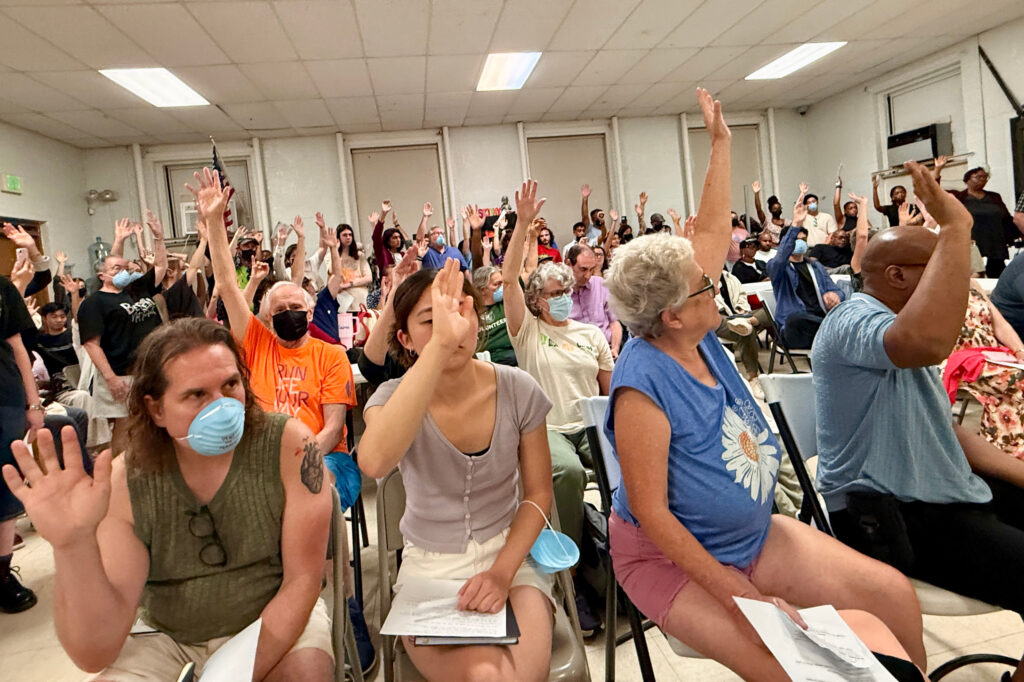
Curtis Bay illustrates that burden. Residents live near the WIN Waste trash incinerator, a medical-waste incinerator, the Quarantine Road Landfill and other industrial operations. At a public meeting, residents described asthma and other respiratory illnesses. One speaker said residents were paying “with our lungs” and “with our blood.”
Community organizations, environmental coalitions and Johns Hopkins researchers have advocated for reducing pollution and closing the medical-waste facility. That facility will stop burning waste under a state settlement. However, the possible continuation of WIN Waste operations means the broader burden remains. MDE’s permit decision is therefore especially important locally.
Which government bodies and officials decide whether WIN Waste can keep operating, and what roles do they play?
MDE has the direct regulatory power over WIN Waste’s continued operation because the facility’s air pollution permit is due for renewal. The source says MDE has already made a tentative determination to renew it, but the agency still must make its decision. Residents are asking MDE not to renew the permit.
Baltimore County has a different role. It approved the contract that could send roughly 215,000 tons of garbage annually to WIN Waste for up to 10 more years. That contract could support the facility’s operations, but it does not replace the state air-permit process. The article also identifies MDE Secretary Serena McIlwain among senior officials involved in environmental policy.
Other officials present at a nearby environmental event included Gov. Wes Moore, Comptroller Brooke Lierman and Maryland Energy Administration Director Kelly Speakes-Backman. The source does not assign them direct authority over the permit. Their presence shows the decision sits within wider state environmental policy debates.
How can cities manage their garbage without relying on large-scale incineration, and what trade-offs do those alternatives involve?
Cities can manage garbage through several approaches besides large-scale incineration. They can reduce waste at its source, reuse products, recycle materials, compost organic waste and send remaining trash to landfills. These approaches matter because they can reduce the amount of garbage requiring combustion, along with concerns about incinerator emissions and ash.
Each alternative has trade-offs. Recycling and composting require separate collection, sorting and markets for recovered materials. Waste reduction and reuse depend on changes by households, businesses and manufacturers. Landfills avoid incinerator emissions but require land and long-term management, and they can produce other pollution risks. These comparisons draw on established waste-management knowledge; the source does not evaluate the alternatives.
For South Baltimore, the dispute shows why waste policy is also an environmental-justice issue. WIN Waste could receive 215,000 tons yearly for up to 10 years, while nearby residents report health concerns. MDE’s permit decision will shape whether incineration remains part of the region’s waste system.
Key Facts:
📌 Maryland regulators ordered a violating medical-waste incinerator to stop burning waste.
📌 Baltimore County approved a potential decade-long contract with WIN Waste.
📌 MDE must decide whether to renew WIN Waste’s air permit.
📌 Incinerators burn garbage and produce both emissions and ash.
📌 An air permit authorizes operation under pollution-control conditions.
📌 MDE must decide whether WIN Waste’s permit is renewed.
📌 The contract could send roughly 215,000 tons of garbage yearly.