News · Social Issues
Protests, Clashes As South African Anti-Migrant Tensions Reignite
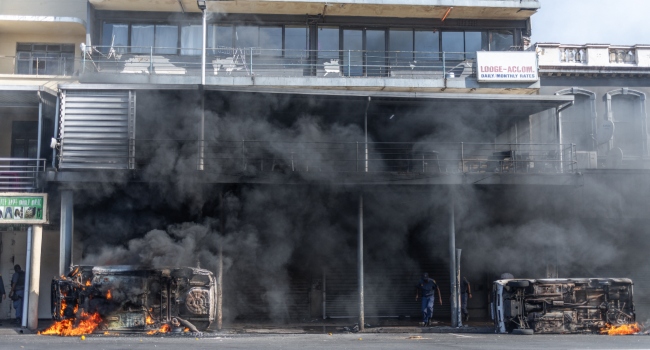
Violence broke out in Soweto, Johannesburg, and in Durban, a port city on South Africa’s east coast. South African protesters confronted foreign nationals as tensions over migration intensified. The clashes followed protests by movements campaigning against undocumented migrants. In Durban, an allegation that a foreign national assaulted a South African demonstrator triggered unrest. Protesters burned vehicles, attacked a foreign-run business, looted other shops, and set fire to a municipal building. Police used rubber bullets to disperse crowds and arrested three foreign nationals. Soweto saw at least 10 vehicles torched, with no injuries reported there. Small convenience stores, often run by migrants, were looted in both areas. The unrest shows how disputes involving individuals can quickly become broader attacks on foreign communities during periods of political and economic tension.
Based on reporting by Channels TV
What happened in Soweto and Durban, and which groups were involved in the clashes?
Violence broke out in Soweto, Johannesburg, and in Durban, a port city on South Africa’s east coast. South African protesters confronted foreign nationals as tensions over migration intensified. The clashes followed protests by movements campaigning against undocumented migrants.
In Durban, an allegation that a foreign national assaulted a South African demonstrator triggered unrest. Protesters burned vehicles, attacked a foreign-run business, looted other shops, and set fire to a municipal building. Police used rubber bullets to disperse crowds and arrested three foreign nationals.
Soweto saw at least 10 vehicles torched, with no injuries reported there. Small convenience stores, often run by migrants, were looted in both areas. The unrest shows how disputes involving individuals can quickly become broader attacks on foreign communities during periods of political and economic tension.
What is xenophobic violence, and why is it being used to describe attacks on foreign nationals in South Africa?
Xenophobic violence means violence, intimidation, or destruction aimed at people because they come from another country. It is different from an ordinary dispute because the target is treated as part of a foreign group. The article uses the term because foreign nationals and migrant-run shops were specifically attacked.
In Durban, an allegation involving one foreign national preceded wider violence. Protesters burned vehicles, attacked a business run by foreigners, and looted small stores. These shops are often operated by migrants and are described as particular targets during xenophobic unrest in South Africa.
The pattern matters because individual accusations can fuel collective attacks. South Africa has experienced periodic xenophobic violence for nearly two decades. Disputed claims that foreigners take scarce jobs and resources have helped drive resentment, alongside anger about undocumented migration and high unemployment.
How large was the immediate violence, in terms of vehicles burned, arrests, looting, and reported deaths?
The immediate violence involved substantial property damage but no deaths reported from the new clashes. Police recorded at least 14 vehicles burned in Durban and at least 10 torched in Soweto. Together, that means at least 24 vehicles were set alight.
Three foreign nationals were arrested in Durban. Protesters also looted small convenience stores and other businesses, including a business run by foreigners. Police used rubber bullets to disperse crowds, and a municipal building was set on fire. The article does not give a total number of looted shops or arrests beyond Durban’s three arrests.
The death figure belongs to earlier unrest, not the immediate incidents. Police said at least four foreign nationals were killed during weeks of previous violence. Some foreign governments reported a higher toll, so the article distinguishes the fresh clashes from that earlier death toll.
What did the court ruling change about who could access South Africa’s asylum system?
The court ruled that certain provisions of a government act on refugees were unconstitutional. Those provisions prevented some individuals from accessing South Africa’s asylum system on procedural grounds. One stated barrier affected people who had entered the country irregularly.
The change concerns access to the process, not the final outcome. A person previously blocked for a procedural reason could seek consideration through the asylum system. Officials would still need to assess whether the person qualified for protection under the relevant rules. The ruling therefore reopened a route to apply for some people.
This mattered immediately because hundreds went to government refugee centres after the decision. The government said the judgment did not automatically grant refugee status or permanent residence. It also remained committed to stronger border control, action against human smuggling, and faster deportations for people who do not qualify to stay.
Why did the ruling lead hundreds of people to visit refugee centres, and why did the government warn that it did not automatically grant refugee status or permanent residence?
The ruling led hundreds of people to visit government refugee centres because it removed certain procedural barriers to entering the asylum system. Some people who had been unable to access the process could now try to submit applications. The decision therefore created a sudden demand for asylum services.
The article notes that some visitors reportedly did not qualify for asylum because they had not faced persecution or other dangers in their home countries. That is the key mechanism: access to an application is separate from approval. Officials must still assess each person’s claim and eligibility.
The government warned against disinformation and stressed that the judgment did not automatically provide refugee status or permanent residence. It said it would continue border controls, efforts against human smuggling, and accelerated deportations of people who do not qualify to remain.
How have unemployment, competition for jobs and services, and upcoming local elections contributed to anti-immigrant protests?
Economic pressure has helped create an audience for anti-immigrant protests. South Africa’s unemployment rate is above 30 percent, and some people blame foreign nationals for competing for scarce jobs and resources. The article describes those claims as disputed, but they remain powerful in public debate.
Populist, anti-immigrant groups have organized demonstrations demanding that undocumented migrants leave. Complaints about illegal immigration grew before local government elections scheduled for November 4. Political timing can make migration a more visible campaign issue, especially when unemployment and access to services already cause frustration.
The protests had serious consequences. Weeks of demonstrations earlier in the year led tens of thousands of people to leave South Africa, including people repatriated by their governments. The unrest also killed at least four foreign nationals according to South African police and strained relations with other African countries.
What is the difference between an asylum seeker, a refugee, and an undocumented migrant, and why do countries control who may legally remain within their borders?
An asylum seeker is someone who asks a country for protection but whose claim has not been decided. A refugee is someone recognized as needing protection because returning home would expose them to persecution or other serious danger. An undocumented migrant is someone who lacks the required legal permission to enter or remain. The article does not define these terms directly; these are standard meanings.
The distinctions matter in this case. The court ruling concerned access to the asylum system, not automatic recognition as a refugee. The government also said people who do not qualify for asylum may be deported, while measures would target undocumented migration and human smuggling.
Countries control who may remain because governments enforce borders and immigration rules, process protection claims, and decide who qualifies for lawful residence. The article highlights this balance through border controls, asylum procedures, and deportations. It also shows how those rules can become politically explosive when migration meets unemployment and public frustration.
Key Facts:
📌 Clashes occurred in Soweto and Durban.
📌 At least 10 vehicles burned in Soweto.
📌 Three foreign nationals were arrested in Durban.
📌 Xenophobic violence targets people because they are foreign.
📌 Migrant-run convenience stores were particular targets.
📌 South Africa has faced such violence for nearly two decades.
📌 At least 24 vehicles were burned in total.