News · Defence & Security
Zelensky confirms strikes on oil refineries in Omsk and Ukhta, one more data center
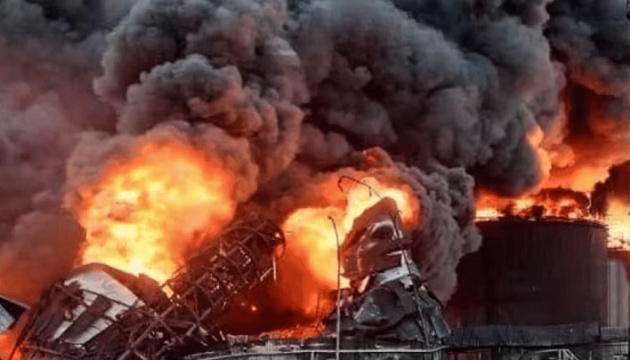
President Volodymyr Zelensky said Ukraine carried out strikes against Russian industrial and digital infrastructure. The reported targets were the Omsk oil refinery, the Ukhta oil refinery, and another Russian data center. The Omsk refinery had reportedly been struck before, making the new attack a repeat strike. The article gives specific details about the weapons. An-196 RS drones reportedly hit the Ukhta refinery, while FP-6 drones, described as modified FP-1s, were used against Omsk the previous day. Zelensky said the Ukhta facility is 1,900 kilometers from Ukraine’s state border. Zelensky presented the strikes as a precise response to Russian attacks. He also called the data-center strike a “symmetrical response.” The article does not describe the damage, casualties, or operational effect at any facility. It records Ukraine’s claim and says another data center was hit, but gives no further details about its location or function.
Based on reporting by Ukrinform English
What strikes does President Zelensky say Ukraine carried out, and which Russian facilities were targeted?
President Volodymyr Zelensky said Ukraine carried out strikes against Russian industrial and digital infrastructure. The reported targets were the Omsk oil refinery, the Ukhta oil refinery, and another Russian data center. The Omsk refinery had reportedly been struck before, making the new attack a repeat strike.
The article gives specific details about the weapons. An-196 RS drones reportedly hit the Ukhta refinery, while FP-6 drones, described as modified FP-1s, were used against Omsk the previous day. Zelensky said the Ukhta facility is 1,900 kilometers from Ukraine’s state border.
Zelensky presented the strikes as a precise response to Russian attacks. He also called the data-center strike a “symmetrical response.” The article does not describe the damage, casualties, or operational effect at any facility. It records Ukraine’s claim and says another data center was hit, but gives no further details about its location or function.
What is an oil refinery, and why can a refinery be an important military and economic target?
An oil refinery is an industrial facility that processes crude oil into products such as gasoline, diesel, jet fuel, and other petroleum materials. It uses heat, pressure, and chemical processes to separate and transform crude oil. Refineries matter because crude oil is not generally ready for direct use in vehicles or most fuel systems.
A refinery can be an important target because it connects energy supply with transportation and industry. If equipment, storage, or processing units are damaged, production may fall or stop temporarily. The article identifies the Omsk and Ukhta refineries as targets, and describes Omsk as one of Russia’s major refineries.
The military importance follows from fuel dependence. Armies need fuel for vehicles, aircraft, ships, generators, and logistics. Damage could therefore create delays or raise costs, though the article does not report the actual effects of these strikes. The scale depends on repairs, stored fuel, alternative refineries, and other supply routes.
How far are the Omsk and Ukhta refineries from Ukraine, and how does that distance compare with the drones' reported range?
The article gives a distance for Ukhta but not for Omsk. Zelensky said the Ukhta refinery is 1,900 kilometers from Ukraine’s state border. That is the only refinery distance stated in the source, so Omsk cannot be compared precisely without adding outside information.
The article reports that An-196 RS drones can fly about 2,500 kilometers. Compared with Ukhta’s stated distance, that range is about 600 kilometers greater. This suggests the reported range exceeds the listed distance to Ukhta, although actual mission distance can differ because launch points, routes, payload, and return requirements are not described.
The comparison does not prove how far any drone actually flew. It only places the reported capability beside the stated distance. The article says An-196 RS drones were used against Ukhta and FP-6 drones against Omsk the day before. It provides no range for FP-6 drones and no distance for Omsk.
Which drone types were reportedly used in the strikes, and why might different drones be chosen for different targets?
The article names two drone types. An-196 RS drones were reportedly used against the Ukhta refinery. FP-6 drones, which Zelensky described as modified FP-1s, were used against the Omsk refinery the day before. The source does not provide detailed specifications for either type beyond the reported An-196 RS range.
Different drones can be chosen for different missions because aircraft vary in range, payload, navigation, speed, and ability to reach a particular target. A longer-range system may suit a distant facility. Another design may be preferred for availability, precision, payload, or mission planning. These are general reasons, not explanations confirmed by the article for this specific operation.
The reported selection also shows that Ukraine used more than one drone design in the strikes. Zelensky emphasized precision, but the article does not explain how accuracy was achieved or compare the drones’ performance. It also does not state whether the drones were one-way systems, what damage they caused, or how many were launched.
What could damage to an oil refinery do to fuel supplies, transportation, and military operations?
An oil refinery converts crude oil into fuels used by cars, trucks, aircraft, ships, factories, and generators. Damage to processing units, pipelines, storage, or power systems can reduce output or force a temporary shutdown. Even a partial interruption may require repairs, rerouting, or fuel rationing, depending on available reserves and replacement capacity.
For transportation, reduced gasoline or diesel production can create shortages, delays, or higher prices. Military operations may also face pressure because vehicles, aircraft, and supply fleets require dependable fuel. A refinery disruption could make logistics slower or more expensive, but the size and duration of the effect would depend on the damage and the wider fuel network.
The source does not say whether either refinery stopped operating, how much fuel was affected, or whether military supplies were disrupted. It only reports strikes on Omsk and Ukhta and Zelensky’s claim that Ukraine acted precisely. Any consequences beyond the reported attacks remain unconfirmed in the article.
How could Russia maintain its fuel supply if one or more refineries were damaged or temporarily shut down?
If a refinery is damaged, a country can keep fuel moving through several backup measures. It can use existing inventories, reduce exports, increase output at other refineries, or import gasoline, diesel, and other refined products. It may also prioritize essential users, including transport, industry, and military logistics.
Supply can be rerouted through available pipelines, railways, roads, or ships. Crude oil might be sent to another refinery, while finished fuel can be moved from regions with spare capacity. These options depend on infrastructure, storage space, refinery compatibility, transport security, and the time needed for repairs. The article does not identify Russia’s actual backup plans.
The reported strikes therefore do not automatically establish a nationwide fuel shortage. Their effect would depend on how important each facility is, how long it remains impaired, and how quickly alternative supplies respond. The article calls Omsk one of Russia’s major refineries but gives no production figures, reserve levels, repair timeline, or information about other facilities.
What is a data center, and why can data centers be strategically important during a modern war?
A data center is a facility containing servers, storage systems, networking equipment, and supporting power and cooling systems. It processes and stores digital information. Data centers may support websites, communications, financial services, public administration, industrial control, or military systems. Their importance depends on what services they operate and how many users rely on them.
During modern war, disrupting a data center can affect coordination, records, communications, or access to digital services. A strike might damage equipment, interrupt power, or disconnect networks. However, many systems use backups, duplicate sites, and recovery plans. The article says only that another Russian data center was hit; it does not identify its location, owner, function, or damage.
Zelensky called the strike a “symmetrical response” and described it as another display of Ukrainian precision. That statement gives the political framing, not a technical assessment. The article provides no evidence about effects on Russian military operations or civilian services. Any such consequences would require additional verified information.
Key Facts:
📌 Zelensky reported strikes on oil refineries in Omsk and Ukhta.
📌 The Omsk refinery was reportedly struck again.
📌 Another Russian data center was also hit.
📌 Refineries process crude oil into usable fuels and petroleum products.
📌 The article calls Omsk one of Russia’s major refineries.
📌 Refinery damage can affect energy, transport, and military logistics.
📌 Ukhta is reported to be 1,900 kilometers from Ukraine’s border.