News · Defence & Security
In Russian-Occupied Oleshky, Civilians Struggle to Survive as Hunger Deepens
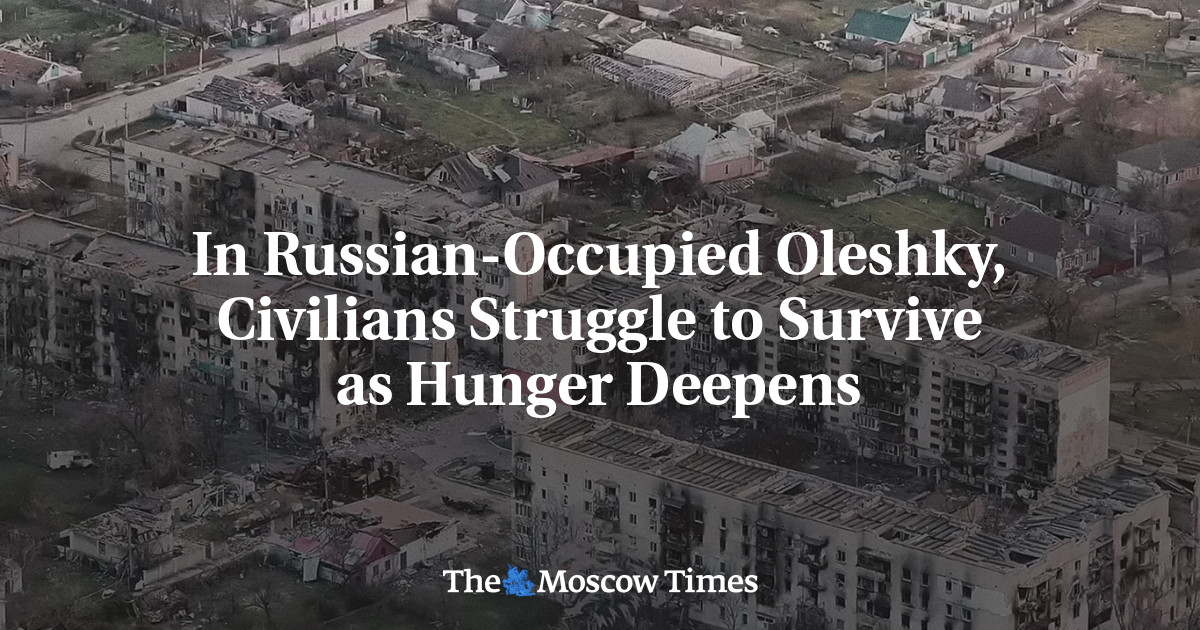
Civilians in Oleshky are trapped in a worsening humanitarian crisis. Bombardment has damaged homes and infrastructure, while roads are mined and badly damaged. The town’s remaining residents are increasingly cut off from food, water, gas, electricity, and medicine. The crisis matters because civilians have few safe ways to leave or receive help. Road deliveries stopped in June after a driver hit a mine and died. Residents now travel on foot to Radensk, 23 kilometers away, to buy food. One resident said people had been eating grass for two months. Lyudmila’s sister makes the journey every few days while her injured husband waits at home. Aid has reached Oleshky by Ukrainian drones, including nearly 400 packages weighing almost four metric tons. Yet residents interviewed did not receive it, and accusations were made that Russian forces took some supplies. Evacuation talks continue, but no safe route has been secured.
Based on reporting by Moscow Times
What is happening to civilians in Oleshky, and why are many of them running out of food, water, medicine, and electricity?
Civilians in Oleshky are trapped in a worsening humanitarian crisis. Bombardment has damaged homes and infrastructure, while roads are mined and badly damaged. The town’s remaining residents are increasingly cut off from food, water, gas, electricity, and medicine. The crisis matters because civilians have few safe ways to leave or receive help.
Road deliveries stopped in June after a driver hit a mine and died. Residents now travel on foot to Radensk, 23 kilometers away, to buy food. One resident said people had been eating grass for two months. Lyudmila’s sister makes the journey every few days while her injured husband waits at home.
Aid has reached Oleshky by Ukrainian drones, including nearly 400 packages weighing almost four metric tons. Yet residents interviewed did not receive it, and accusations were made that Russian forces took some supplies. Evacuation talks continue, but no safe route has been secured.
Where is Oleshky, and why has its position across the Dnipro River made it a frontline town?
Oleshky is in Ukraine’s Kherson region, on the occupied left bank of the Dnipro River. Kherson city and Ukrainian-controlled territory lie across the water on the right bank. This geography places the town directly beside opposing military positions. It also makes ordinary travel, supply deliveries, and evacuation especially difficult.
Russian forces use positions on the occupied bank to strike Ukrainian cities, according to defense analyst Konrad Muzyka. Kyiv responds by targeting Russian forces on the other side of the river. After Russian forces retreated across the Dnipro in late 2022, Oleshky became a frontline town rather than a satellite town serving Kherson.
The river and battlefield divide the town from Ukrainian-controlled areas. Roads leading in and out are heavily mined and damaged. The result is a dangerous, isolated community where bombardment continues and both military access and civilian movement are tightly constrained.
How much has Oleshky changed in size and condition—from its pre-war population of about 24,000 to roughly 2,000 remaining residents?
Oleshky has lost most of its population since the war transformed it into a frontline town. About 24,000 people lived there before the war. The article reports that roughly 2,000 residents remain, including an estimated 50 children. This sharp reduction shows both the scale of displacement and the danger facing those who stayed.
The town’s physical condition has deteriorated alongside its population. Months of bombardment have destroyed much of its infrastructure. A representative of a Russian evacuation organization said residential buildings without damage could be counted on one hand. Roads are mined and badly damaged, making entry and exit practically impossible.
The remaining residents now live with severe shortages and frequent strikes. Food deliveries by road have stopped, and access to water, gas, electricity, and medicine is limited. People are attempting to leave by bicycle, electric bike, or on foot, but evacuations remain incomplete and dangerous.
What does it mean for a town to be under military occupation, and how does occupation affect who controls movement, aid, and public services?
A town under military occupation is controlled in practice by a foreign military power, even though the territory may still be internationally recognized as belonging to another country. Occupation affects daily life because the occupying power controls security, access routes, and often local administration. International humanitarian law requires civilians to be protected and basic needs to be addressed.
In Oleshky, Russian forces control the occupied bank where the town is located. The article says Moscow prohibits humanitarian bodies and international organizations from working in occupied Ukrainian territories. Small volunteer groups therefore attempt evacuations, sometimes traveling through Russia and Belarus. The Kremlin has also accused Kyiv of preventing civilians from leaving.
This arrangement leaves civilians dependent on limited and contested channels of help. Ukraine’s military has used drones to deliver food and medicine, while talks about safe evacuation continue. The article describes the practical effects of occupation, but does not make a legal finding about every party’s conduct.
What happens to civilians when roads are mined, infrastructure is destroyed, and humanitarian organizations cannot safely enter or evacuate them?
When roads are mined and infrastructure is destroyed, civilians lose safe access to food, water, healthcare, electricity, and escape routes. The danger is not limited to shelling or drones. A journey for supplies can itself become deadly, and damaged roads prevent regular deliveries from reaching the population.
In Oleshky, a food-delivery driver died after hitting a mine in June. Since then, residents have walked to Radensk, 23 kilometers away, to buy food. One woman makes the trip every few days while her husband recovers from a shrapnel wound. Others have tried to flee on bicycles, electric bikes, or foot.
The lack of safe humanitarian access deepens isolation. Volunteer groups face difficult routes, and international organizations cannot operate there under Moscow’s restrictions. Ukrainian drone deliveries have provided some aid, but interviewed residents received none. Talks continue, yet a safe evacuation breakthrough has not occurred.
What roles are Russia, Ukraine, local authorities, and volunteer groups playing in the fighting, aid deliveries, and attempted evacuations?
Russia and Ukraine are using opposite sides of the Dnipro in the fighting around Oleshky. Russian forces use occupied-bank positions to strike Ukrainian cities. Kyiv targets Russian forces across the river. This military contest has made the town a frontline zone and contributed to the destruction surrounding civilians.
Ukraine has also used drones to deliver food and medicine. A latest operation sent nearly 400 packages weighing almost four metric tons, after an earlier delivery in late September. Ukrainian officials, including Andrii Sybiha and Dmytro Lubinets, have described the crisis and pressed for help. Russia acknowledged conditions were critical but blamed Kyiv for blocking departures.
The exiled Oleshky city military administration tracks evacuees and reports who reaches Ukrainian territory. Volunteer groups attempt evacuations through Russia and Belarus because larger humanitarian bodies cannot operate in occupied areas. Talks between Ukraine and Russia continue, but no safe evacuation route has been secured.
Why are civilians especially vulnerable in wars fought across a river and through drones, mines, and bombardment—and what principles of international humanitarian law are meant to protect them?
Civilians are especially vulnerable when fighting takes place across a river. The water divides communities from services and escape routes, while opposing forces can attack from nearby positions. Drones and mines add dangers that are difficult to see or avoid. Bombardment can destroy homes, roads, power, and medical access at the same time.
Oleshky illustrates these risks. Strikes reportedly land every five to 10 minutes, roads are mined, and a delivery driver died after hitting one. Residents travel on foot for food, while others try to flee by bicycle. International humanitarian law generally requires parties to distinguish civilians from military targets, avoid disproportionate attacks, take precautions, and facilitate relief for civilians.
The article documents severe civilian harm but does not determine whether particular attacks violated international law. It reports that humanitarian organizations cannot operate there and that evacuation talks continue. Protecting civilians therefore depends on safer access, reliable aid, and routes that both sides respect.
Key Facts:
📌 Road deliveries stopped in June after a driver hit a mine and died.
📌 Residents walk 23 kilometers to Radensk for food.
📌 Ukrainian drones delivered nearly 400 aid packages.
📌 Oleshky lies on the Russian-occupied bank of the Dnipro River.
📌 Russian forces use positions there to strike Ukrainian cities.
📌 Oleshky became a frontline town after late-2022 Russian retreat.
📌 Oleshky’s pre-war population was about 24,000.