News · Politics & Governance
PM Koretskyi attends Conciliation Council meeting to discuss adoption of critical bills
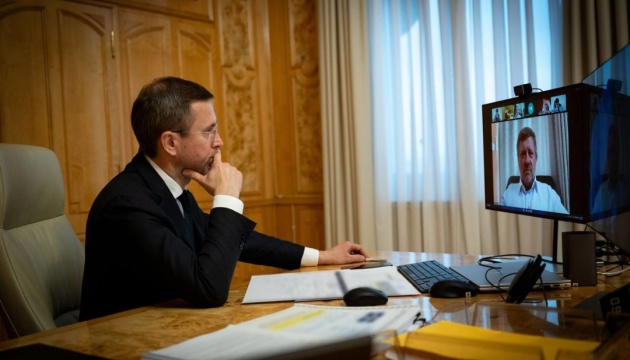
The Conciliation Council meeting focused on legislation considered urgent before the upcoming plenary week. Prime Minister Sergii Koretskyi said participants discussed bills that were priorities for everyone and critically important to adopt. The meeting brought together Parliament’s leadership and representatives of all parliamentary factions, groups, and committees. The key mechanism is coordination. Parliamentary participants agreed to place the priority bills on the agenda, while the government addressed decisions required on its side. Koretskyi thanked participants for including the bills and urged members of parliament to support them in the parliamentary chamber. The stakes are financial as well as legislative. Koretskyi said timely international financial assistance depends on adopting the bills. He also said the Cabinet would hold an extraordinary meeting and complete the government’s part of the work by October 15. The Verkhovna Rada and Cabinet had already agreed on priorities linked to international commitments and partner support.
Based on reporting by Ukrinform English
What did Prime Minister Sergii Koretskyi discuss with parliamentary leaders and representatives at the Conciliation Council meeting?
The Conciliation Council meeting focused on legislation considered urgent before the upcoming plenary week. Prime Minister Sergii Koretskyi said participants discussed bills that were priorities for everyone and critically important to adopt. The meeting brought together Parliament’s leadership and representatives of all parliamentary factions, groups, and committees.
The key mechanism is coordination. Parliamentary participants agreed to place the priority bills on the agenda, while the government addressed decisions required on its side. Koretskyi thanked participants for including the bills and urged members of parliament to support them in the parliamentary chamber.
The stakes are financial as well as legislative. Koretskyi said timely international financial assistance depends on adopting the bills. He also said the Cabinet would hold an extraordinary meeting and complete the government’s part of the work by October 15. The Verkhovna Rada and Cabinet had already agreed on priorities linked to international commitments and partner support.
What is the Conciliation Council, and what role does it play in organizing the Verkhovna Rada’s work?
The Conciliation Council is a parliamentary coordination body that brings together the Verkhovna Rada’s leadership and representatives of factions and groups. Its purpose is to organize the chamber’s work, especially by discussing legislative priorities and building agreement about upcoming business. The source identifies it as the setting where the priority bills were discussed.
Its practical role is agenda coordination. In this case, participants considered bills needed during the upcoming plenary week and thanked one another for including them on the agenda. That step does not itself pass a law. It prepares the parliamentary chamber to debate and vote on selected measures.
The council therefore connects political coordination with formal lawmaking. The meeting included representatives of all parliamentary factions, groups, and committees, alongside Parliament’s leadership and the prime minister. The source does not detail the council’s full legal powers. It does show that the body helps organize attention around bills tied to Ukraine’s international commitments and financial support.
Which actors must cooperate to get these priority bills adopted and implemented?
The central actors are the Verkhovna Rada, the Cabinet of Ministers, and the international partners whose assistance is at stake. Inside Parliament, its leadership, factions, groups, and committees must coordinate the bills and support them in the chamber. The prime minister is pressing these actors to keep the legislative timetable on track.
The mechanism has two linked parts. Parliament must adopt the priority bills through its formal process. Separately, the Cabinet must make necessary government decisions. Koretskyi said the government would hold an extraordinary Cabinet meeting and complete its part of the work by October 15. This division allows legislation and executive action to proceed together.
Cooperation matters because the priorities concern both international commitments and financial support from partners. A parliamentary vote alone may not finish every required government step. Cabinet decisions alone cannot replace laws that require parliamentary approval. The article presents coordinated action as the route to completing Ukraine’s obligations and protecting timely assistance.
What could happen to Ukraine’s international financial assistance if the bills are not adopted on time?
The clearest consequence identified in the article is a risk to the timing of international financial assistance. Koretskyi said that timely receipt of this support depends on adopting the priority bills. The statement does not say that assistance would certainly be cancelled, only that its timely arrival is connected to parliamentary action.
The mechanism is conditional progress. Ukraine’s partners have linked financial support to legislative priorities connected with international commitments. If Parliament does not adopt the necessary bills during the planned window, the government may not be able to show that the required steps are complete. That could affect when funds are released or received.
The immediate response is a coordinated deadline. Koretskyi urged members of parliament to support the bills in the chamber. He also announced an extraordinary Cabinet meeting to approve necessary decisions and finish the government’s work by October 15. The article presents prompt action as important for maintaining financial support from partners.
How large is Ukraine’s dependence on financial support from international partners compared with the size of its national budget?
The article does not state Ukraine’s national budget size or the amount of international financial assistance involved. Therefore, no exact comparison can be calculated from the provided text. It only establishes that timely assistance from international partners is important and depends on adopting certain bills.
In general, wartime international support can represent a substantial share of a country’s available public financing, but its scale changes by year and by definition. A comparison might use the annual state budget, total government spending, or financing needs. Those are different measures, so a reliable ratio requires official figures for the same period and category.
The article’s concrete message is about dependence in timing, not a stated percentage. The Verkhovna Rada and Cabinet identified legislation needed to fulfill international commitments and secure partner support. Without budget numbers, the safe conclusion is that the assistance matters significantly, while its exact size relative to Ukraine’s national budget remains unspecified here.
Why might Ukraine need both parliamentary legislation and separate Cabinet decisions to meet its international commitments?
Parliamentary legislation and Cabinet decisions are different kinds of government action. The Verkhovna Rada adopts laws, while the Cabinet of Ministers makes executive decisions and organizes their implementation. International commitments can require both a legal basis and practical government measures. The article does not list the specific bills or decisions, but it clearly separates the two responsibilities.
The mechanism is sequential and complementary. Parliament must support the bills in the chamber. The Cabinet must then adopt necessary decisions and complete the government’s part of the work. Koretskyi announced an extraordinary Cabinet meeting for this purpose, with a target of finishing that work by October 15. Neither institution is presented as a substitute for the other.
This arrangement helps Ukraine meet commitments and secure partner support. The Verkhovna Rada and Cabinet agreed on priorities that include bills needed for international commitments and financial assistance. The article’s emphasis on coordination suggests that timely completion depends on both formal lawmaking and executive follow-through, rather than on a parliamentary vote alone.
How do international financial commitments work: why do partner countries or institutions make funding conditional on specific reforms or laws?
International financial commitments often attach conditions to funding because partner countries or institutions want assistance to achieve agreed objectives. Conditions can require reforms, laws, reporting, or other actions. They create a shared framework for how support will be used and provide a way to check whether commitments have been met. The article specifically connects Ukraine’s priority bills with international commitments and financial support.
The key mechanism is a commitment-and-release process. Ukraine adopts or implements agreed measures, while partners assess progress under their arrangements. The source does not identify the individual conditions, partners, or release rules. It does state that timely receipt of international financial assistance depends on adopting the bills, showing that legislation is part of the required progress.
That link explains the urgency of the Conciliation Council meeting. Parliament must consider the bills during the upcoming plenary week, and the Cabinet must complete necessary decisions by October 15. Together, those steps are intended to fulfill Ukraine’s international commitments and help secure financial support from partners.
Key Facts:
📌 The meeting focused on bills considered critically important during the upcoming plenary week.
📌 Parliamentary factions, groups, committees, and leadership joined the discussion.
📌 Koretskyi linked timely international financial assistance to adopting the bills.
📌 The Conciliation Council includes Parliament’s leadership and parliamentary representatives.
📌 It discussed priority bills for the upcoming plenary week.
📌 Participants included the bills on the parliamentary agenda.
📌 The Verkhovna Rada must support and adopt the priority bills.