News · Defence & Security
Rosneft Recruits Anti-Aircraft Gun Crews to Defend Samara Refinery Against Ukrainian Drones – Vyorstka
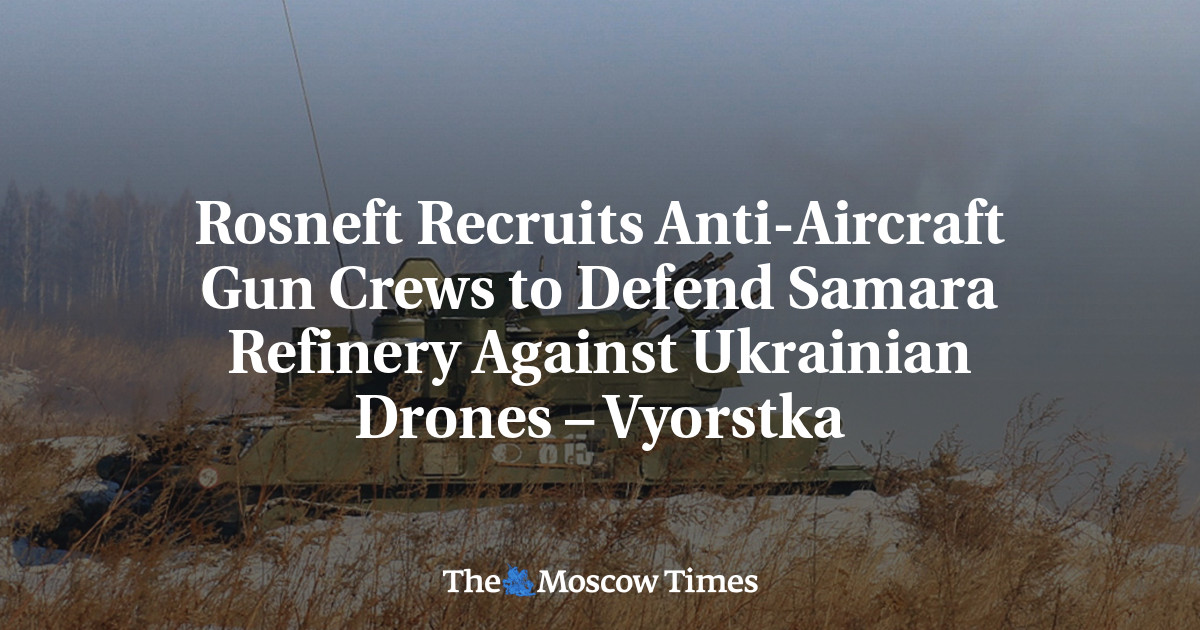
Rosneft was recruiting two kinds of defensive crews for its Kuibyshev refinery in Samara. One group would operate Soviet-era anti-aircraft guns. The other would operate infantry fighting vehicles. The unusual listings show a major industrial site preparing for direct drone threats rather than relying only on ordinary security measures. The anti-aircraft crews would watch for and intercept aerial targets. The armored vehicle crews would keep infantry fighting vehicles stationed at the refinery ready for combat. The listings appeared on the Russian recruitment website HeadHunter. They offered hostel accommodation, meals, and mandatory health and life insurance. The jobs were advertised after the refinery had been repeatedly targeted since Russia’s full-scale invasion began in 2022. The listings were later removed, and HeadHunter indicated that applications were no longer being accepted. The article does not say whether Rosneft filled the positions.
Based on reporting by Moscow Times
What roles was Rosneft recruiting for at the Kuibyshev refinery, and what would the crews be expected to do?
Rosneft was recruiting two kinds of defensive crews for its Kuibyshev refinery in Samara. One group would operate Soviet-era anti-aircraft guns. The other would operate infantry fighting vehicles. The unusual listings show a major industrial site preparing for direct drone threats rather than relying only on ordinary security measures.
The anti-aircraft crews would watch for and intercept aerial targets. The armored vehicle crews would keep infantry fighting vehicles stationed at the refinery ready for combat. The listings appeared on the Russian recruitment website HeadHunter. They offered hostel accommodation, meals, and mandatory health and life insurance.
The jobs were advertised after the refinery had been repeatedly targeted since Russia’s full-scale invasion began in 2022. The listings were later removed, and HeadHunter indicated that applications were no longer being accepted. The article does not say whether Rosneft filled the positions.
What are anti-aircraft guns and infantry fighting vehicles, and how can they be used to protect a refinery from drones?
Anti-aircraft guns are weapons designed to engage aircraft, helicopters, or other objects in the air. Infantry fighting vehicles are armored vehicles that carry troops and provide weapons support. The article identifies the refinery’s advertised equipment as Soviet-era anti-aircraft guns and infantry fighting vehicles, but does not give their models or technical specifications.
Against drones, anti-aircraft crews could identify and fire at aerial targets. Armored vehicles could help move or protect personnel around the site and remain ready to respond to attacks. The listings specifically required crews to intercept aerial targets and keep the vehicles combat-ready. Those details show the intended defensive roles without explaining a precise operating plan.
This approach adds armed protection at the facility itself. It does not guarantee that every drone would be stopped. The article gives no results from the recruitment effort, no number of positions, and no account of the weapons’ effectiveness.
How much were the recruits offered, and how much did Russian businesses spend on anti-drone protection in the first half of 2026?
The advertised compensation totaled 249,000 rubles per month, equivalent in the article to $2,938. That total included salary, regional governor bonuses, and military reserve pay. The package also included hostel accommodation, three meals each day, and mandatory health and life insurance. These additions made the offer more than a basic wage.
The wider business response was much larger in aggregate. Russian businesses spent more than 441 million rubles, or $5.3 million, on anti-drone protection during the first half of 2026. The article describes this as more than six times the amount spent during the same period a year earlier.
Together, the figures show both recruitment costs and expanding security spending. One refinery job listing represented a monthly offer to individual workers. The national business figure covered anti-drone protection across Russian companies. The article does not provide a full breakdown of those expenditures.
Why has the Kuibyshev refinery been targeted repeatedly, and why would damage to it matter beyond the facility itself?
The Kuibyshev refinery has been repeatedly targeted since Russia launched its full-scale invasion of Ukraine in 2022. The article does not explain the attackers’ specific reasons or identify the purpose of any individual strike. It therefore supports the fact of repeated attacks, but not a detailed motive.
Damage to a refinery can matter beyond its perimeter because refineries process crude oil into usable fuels. A damaged facility may face repairs, reduced operations, or interruptions in fuel production. Those possible effects are general background knowledge; the article itself does not report a shutdown or quantify losses at Kuibyshev.
The broader stakes are reflected in Putin’s decree on strategically important facilities. It covers industrial sites considered important to national security and economic stability. The decree permits temporary state administration when operators fail to protect facilities or repair damage quickly. That creates pressure to strengthen defenses and accelerate repairs.
What happens to a major company or the wider economy when critical industrial facilities cannot be protected or quickly repaired?
When a critical industrial facility cannot be protected or repaired quickly, the consequences can extend beyond its owner. A damaged site may lose operating capacity, require costly repairs, or interrupt important services. The article does not report a specific shutdown at Kuibyshev, so those effects should be understood as general consequences rather than confirmed events there.
Russia’s response adds a direct legal and political risk. In August, Vladimir Putin signed a decree allowing the state to place strategically important facilities under temporary administration. This could happen when operators were deemed to have failed to protect facilities adequately from Ukrainian attacks or repair damage quickly.
The measure covers industrial, communications, transport, and logistics facilities. These sites are considered important to national security and economic stability. Putin later said the decree had nothing to do with plans for nationalization. The article also reports that businesses struggled to recruit reservists because they were rotated among facilities.
How has the use of Ukrainian drones since Russia’s full-scale invasion changed the way Russian businesses protect strategic facilities?
Since Russia’s full-scale invasion began in 2022, Ukrainian drone attacks have pushed Russian businesses to treat facility protection as an operational priority. The article does not provide a complete before-and-after history, but it documents stronger and more militarized defenses at strategic sites.
At Rosneft’s Kuibyshev refinery, advertised jobs involved Soviet-era anti-aircraft guns and infantry fighting vehicles. Applicants would intercept aerial targets and keep armored vehicles ready for combat. Across Russian businesses, anti-drone protection spending exceeded 441 million rubles in the first half of 2026, more than six times the previous year’s level.
Businesses also faced a personnel problem. Russia’s top business lobby told Putin that recruiting reservists was difficult because they were regularly rotated to other facilities. The government responded with a decree allowing temporary administration of important facilities judged inadequately protected or repaired too slowly.
What does an oil refinery do, and why are refineries essential to turning crude oil into fuels used by society and the economy?
An oil refinery is an industrial facility that processes crude oil into usable petroleum products. These products can include fuels and other refined materials. Crude oil is not usually ready for direct use in vehicles, machinery, heating systems, or many industrial processes, so refining is a crucial conversion step.
Refineries separate and transform crude into products with different uses and properties. The article identifies Kuibyshev as a refinery, but it does not describe its exact equipment, products, capacity, or output. The general role of refining explains why protecting such a facility can matter beyond its site.
If a refinery is damaged, its operations may be disrupted while repairs take place. That can affect the availability of fuels and industrial inputs, depending on the facility and the wider supply network. The article does not report a specific production loss at Kuibyshev. It does show that Russia treats strategically important industrial facilities as relevant to national security and economic stability.
Key Facts:
📌 Rosneft advertised anti-aircraft gun operator positions.
📌 Crews would operate infantry fighting vehicles.
📌 Their duties included intercepting aerial targets.
📌 Anti-aircraft guns are designed to engage airborne targets.
📌 Infantry fighting vehicles are armored vehicles with troop and weapons roles.
📌 The listings required vehicles to remain ready for combat.
📌 Monthly compensation totaled 249,000 rubles.