News · International Relations
Shows of Strength and Signs of Strain
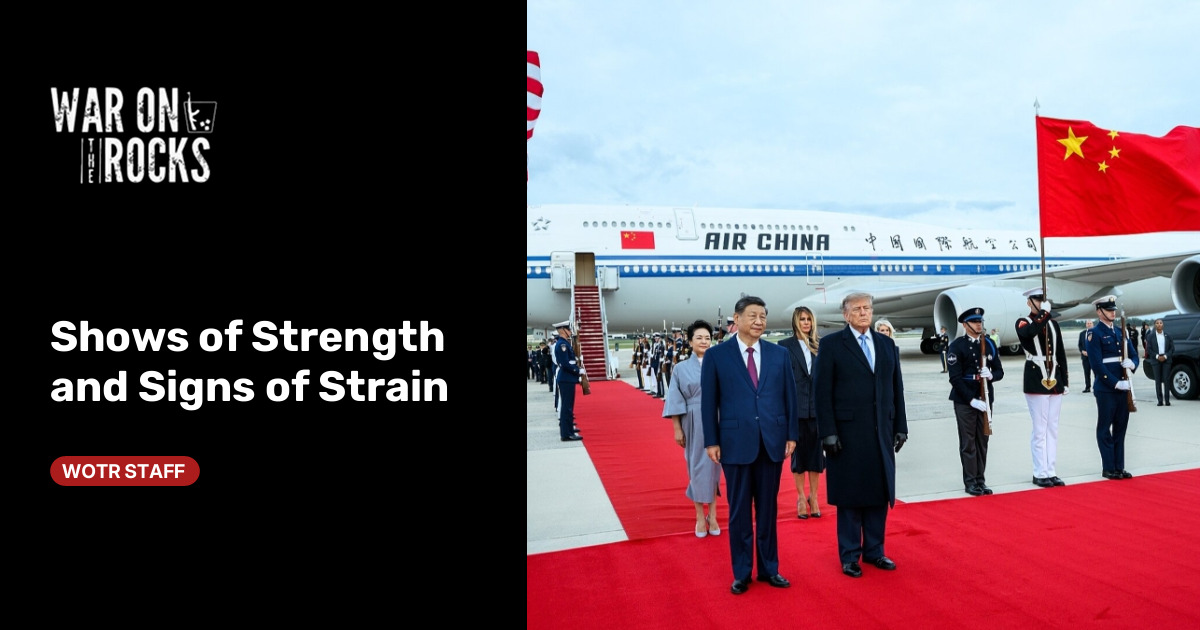
The two diplomatic efforts produced very different signals, but neither delivered a decisive breakthrough. U.S. and Iranian negotiators resumed indirect talks in late September. The talks were their first since a June memorandum of understanding collapsed. The U.S.-China summit projected ceremony and high-level respect, but the article reports little concrete substance. Iran offered to reopen the Strait of Hormuz within a week. However, Washington found that offer less valuable because traffic through the chokepoint had been increasing. Tehran also demanded upfront financial returns, access to financial assets, and sanctions relief before addressing nonproliferation issues. The deadlock therefore remains. Washington wants progress on inspections and limits on Iran’s nuclear program, but sees no guarantee of either. Trump said on Oct. 8 that discussions were productive. Still, Iran’s vessel attacks and the approaching Nov. 3 midterm elections may shape the next stage of negotiations.
Based on reporting by War on the Rocks
What did the recent U.S.-Iran talks and the U.S.-China summit actually achieve?
The two diplomatic efforts produced very different signals, but neither delivered a decisive breakthrough. U.S. and Iranian negotiators resumed indirect talks in late September. The talks were their first since a June memorandum of understanding collapsed. The U.S.-China summit projected ceremony and high-level respect, but the article reports little concrete substance.
Iran offered to reopen the Strait of Hormuz within a week. However, Washington found that offer less valuable because traffic through the chokepoint had been increasing. Tehran also demanded upfront financial returns, access to financial assets, and sanctions relief before addressing nonproliferation issues.
The deadlock therefore remains. Washington wants progress on inspections and limits on Iran’s nuclear program, but sees no guarantee of either. Trump said on Oct. 8 that discussions were productive. Still, Iran’s vessel attacks and the approaching Nov. 3 midterm elections may shape the next stage of negotiations.
What are indirect negotiations, and why are the United States and Iran using them instead of talking directly?
Indirect negotiations are talks conducted through intermediaries, shuttle messages, or separate meetings rather than direct conversations between the opposing governments. They can let governments explore compromises while reducing political exposure. They may also preserve communication when trust is low or formal relations are difficult.
In this case, the article gives one clear fact: U.S. and Iranian negotiators held indirect talks in late September. Those talks followed the collapse of a memorandum of understanding reached in June. The source does not identify the intermediaries or explain the precise reason for avoiding direct discussions.
The format has not solved the central dispute. Iran wants financial returns, access to assets, and sanctions relief before nuclear discussions. Washington wants assurances about inspections and limits on Iran’s nuclear program. Indirect talks therefore provide a channel, but not yet a settlement. Any explanation of the parties’ specific choice beyond these facts relies on general diplomatic practice.
What is the Strait of Hormuz, and why can access to it give Iran leverage in negotiations?
The Strait of Hormuz is a narrow sea passage through which ships travel between the Persian Gulf and the Gulf of Oman. It is strategically important because large volumes of energy cargo use this route. A chokepoint concentrates traffic, so disruption or threats can affect many shipments at once.
The article gives Iran a direct bargaining example. Tehran offered to reopen the strait within a week during its negotiations with Washington. That offer had diminishing appeal because traffic through the chokepoint had been trending upward. Iran also increased attacks on vessels, signaling that it could inject more volatility into the market.
This creates leverage without guaranteeing a diplomatic win. The threat can raise concern about energy supplies and prices, but Washington may refuse Iranian terms. The article says attacks alone will not force acceptance. Iran’s negotiating opportunity may also narrow after the Nov. 3 midterm elections, when U.S. pressure over oil prices and war could lessen.
How much of the world’s oil and other energy traffic normally passes through the Strait of Hormuz?
The Strait of Hormuz carries an exceptionally large share of the world’s seaborne energy trade. The source article calls it a chokepoint and says traffic through it had been trending upward, but it does not state a volume or percentage. This answer therefore uses established energy-market estimates rather than a figure from the article.
Recent widely used estimates place the normal flow at roughly one-fifth of global petroleum liquids consumption or trade. The passage also carries a major share of global liquefied natural gas shipments. Exact figures vary by year and by whether analysts count production, consumption, or seaborne trade.
That scale explains why the strait matters in negotiations. A sustained closure or serious threat could delay cargoes, raise insurance and transport costs, and push energy prices higher. In the article’s immediate setting, however, traffic was increasing, which made Iran’s offer to reopen the passage less valuable to Washington than it might otherwise have been.
What happens to shipping, oil prices, and economies when vessels are attacked or a major oil chokepoint is threatened?
Vessel attacks and chokepoint threats make shipping less predictable and more expensive. Operators may reroute, delay voyages, or demand higher insurance premiums. Buyers then worry about whether energy cargoes will arrive on time. Even before physical supplies fall, fear of disruption can lift oil and gas prices.
The article describes Iran’s heightened attacks on vessels as a signal that Tehran could “inject more volatility into the market.” It also says the Trump administration faced pressure from high oil prices and an unpopular war. These details show the mechanism: maritime danger can become economic and political pressure.
The effects can spread beyond shipping companies. Higher energy costs can squeeze households, businesses, and national economies. Yet the strategy has limits. The article says traffic through the Strait of Hormuz was trending upward, weakening Iran’s offer to reopen it. It also says vessel attacks would not be enough to force Washington to accept Iranian terms.
Why is Iran demanding sanctions relief and access to financial assets before agreeing to nuclear discussions or inspections?
Sanctions relief and access to financial assets would give Iran immediate economic benefits. The article says the regime is facing growing economic strain under U.S. pressure. Tehran’s demand for upfront financial returns therefore signals that economic relief is a central priority, not merely a side issue in the negotiations.
Iran insists that nonproliferation discussions should follow an initial stage providing access to assets and sanctions relief. In practical terms, Tehran wants benefits before discussing inspections or limits on its nuclear program. Washington sees a serious problem in that sequence because it could provide concessions without a guaranteed nuclear result.
The disagreement is about both substance and order. Iran wants trust-building rewards first. The Trump administration likely views that proposal as unsatisfactory because it requires financial concessions and offers no guarantee of renewed inspections or nuclear limits. The article gives no further explanation of Iran’s internal decision-making, so the economic-pressure rationale is the clearest stated reason.
What is nuclear nonproliferation, and how do international inspections help limit the spread of nuclear weapons?
Nuclear nonproliferation is the effort to prevent the spread of nuclear weapons materials, and related capabilities. It usually combines diplomatic agreements, restrictions, monitoring, and verification. The goal is to reduce the chance that a state can secretly develop or expand a weapons program.
International inspections provide independent checks. Inspectors examine declared sites, review records, install monitoring tools, and compare evidence with a country’s commitments. If access is limited or findings conflict with declarations, other governments receive an early warning. The article does not describe specific inspection methods, but it identifies resumed inspections as a U.S. objective.
That verification issue is central to the U.S.-Iran deadlock. Tehran wants financial assets and sanctions relief before nonproliferation discussions. Washington wants limits on Iran’s nuclear program and a guarantee that inspections can resume. Without agreement on both access and restrictions, financial concessions would not assure Washington that nuclear risks were being reduced.
Key Facts:
📌 - U.S.-Iran indirect talks resumed in late September.
📌 - Trump called the Iran discussions “productive” on Oct. 8.
📌 - The Washington summit achieved little clear substance.
📌 - Indirect talks resumed after the June memorandum of understanding collapsed.
📌 - The article does not identify the intermediaries.
📌 - Financial relief and nuclear limits remain unresolved.
📌 - Tehran offered to reopen the Strait of Hormuz within a week.