News · Economy & Business
Oyedele Clarifies, Says 𝐍𝐍𝐏𝐂 D𝐢𝐬𝐜𝐨𝐮𝐧𝐭, Commercial Decision, N𝐨𝐭 S𝐮𝐛𝐬𝐢𝐝𝐲
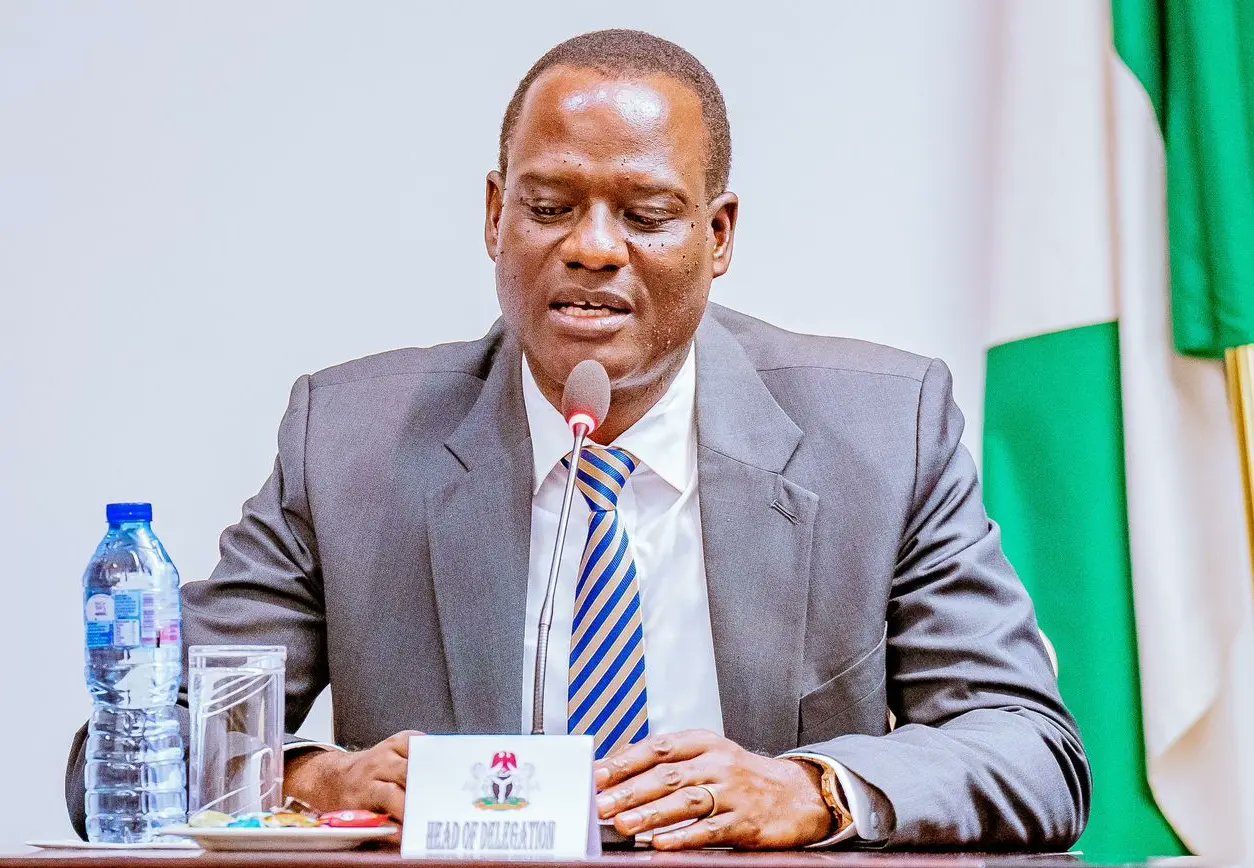
NNPC Retail changed the amount it keeps as a retail margin on petrol sales. From 1 October 2026, it began discounting that margin at its stations, lowering the price motorists pay. The change matters because it offers some relief to households, commuters and transporters without, according to the government, restoring fuel subsidy payments. The company continues to purchase petrol from the Dangote Refinery and other suppliers at prevailing market prices. It then applies a smaller retail margin, or temporarily gives up the margin, and passes that saving to customers through a lower pump price. The article does not state the exact discount per litre. The government describes the measure as a commercial decision by NNPC Limited. It says the pump price remains connected to market conditions, while the company absorbs the reduction through its retail business. NNPC expects stronger customer traffic and sales volumes to help offset lower earnings per litre.
Based on reporting by ThisDay
What exactly did NNPC Retail change about petrol prices from 1 October 2026?
NNPC Retail changed the amount it keeps as a retail margin on petrol sales. From 1 October 2026, it began discounting that margin at its stations, lowering the price motorists pay. The change matters because it offers some relief to households, commuters and transporters without, according to the government, restoring fuel subsidy payments.
The company continues to purchase petrol from the Dangote Refinery and other suppliers at prevailing market prices. It then applies a smaller retail margin, or temporarily gives up the margin, and passes that saving to customers through a lower pump price. The article does not state the exact discount per litre.
The government describes the measure as a commercial decision by NNPC Limited. It says the pump price remains connected to market conditions, while the company absorbs the reduction through its retail business. NNPC expects stronger customer traffic and sales volumes to help offset lower earnings per litre.
What is a retail-margin discount, and how is it different from a government fuel subsidy?
A retail-margin discount is a voluntary price reduction by the retailer. The seller accepts a smaller profit margin, or no margin for a period, and passes the saving to consumers. It matters because the lower price comes from the company’s commercial decision rather than from a new government spending programme.
For example, NNPC Retail can buy petrol from the Dangote Refinery or another supplier at the prevailing market price. It then reduces the margin normally added before setting the pump price. By contrast, a subsidy would involve government paying part of the price that consumers would otherwise pay, using public revenue.
The government says NNPC bears the discount’s cost alone. It also says the fuel-subsidy regime ended in 2023 and is not returning. The distinction is important because public funds would otherwise be unavailable for salaries, schools, hospitals and infrastructure. NNPC hopes higher sales volumes can partly offset the smaller margin.
How large is the price relief being discussed, compared with the proposed ceiling of N1,350 per litre and the earlier price of about N800?
The price relief under NNPC Retail’s discount is not quantified in the article. The report confirms that motorists pay less at NNPC Retail stations, but it does not state the previous pump price, the new price, or the discount per litre. Therefore, the exact size of the relief cannot be calculated from the available facts.
The Centre for Social Justice discusses a separate government price-modulation initiative. It says the proposed mechanism would keep petrol at not more than N1,350 per litre. CSJ argues that Nigerians were paying about N800 before the America-Israel-Iran war and wants relief that returns the price to that level, followed by a plan toward N400-N500 per litre.
These figures show the disagreement over what counts as adequate relief. N1,350 is a ceiling in the proposed initiative, while N800 is CSJ’s reference point for an earlier price. Neither figure measures NNPC’s retail-margin discount itself. The article supplies no direct comparison between the NNPC price before and after 1 October 2026.
Who pays for NNPC’s discount, and why does the government say no public money is being used?
The retailer pays for the discount. NNPC Retail reduces the profit margin it would normally add to petrol sales, then passes that reduction to motorists. The government says this is different from a subsidy because no public revenue is used to cover part of the product’s cost.
The reported mechanism is straightforward. NNPC Retail continues buying petrol from the Dangote Refinery and other suppliers at prevailing market prices on commercial terms. It then applies a smaller margin when calculating the pump price. The saving reaches consumers, while the cost appears in the company’s retail earnings rather than in the government budget.
The government therefore describes the initiative as a commercial decision by NNPC Limited, not a reversal of pricing reforms. Oyedele also says lower earnings per litre may be offset by higher sales volumes. More motorists could patronise NNPC stations because of the lower price, potentially helping the company recover some lost margin without drawing on public funds.
What could happen to NNPC’s profits and dividend payments if it earns less per litre but attracts more customers?
Reducing the retail margin normally lowers the amount NNPC earns on every litre sold. That could raise concerns about lower profits for NNPC Limited and smaller dividend payments to the Federation. The concern matters because retail earnings can affect the company’s overall financial contribution.
The minister offers a volume-based explanation. A lower pump price may attract motorists to NNPC Retail stations. If the stations sell substantially more petrol, the increased number of litres sold could offset the reduced earnings per litre. In simple terms, a smaller return on each sale might be balanced by many more sales.
The article presents this as a possibility, not a confirmed result. It does not provide sales figures, profit estimates or a forecast for dividend payments. The immediate policy choice is therefore to give consumers some relief while relying on stronger patronage to support NNPC’s business and profits. The eventual effect will depend on how customers respond to the discount.
How does this discount fit into Nigeria’s decision to end its fuel-subsidy regime in 2023, and how would using cheaper Federation-owned crude be different?
The government says the discount fits within Nigeria’s post-2023 fuel-pricing reforms. It argues that NNPC Retail is reducing its own retail margin while continuing to buy petrol at prevailing market prices. Because public revenue is not used, officials say the measure does not restore the subsidy system that the administration ended in 2023.
The minister draws a different line around Federation-owned crude. If crude belonging to the Federation were sold below market value to make domestic petrol cheaper, the shortfall would not disappear. It would effectively be transferred to public revenue. That would make the arrangement similar in financial effect to government support for the fuel price.
The government says it will keep pursuing ways to reduce the burden of high petrol prices without placing that burden on public resources. NNPC’s discount therefore offers temporary consumer relief through its retail margin. The article also reports CSJ’s call for deeper reductions through domestic crude pricing, local refining and stronger controls against smuggling or diversion.
How do crude-oil costs, local refining, retailer margins, and government revenue combine to determine the petrol price Nigerians pay?
The petrol price begins with what the retailer pays suppliers for the product. NNPC Retail buys petrol from the Dangote Refinery and other suppliers at prevailing market prices. It then adds a retail margin, which helps cover the business and can provide profit. The resulting calculation determines the pump price paid by motorists.
A margin discount changes only the retailer’s share. NNPC can reduce or remove its margin and pass the saving to customers while leaving the supplier price unchanged. Government revenue enters the picture when the state pays part of the consumer price or sells Federation-owned crude below market value. In those cases, public resources carry the difference.
CSJ proposes cheaper domestic crude for local refineries, based on a domestic price cap, and says refineries should receive enough crude to meet local needs. It also calls for preventing refined products from being smuggled or diverted. The article presents these measures as possible routes to lower prices, alongside NNPC’s narrower retailer-funded discount.
Key Facts:
📌 NNPC Retail began discounting petrol prices at its stations from 1 October 2026.
📌 The discount comes from NNPC Retail’s margin, not from cheaper fuel purchases.
📌 The article does not state the discount amount per litre.
📌 A margin discount is paid for by the retailer.
📌 A subsidy uses government revenue to reduce consumers’ fuel costs.
📌 The government says Nigeria’s subsidy regime ended in 2023.
📌 The article does not quantify NNPC Retail’s discount per litre.