News · Defence & Security
Navantia and Larsen and Toubro collaborate to offer LHDs to the Indian Navy
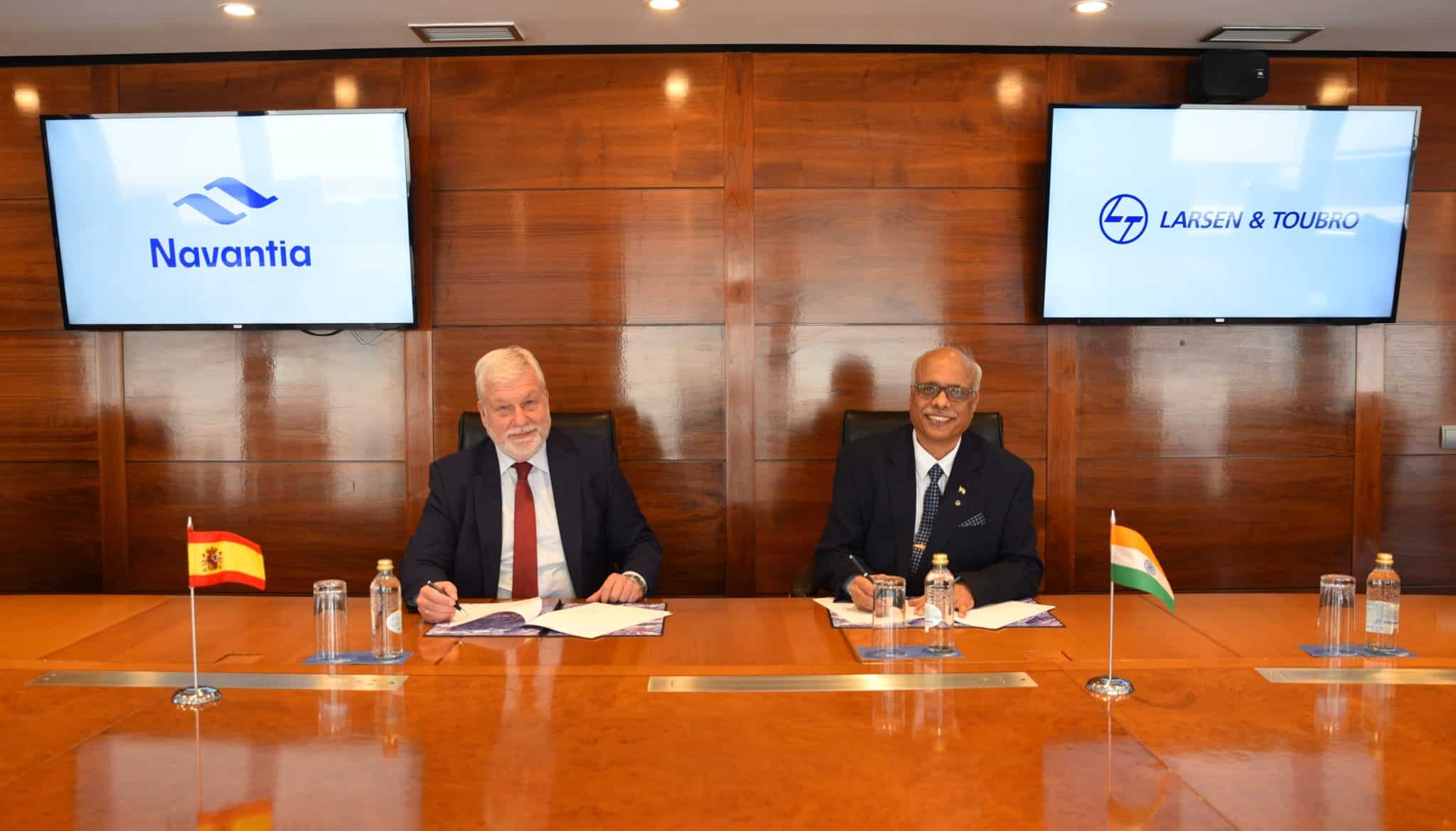
Navantia and Larsen & Toubro have signed a memorandum of understanding in Madrid. They will cooperate on India’s program for four amphibious assault ships, known in India as the LPD program. The partnership aims to support the Indian Navy while developing local capacity to build large, complex ships. The arrangement combines L&T’s engineering and shipbuilding capabilities with Navantia’s experience designing and constructing surface ships and submarines. Navantia’s experience with the Juan Carlos I, Canberra, and Adelaide designs will help strengthen the proposed technical solution. L&T will provide its established Indian engineering and shipbuilding base. The agreement creates a framework for long-term cooperation. It could help India advance its maritime capabilities and autonomy in constructing complex naval platforms. Navantia also says it will provide long-term support to L&T, the Indian Navy, and other stakeholders throughout the ships’ lifecycles.
Based on reporting by Naval News Defence
What has Navantia and Larsen & Toubro agreed to do for the Indian Navy?
Navantia and Larsen & Toubro have signed a memorandum of understanding in Madrid. They will cooperate on India’s program for four amphibious assault ships, known in India as the LPD program. The partnership aims to support the Indian Navy while developing local capacity to build large, complex ships.
The arrangement combines L&T’s engineering and shipbuilding capabilities with Navantia’s experience designing and constructing surface ships and submarines. Navantia’s experience with the Juan Carlos I, Canberra, and Adelaide designs will help strengthen the proposed technical solution. L&T will provide its established Indian engineering and shipbuilding base.
The agreement creates a framework for long-term cooperation. It could help India advance its maritime capabilities and autonomy in constructing complex naval platforms. Navantia also says it will provide long-term support to L&T, the Indian Navy, and other stakeholders throughout the ships’ lifecycles.
What is an LPD, and how does a ship with a helicopter-capable through deck become an LHD?
An LPD, or Landing Platform Dock, carries, transports, and lands elements of an expeditionary force. It uses specialised surface craft and integral helicopters to move people and equipment from sea to shore. The ship can also serve as a mother ship for unmanned capabilities and future unmanned vehicles, platforms, and equipment.
India’s 2021 request described a through deck capable of accommodating various helicopter types. A through deck is a continuous flight deck running along much of the ship. That feature gives the vessel a stronger aviation role than a conventional dock ship. The article therefore notes that this requirement makes the proposed vessel an LHD rather than an LPD in practical terms.
The distinction is about emphasis and design. An LPD centres on landing craft and the dock function, while an LHD combines amphibious transport with substantial helicopter operations. India’s proposed ships appear to combine both capabilities.
How large and capable are the proposed ships, including their troop capacity, length, displacement, landing craft, helicopters, and weapons?
The Indian Navy’s proposed ships are large amphibious platforms. The requirement describes vessels about 220 metres long, plus or minus 5 percent, with displacement of about 29,000 tonnes, plus or minus 10 percent. An earlier 2021 request called for ships 200 metres long and able to embark 900 troops.
The ships would have a through deck for various helicopter types. They would also carry Landing Craft Mechanised vessels and Landing Craft Vehicle Personnel vessels. Their systems would include multi-function and air-surveillance radars, a combat management system, and integrated full-electric propulsion. Unmanned vehicles listed include remotely operated vessels, unmanned aerial vehicles, and gliders.
The 2021 request also called for heavy armament: 16 anti-ship missiles and 32 VLSRSAM missiles. The figures show that these are not simply troop transports. They are intended as heavily equipped command, aviation, landing, and support platforms for demanding naval operations.
Why does India want four amphibious ships, and what missions could they perform besides landing troops?
India wants four ships because its amphibious capability has declined after older landing ships were decommissioned. The new platforms would give the Navy a larger, modern force for expeditionary operations. They could transport and land troops, vehicles, and equipment while supporting helicopter and unmanned operations.
The ships are also intended for missions beyond combat landings. Navantia identifies humanitarian assistance and disaster relief as important uses. The proposed platforms could support other naval operations as well. Their helicopters, landing craft, radars, weapons, and unmanned systems would make them flexible ships for complex missions at sea and near shore.
The need is especially clear against India’s current fleet. INS Jalashwa is the only ex-US Navy LPD and serves as the flagship amphibious vessel. Only four LSTs remain: three Shardul-class ships and INS Gharial. Four modern platforms would substantially expand and renew this force.
How will combining Navantia’s ship-design experience with L&T’s engineering and shipbuilding capabilities affect India’s ability to build complex naval vessels locally?
Navantia brings experience designing and building surface ships and submarines, including large amphibious vessels. L&T brings engineering excellence, shipbuilding capabilities, and a record of working on complex systems. Combining those strengths gives the Indian program access to established design experience and an Indian industrial base.
Navantia’s LHD experience includes Juan Carlos I for Spain and Canberra and Adelaide for Australia. These proven designs are expected to serve as the basis for the Indian LPD program. L&T’s role would connect that experience with local engineering, construction, and systems work for the four proposed ships.
The intended effect is broader than one ship contract. The companies say the collaboration will contribute to local capabilities for constructing large ships. It could strengthen India’s autonomy in building complex naval platforms. Navantia also commits to long-term support for L&T, the Navy, and other stakeholders throughout the ships’ lifecycles.
What naval vessels and equipment does India currently use for amphibious operations, and why has that capability declined?
India’s current amphibious force is centered on INS Jalashwa, the sole ex-US Navy LPD and the fleet’s flagship amphibious vessel. Four LSTs also remain in service: three Shardul-class vessels commissioned in the late 2000s and INS Gharial of the Magar class, commissioned in 1997.
These ships are supported by eight Mk IV Landing Craft Utility vessels, commissioned in the late 2010s, plus several smaller vessels. INS Jalashwa has also been used for trials connected with ISRO’s Gaganyaan human space flight mission. This shows the ship can support activities beyond conventional amphibious operations.
The overall capability has declined notably in recent years. The article links that decline to the decommissioning of older LSTs. The proposed four-ship program would therefore replace neither every existing vessel nor every smaller craft, but would add major modern platforms to a reduced amphibious fleet.
How do amphibious ships move troops, vehicles, helicopters, landing craft, and unmanned systems from sea to shore during military or disaster-relief operations?
An amphibious ship gathers people, equipment, vehicles, aircraft, and craft at sea, then moves them toward shore. Its landing craft carry the force from the ship to the landing area, while helicopters move personnel or equipment over the shoreline. The ship’s large hull provides transport, coordination, and support during the operation.
The proposed Indian vessels would carry Landing Craft Mechanised and Landing Craft Vehicle Personnel vessels. Their through deck would accommodate various helicopter types. The ships would also use a combat management system, multi-function radars, air-surveillance radars, and integrated full-electric propulsion to support operations. The article describes them as mother ships for remotely operated vessels, UAVs, gliders, and other unmanned systems.
This arrangement supports both military and civilian missions. Troops and equipment could be landed during expeditionary operations, while helicopters, craft, and unmanned vehicles could assist humanitarian assistance or disaster relief. The ships’ weapons would also support their broader naval role.
Key Facts:
📌 Navantia and L&T signed a memorandum of understanding in Madrid.
📌 The partnership concerns four amphibious ships for the Indian Navy.
📌 The agreement aims to develop India’s local large-shipbuilding capabilities.
📌 An LPD transports and lands forces using surface craft and helicopters.
📌 India’s requirement includes a through deck for various helicopter types.
📌 The through deck makes the ship an LHD rather than a conventional LPD.
📌 The proposed ships would be about 220 metres long.