News · Environment & Climate
India’s Tiger, Lion and Rhino Populations Are Growing
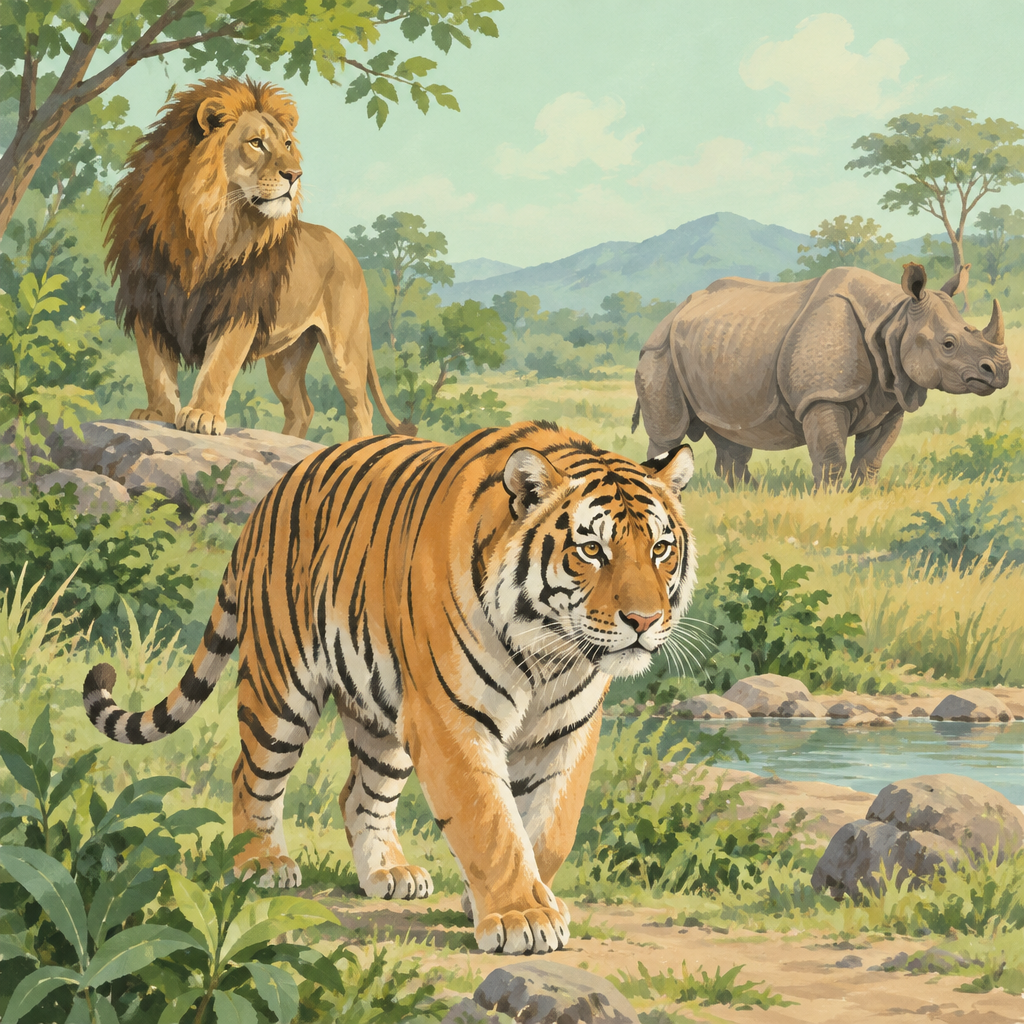
Project Tiger is India’s national effort to conserve tigers. It matters because the country’s national animal appeared close to extinction in the 1970s. The program shows how sustained protection can reverse a severe population decline. Its success has also helped India support tiger restoration elsewhere, including Cambodia. The article does not list Project Tiger’s exact methods. In general, tiger conservation uses protected reserves, anti-poaching work, habitat management, and monitoring. These measures give tigers safer places to live and reproduce. They also protect the prey and vegetation needed to sustain them. The results are striking. India’s tiger numbers have more than doubled over two decades, reaching nearly 3,700. India became so effective that it agreed to export tigers to Cambodia, where they had gone extinct. The success brings a challenge: expanding tiger populations can increase encounters with people living near their habitat.
Based on reporting by Human Progress
What is Project Tiger, and how does it protect India's tigers?
Project Tiger is India’s national effort to conserve tigers. It matters because the country’s national animal appeared close to extinction in the 1970s. The program shows how sustained protection can reverse a severe population decline. Its success has also helped India support tiger restoration elsewhere, including Cambodia.
The article does not list Project Tiger’s exact methods. In general, tiger conservation uses protected reserves, anti-poaching work, habitat management, and monitoring. These measures give tigers safer places to live and reproduce. They also protect the prey and vegetation needed to sustain them.
The results are striking. India’s tiger numbers have more than doubled over two decades, reaching nearly 3,700. India became so effective that it agreed to export tigers to Cambodia, where they had gone extinct. The success brings a challenge: expanding tiger populations can increase encounters with people living near their habitat.
How much has India's tiger population grown, and how does that compare with tiger populations elsewhere in Asia?
India’s tiger population has grown to nearly 3,700. That is more than twice its size two decades ago. This is a major conservation turnaround because India’s national animal seemed headed toward extinction in the 1970s. The figure also shows that population recovery is possible when protection is sustained.
The comparison with other Asian countries is stark. The article says tiger populations collapsed in richer and less crowded parts of Asia, such as Malaysia. India therefore stands out not because it has the easiest conditions, but because its conservation effort has produced unusually strong growth. Project Tiger is described as a roaring success.
India’s recovery has created a new role for the country. It agreed to export tigers to Cambodia, where the animals had gone extinct. Yet success also creates pressure. More tigers can mean more contact with people, especially when growing animal populations move beyond protected areas or into landscapes shared with communities.
Why can successful wildlife conservation lead to more attacks and encounters between people and wild animals?
Successful conservation increases animal numbers and helps species occupy more of their former range. That is good for biodiversity, but it can bring wildlife closer to farms, roads, and settlements. People then have more chances to meet animals that can kill or injure them. The article links recent attacks to India’s success at protecting wildlife.
The examples are direct. Indians were mauled by tigers in the west, attacked by leopards in the north, and trampled by elephants in the east. These incidents occurred as tiger, lion, rhino, and cheetah conservation efforts gained momentum. Growing populations create more opportunities for animals to leave reserves or pass through human-used areas.
This does not mean conservation caused a failure. It means success requires better management as populations recover. Governments must protect people while maintaining animal habitat. The article presents the tension clearly: wildlife deaths and human tragedies expose state failures, yet the encounters also reflect animals becoming more numerous and secure.
Why were India's tigers, Asiatic lions, and rhinos previously at risk, and what changed in the country's conservation efforts?
The article gives clear evidence that several species were in danger, but it does not fully explain every original cause. It says India’s tigers seemed headed toward extinction in the 1970s. It also reports that Assam’s rhinos faced poaching, while Gujarat had to open a reserve for an expanding lion population. These details show changing conservation pressures.
The shift came through stronger protection and active management. Project Tiger helped tigers recover. Gujarat created a reserve to accommodate its growing Asiatic lion population. Assam reported zero poaching-related cases involving its large and growing rhino population in the previous year. These are examples of protection producing measurable gains.
The broader lesson is that conservation priorities change as species recover. Earlier efforts focused on preventing disappearance and illegal killing. Now governments must also manage expanding populations and their contact with people. India is even importing African cheetahs to re-establish a species that disappeared within its borders in 1952.
How do protected reserves, anti-poaching measures, and habitat protection help animal populations recover?
Protected reserves, anti-poaching measures, and habitat protection address different parts of the same problem. Reserves limit some human pressure. Anti-poaching work stops illegal killing. Habitat protection preserves places where animals can feed, breed, and shelter. Together, these measures allow populations to survive long enough to recover.
India’s examples show the pattern. Project Tiger helped the country’s tiger numbers rise to nearly 3,700. Gujarat opened a reserve for its expanding Asiatic lion population. Assam’s chief minister said the state recorded zero poaching-related rhino cases in the previous year. These outcomes connect security and space with population growth.
Recovery brings responsibilities as well as success. As animals become more numerous, they may move beyond reserves and encounter people. Conservation therefore cannot stop at creating protected areas. It must also manage surrounding landscapes and conflict. The article’s attacks by tigers, leopards, and elephants show why protection must be matched by effective state management.
When animal populations outgrow existing reserves, what alternatives can governments use to reduce conflict besides reducing the number of animals?
When animal populations outgrow existing reserves, governments can create or enlarge protected areas. They can also connect habitats through wildlife corridors, helping animals move without crossing as many settlements or roads. These approaches address space shortages instead of treating growing populations as the problem. The article specifically reports that Gujarat opened a reserve for expanding Asiatic lions.
Other established options include restoring habitat, securing buffer zones, improving early-warning systems, and compensating communities after damage. Governments may also move individual animals from high-conflict locations to suitable habitats, when scientifically justified. These methods require careful planning because poorly chosen transfers can create new conflicts. The article itself does not describe such programs in detail.
The need is clear from India’s recent incidents. Tigers, leopards, and elephants attacked or trampled people in different regions. Conservation success has made encounters more likely. Future policy must therefore combine population protection with safer landscapes, better local preparation, and reserves designed to accommodate animals as their numbers grow.
Why do healthy populations of predators and large herbivores require enough habitat, prey or vegetation, and connected spaces beyond protected parks?
Healthy wildlife populations need more than legal protection. Predators require enough prey, while large herbivores need sufficient vegetation and water. All animals need space for breeding, shelter, and movement. If a park is too small or resources are exhausted, animals may leave protected boundaries and meet people. Connected habitats provide room for populations to function naturally.
The article illustrates this pressure without describing habitat science in detail. India’s tiger population reached nearly 3,700, and Gujarat opened a reserve for expanding Asiatic lions. Tigers, leopards, and elephants also encountered people in several regions. These examples suggest why one isolated reserve may not be enough as populations grow.
Corridors and protected landscapes beyond park boundaries can spread pressure across a wider area. They can also help animals reach food and breeding areas without crossing as many settlements. The article does not specify India’s corridor policies, so this point uses established conservation knowledge. The continuing challenge is to protect both wildlife recovery and human safety.
Key Facts:
📌 Project Tiger is India’s national tiger-conservation effort.
📌 India’s tiger population has more than doubled in two decades.
📌 India agreed to export tigers to Cambodia.
📌 India has nearly 3,700 tigers.
📌 Tiger numbers more than doubled over the past two decades.
📌 Tiger populations collapsed in Malaysia and other parts of Asia.
📌 Indians were mauled by tigers in the west.