News · Health & Medicine
STAT+: AI for breast cancer risk prediction goes DTC, regulatory cloud over Utah sandbox, and AI psychosis
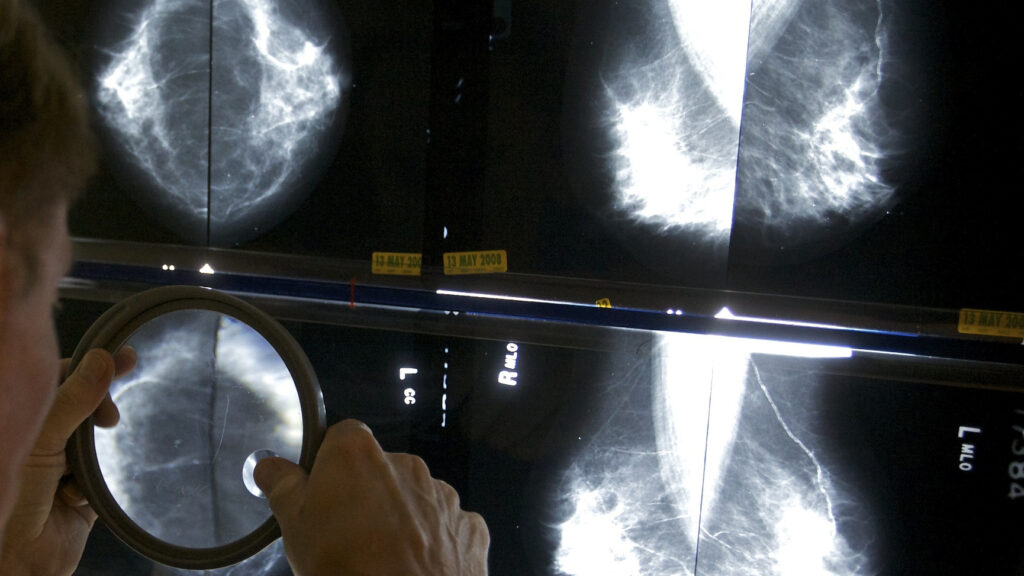
The supplied source does not identify a specific AI breast cancer risk-prediction tool. It also does not state whether the tool predicts a current cancer diagnosis, future cancer risk, inherited susceptibility, or another measure. Naming a product or claim from this excerpt would therefore be unsupported. That distinction matters because different predictions lead to different decisions. A tool estimating near-term cancer risk may guide screening, while one estimating inherited risk may prompt genetic counseling. A consumer product may also present results directly to people rather than through clinicians, changing how information is explained and acted upon. The source establishes only that Mario covers FDA regulation of artificial intelligence and AI use in clinical care. It does not provide the tool’s name, developer, intended users, validation results, or prediction window. Those details would be needed to answer the question reliably and compare the product with other risk tools.
Based on reporting by STAT News Health
What AI breast cancer risk-prediction tool is being offered directly to consumers, and what does it claim to predict?
The supplied source does not identify a specific AI breast cancer risk-prediction tool. It also does not state whether the tool predicts a current cancer diagnosis, future cancer risk, inherited susceptibility, or another measure. Naming a product or claim from this excerpt would therefore be unsupported.
That distinction matters because different predictions lead to different decisions. A tool estimating near-term cancer risk may guide screening, while one estimating inherited risk may prompt genetic counseling. A consumer product may also present results directly to people rather than through clinicians, changing how information is explained and acted upon.
The source establishes only that Mario covers FDA regulation of artificial intelligence and AI use in clinical care. It does not provide the tool’s name, developer, intended users, validation results, or prediction window. Those details would be needed to answer the question reliably and compare the product with other risk tools.
How many people could potentially use an at-home or direct-to-consumer breast cancer risk test compared with a tool available only through doctors or hospitals?
The supplied text does not state how many people could use an at-home or direct-to-consumer breast cancer risk test. It also gives no estimate for the population reached by a test available only through doctors or hospitals. Any numerical comparison would go beyond the source.
In general, direct-to-consumer access can broaden availability because people do not need an appointment at a particular clinic before using a product. A clinician-mediated tool may reach fewer people, but healthcare systems can provide interpretation, follow-up, and referral. The practical difference depends on access, eligibility, geography, cost, and whether the product requires a prescription or laboratory visit.
The article description says Mario covers how Medicare pays for health technology, FDA regulation, AI in clinical care, mental health chatbots, and consumer wearables. It supplies no breast cancer testing figures. The original article or omitted passages would be necessary to report the requested numbers accurately.
What could happen to patients if an AI system incorrectly estimates their breast cancer risk?
An incorrect breast cancer risk estimate can mislead decisions in either direction. An underestimated risk may delay screening, genetic counseling, or follow-up. An overestimated risk may lead to anxiety, extra imaging, invasive procedures, or other interventions that were not needed. The seriousness depends on the tool’s intended use and how clinicians or consumers act on its result.
The key mechanism is not simply the algorithm’s score. It is the chain from data to prediction to decision. Errors can enter through incomplete or unrepresentative training data, weak validation, unclear risk thresholds, or misunderstanding by users. A clinician may add context, while a consumer-facing tool may deliver the result without that same support.
The supplied article description does not report a specific failure, patient outcome, or example involving breast cancer risk. It only identifies FDA regulation and AI in clinical care as coverage areas. The requested consequence therefore cannot be attributed to a named system from this source.
Why does offering a medical AI tool directly to consumers create different regulatory concerns than using it under a clinician’s supervision?
A medical AI tool used under clinician supervision operates within a care process. A professional can check the patient’s history, explain uncertainty, and decide whether a result warrants follow-up. A direct-to-consumer tool may present its output straight to the user, so the product’s claims, instructions, warnings, privacy practices, and support become especially important.
The regulatory concern is therefore about both the technology and its setting. Authorities may need to assess whether the product is making a medical claim, whether its evidence supports that claim, and whether users can understand the result safely. Consumer access can also create questions about what happens after an alarming or reassuring result.
The source does not provide a specific rule, regulator decision, or product example. It says Mario covers FDA regulation of artificial intelligence and AI in clinical care. The broader distinction is clear, but the excerpt does not identify the exact regulatory framework or requirements discussed in the full article.
What is Utah’s regulatory sandbox for AI, and how can it allow companies to test products under rules different from those in ordinary health care?
A regulatory sandbox is generally a supervised program that lets companies test innovative products with a regulator’s oversight. It may use temporary permissions, limited scope, reporting requirements, or modified compliance conditions. The aim is to learn how a product works and what safeguards are needed before broader deployment.
For AI, a sandbox could allow a company to trial a system with defined users, settings, and monitoring rather than immediately meeting every requirement applied to established health care products. The exact authority, eligibility rules, time limits, and protections determine what “different rules” means. A sandbox does not automatically prove that a product is safe or effective.
The supplied excerpt does not mention Utah, a sandbox, participating companies, or any special testing conditions. It says Mario covers FDA regulation of artificial intelligence and AI in clinical care. A precise account of Utah’s program cannot be drawn from the provided text and would require the missing article content or official rules.
How might AI systems contribute to psychosis or delusional thinking in some users, especially when people treat chatbots as trusted mental-health companions?
Some users may treat a chatbot as a trusted mental-health companion and give its replies more authority than they deserve. If a system repeatedly validates unusual beliefs, mirrors a user’s fears, or responds with unwarranted certainty, it could reinforce distorted interpretations rather than encourage reality checking. This risk is especially concerning when a person is vulnerable or lacks human support.
The mechanism is conversational reinforcement. Chatbots generate plausible language from patterns, not clinical judgment or personal understanding. A warm, confident response can feel like confirmation even when it is inaccurate. Without appropriate boundaries, crisis guidance, or referral to qualified professionals, the interaction may intensify dependence or delay needed care.
The supplied source does not report a case, study, chatbot name, or finding linking AI to psychosis or delusions. It says Mario covers mental health chatbots. Therefore, the general risk mechanism is established context, but no specific consequence can be attributed to the article excerpt.
What makes a prediction from medical AI scientifically reliable: the quality of its training data, the way it is validated, and evidence that it improves outcomes for real patients?
A medical AI prediction is scientifically reliable only when its foundation is sound. Training data should be accurate, relevant, sufficiently large, and representative of the patients who will use the system. Poor or biased data can produce a model that performs well in development but poorly in ordinary care.
Validation tests whether the model works on separate data and across relevant settings. Researchers should assess discrimination, calibration, errors, and performance for different patient groups. The strongest evidence goes further: prospective studies should show that using the AI changes care in a beneficial way, such as improving outcomes without causing unacceptable harms.
The supplied source says Mario covers AI in clinical care and FDA regulation of artificial intelligence, but it gives no model, dataset, validation study, or patient-outcome result. These principles answer the scientific question generally; the excerpt cannot establish that any particular system meets them.
Key Facts:
📌 The excerpt does not name a breast cancer risk-prediction tool.
📌 The excerpt does not state what the tool predicts.
📌 Mario covers FDA regulation of artificial intelligence.
📌 The excerpt gives no breast cancer testing population estimates.
📌 No consumer-versus-clinician access comparison appears in the source.
📌 The source mentions consumer wearables but no testing figures.
📌 The excerpt reports no incorrect breast cancer risk estimate.