News · Economy & Business
Nigeria Doesn’t Have Enough Crude Oil To Service Dangote Refinery, Says Oyedele
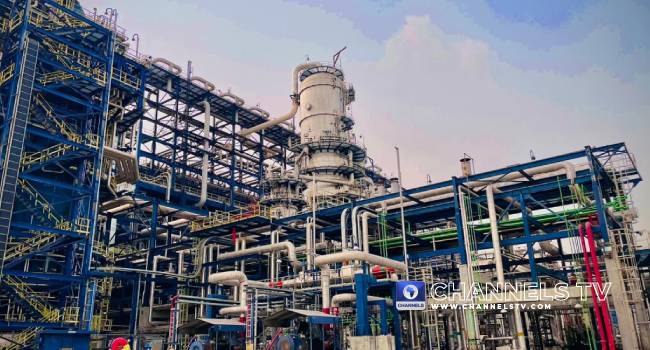
Nigeria’s total crude production is not the same as the volume the government can freely allocate. Under production-sharing contracts and joint ventures, much of the oil is divided among Nigeria and participating companies. Production costs and royalties reduce the government’s eventual share further. This matters because the Dangote Refinery needs dependable crude supplies to meet domestic fuel demand. Oyedele said Nigeria produces about 1.8 million barrels daily. But roughly 45 to 55 percent may be shared under contracts, while other barrels cover the cost of getting crude from the ground. Royalties are also deducted before Nigeria’s remaining profit oil is shared. He said fewer than 700,000 barrels are freely available. That shortage means Nigeria cannot currently give Dangote all the crude it wants. Dangote therefore imports crude, while the government tries to stabilize supplies through the Naira for Crude initiative. Oyedele expects higher production to eventually free enough barrels for Dangote and other domestic refiners.
Based on reporting by Channels TV
Why does the Nigerian government say it cannot currently supply the Dangote Refinery with all the crude oil it needs?
Nigeria’s total crude production is not the same as the volume the government can freely allocate. Under production-sharing contracts and joint ventures, much of the oil is divided among Nigeria and participating companies. Production costs and royalties reduce the government’s eventual share further. This matters because the Dangote Refinery needs dependable crude supplies to meet domestic fuel demand.
Oyedele said Nigeria produces about 1.8 million barrels daily. But roughly 45 to 55 percent may be shared under contracts, while other barrels cover the cost of getting crude from the ground. Royalties are also deducted before Nigeria’s remaining profit oil is shared. He said fewer than 700,000 barrels are freely available.
That shortage means Nigeria cannot currently give Dangote all the crude it wants. Dangote therefore imports crude, while the government tries to stabilize supplies through the Naira for Crude initiative. Oyedele expects higher production to eventually free enough barrels for Dangote and other domestic refiners.
How much crude oil does Nigeria produce each day, and how much does the government say is freely available for domestic refiners?
Nigeria’s headline production figure is 1.8 million barrels of crude oil per day. However, that figure includes oil that is not controlled entirely by the Nigerian government. Contracts with private or partner companies determine how production is divided. The usable figure for domestic supply is therefore much lower.
Finance Minister Taiwo Oyedele said Nigeria does not have up to 700,000 “free crude” barrels to give anyone, including Dangote. Before that point, production-sharing contracts and joint ventures divide barrels. Production costs and royalties also come out before Nigeria’s profit oil is calculated. The article does not give an exact final allocation below 700,000 barrels.
This gap explains why Dangote imports crude instead of relying fully on Nigerian production. It also limits supplies for other local refiners. The government says increased production could eventually release enough crude to serve Dangote and other refiners while reducing dependence on imported crude.
What happens to Nigeria’s crude oil supply before the government receives its share from production-sharing contracts and joint ventures?
Production-sharing contracts and joint ventures determine how Nigeria’s crude output is divided. The country does not simply keep every barrel produced within its territory. Participating companies and the government receive shares according to their agreements. This reduces the volume available for Nigeria’s own allocation.
Oyedele gave a rough example of a 45-to-55 split under these arrangements. He then explained that some barrels are used to recover the cost of producing and lifting crude from the ground. Another portion goes to royalties. Only after these deductions does the remaining profit oil become available for sharing.
The process leaves Nigeria with far fewer free barrels than its headline production suggests. Oyedele said the country has less than 700,000 freely available barrels for anyone, including Dangote. Until production rises, the government cannot reliably supply all domestic refiners and must rely partly on imported crude and existing stabilisation measures.
Why are some of Nigeria’s crude oil barrels used to pay production costs, royalties, and foreign or private partners?
Nigeria’s crude production involves contracts and joint ventures in which companies help produce the oil. Those arrangements specify how the output is divided. They are designed to account for the costs and obligations involved in bringing crude from underground to the surface. Nigeria therefore receives a residual share rather than the entire production volume.
The minister described a sequence of deductions. First, production-sharing and joint-venture ratios divide the output. Next, “cost oil” covers the expense of producing and extracting crude. Royalties are also taken. Only then does the remaining “profit oil” become the portion shared between the relevant parties, including Nigeria.
This mechanism explains why 1.8 million daily barrels do not translate into 1.8 million government-controlled barrels. Oyedele said fewer than 700,000 barrels are freely available today. That constraint limits crude deliveries to Dangote and other refiners until higher production creates additional free barrels.
What is a refinery, and why does the Dangote Refinery need a steady supply of crude oil to produce petrol and other fuels?
A refinery is an industrial facility that processes crude oil into usable products, including petrol and other fuels. Crude is the raw material, so a refinery needs regular deliveries to keep its operations supplied. If input falls short, the facility may produce less fuel or rely on imported crude instead.
The Dangote Refinery is Nigeria’s largest refinery, according to the article’s description of the country’s refining landscape. Yet Nigeria’s government says it cannot currently provide all the crude Dangote needs. Nigeria produces 1.8 million barrels daily, but contractual shares, costs, and royalties leave fewer than 700,000 barrels freely available.
As a result, Dangote imports crude while Nigeria works to increase production. Oyedele said the government hopes to reach a point where Dangote receives everything it wants and other refiners get enough too. More local refining could eventually allow Nigeria to export refined products instead of crude.
How could inadequate domestic crude supplies affect petrol prices, fuel imports, and the operation of Nigerian refineries?
When domestic refiners cannot obtain enough crude, they have fewer locally sourced barrels to process. They may need imported crude, which can expose fuel production to international prices and shipping costs. If imports are unavailable or too expensive, refinery operations could also be reduced. These pressures matter because petrol prices already affect transport, food, and other goods.
Dangote’s situation illustrates the mechanism. Nigeria produces 1.8 million barrels daily, but the government says fewer than 700,000 are freely available after contractual shares, production costs, and royalties. Dangote therefore imports crude. Other Nigerian refiners also compete for the limited barrels that remain available for domestic use.
The article does not quantify any resulting price increase or refinery shutdown. It does say the government expects higher production to free more crude. If that happens, Dangote and other refiners could receive more local supply, potentially supporting more domestic refining and fewer crude imports.
What are fuel subsidies, and how did removing Nigeria’s petrol subsidy change government finances and the cost of living?
A fuel subsidy is government support that keeps petrol prices below the market cost, with public funds covering part of the difference. It can make transport and goods cheaper, but it also creates a large government expense. Tinubu said Nigeria’s subsidy had become fiscally unsustainable, so his administration removed it in 2023 as part of wider reforms.
The article says cheap petrol had lowered food and goods prices and was viewed by some people as their most important government benefit. After the subsidy was scrapped and the naira floated, living costs and hardship increased. Petrol rose to about N1,400 per litre from N830 before the war in the Middle East. The government later introduced a 30-day petrol discount, prompting accusations of a hidden subsidy.
Economists broadly supported the reforms, but their social cost remains severe. The government says ending the subsidy prevented a worse crisis. Opposition figures continue calling for alternatives, including production subsidies for domestic refineries.
Key Facts:
📌 Nigeria produces 1.8 million barrels of crude daily.
📌 Fewer than 700,000 barrels are freely available for anyone.
📌 Dangote currently imports crude oil.
📌 Nigeria currently produces 1.8 million barrels daily.
📌 The government says fewer than 700,000 barrels are freely available.
📌 The freely available amount cannot meet Dangote’s full needs.
📌 Contracts divide crude between Nigeria and participating partners.