News · Health & Medicine
STAT+: House Democrat seeks to scrap No Surprises Act’s costly arbitration process
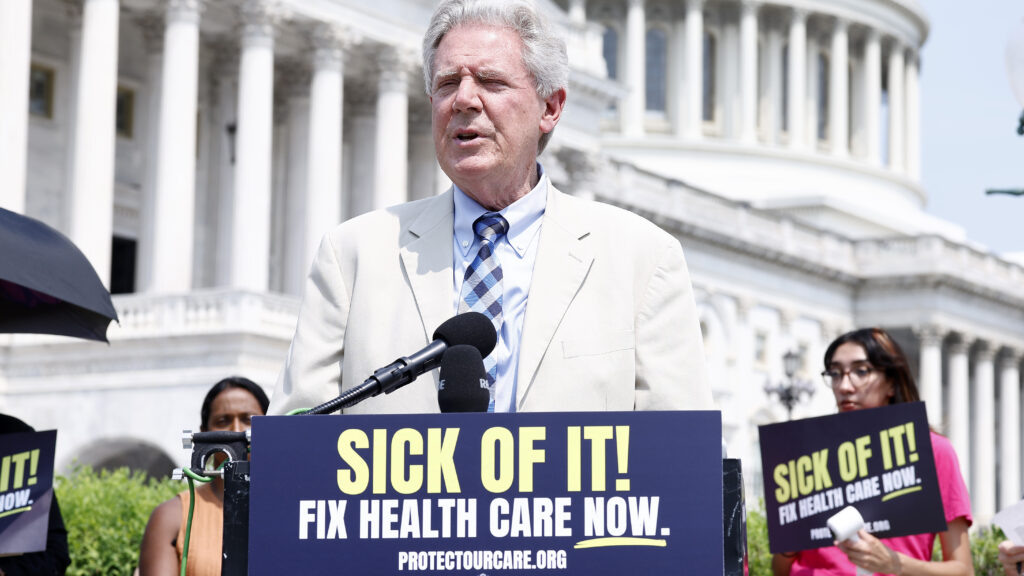
Rep. Frank Pallone’s proposal would change how payment disputes are settled after patients receive care from out-of-network providers. Instead of relying on the current arbitration process, the Lower Premiums, Faster Payments Act would use median in-network rates as the payment standard. The goal is to replace a problem-plagued system. Under the proposal, an insurer and an out-of-network provider would no longer depend on the existing dispute process to determine payment. The median rate paid to in-network providers would guide the amount. This would create a more fixed benchmark for resolving disagreements. The proposal has received praise from academics and consumer advocates. Provider groups have condemned it because arbitration has reportedly been a gold mine for them. Pallone, a No Surprises Act author, called the law an overwhelming success in protecting patients, but the payment system remains politically contested.
Based on reporting by STAT News Health
What would Rep. Frank Pallone’s Lower Premiums, Faster Payments Act change about the No Surprises Act?
Rep. Frank Pallone’s proposal would change how payment disputes are settled after patients receive care from out-of-network providers. Instead of relying on the current arbitration process, the Lower Premiums, Faster Payments Act would use median in-network rates as the payment standard. The goal is to replace a problem-plagued system.
Under the proposal, an insurer and an out-of-network provider would no longer depend on the existing dispute process to determine payment. The median rate paid to in-network providers would guide the amount. This would create a more fixed benchmark for resolving disagreements.
The proposal has received praise from academics and consumer advocates. Provider groups have condemned it because arbitration has reportedly been a gold mine for them. Pallone, a No Surprises Act author, called the law an overwhelming success in protecting patients, but the payment system remains politically contested.
What is the arbitration process used to resolve payment disputes between health insurers and out-of-network providers?
Arbitration is a dispute-resolution process used when a health insurer and an out-of-network provider cannot agree on payment. Instead of leaving the disagreement unresolved, an independent decision-maker reviews the dispute and selects an amount under the system’s rules. The source describes this process as problem-plagued.
In practice, the provider and insurer present their positions to the arbitration process. The resulting decision determines the payment for the care. This mechanism is different from automatically using a standard rate, because the final amount depends on the dispute procedure rather than solely on a median in-network benchmark.
The article does not explain every arbitration rule or provide payment totals. It does state that provider groups have found arbitration highly profitable, calling it a gold mine. Pallone’s bill would eliminate this process and use median in-network rates instead.
How many patients and medical bills does the No Surprises Act protect from unexpected out-of-network charges?
The article does not state how many patients or medical bills the No Surprises Act protects from unexpected out-of-network charges. Giving a numerical answer would therefore go beyond the provided text. The source offers a broad assessment instead: Pallone said the law has been an “overwhelming success” in protecting patients from surprise bills.
The article focuses on the law’s payment-dispute system, not on coverage totals. It explains that the system handles disagreements between health insurers and out-of-network providers. It also describes the proposed replacement, but supplies no patient count, bill count, annual volume, or other scale figure.
That missing information matters because the law’s reach cannot be measured from this article alone. The proposal’s political importance is clear, but its effects cannot be quantified here. Any precise number would require a separate source, which the provided text does not identify.
Why have provider groups criticized a payment system based on median in-network rates?
Provider groups have criticized the proposed payment system because a median in-network rate can limit what an out-of-network provider receives. Providers may believe their services, location, expertise, or negotiating position justify a higher payment. A fixed benchmark could reduce that leverage compared with arbitration.
The key mechanism is the payment reference point. Under the proposal, the median rate paid to in-network providers would guide settlement of a dispute. If that median is below the amount a provider expects, the provider would receive less than under a more favorable arbitration decision. The article specifically describes arbitration as a gold mine for provider groups.
The source does not list each provider group’s argument or provide payment comparisons. It does show a sharp divide: academics and consumer advocates praised Pallone’s bill, while provider groups condemned it. Their criticism reflects the financial stakes of replacing arbitration.
What could happen to patients’ premiums, insurers’ costs, and providers’ payments if arbitration were replaced by median in-network rates?
A median-rate system could make payments more predictable and potentially lower for insurers. If insurers spend less on out-of-network disputes, those savings could put downward pressure on premiums. Providers, especially those who have received favorable arbitration awards, could see lower payments. These are likely policy effects, not results reported in the source.
The mechanism is straightforward. A standard median in-network rate would replace a dispute process that can produce higher awards. Insurers would face a clearer payment benchmark, while providers would lose some ability to seek larger amounts through arbitration. Patients would generally remain protected from the disputed out-of-network charge under the No Surprises Act.
The article does not provide estimates for premiums, insurer costs, or provider payments. It reports praise from academics and consumer advocates, plus condemnation from provider groups. Those reactions show the debate, but they do not prove the proposal would produce specific savings or reductions.
How would using the median in-network rate settle a dispute between an insurer and an out-of-network provider?
Under the proposed approach, the median in-network rate would serve as the standard for settling a payment dispute. The median is the middle amount among relevant in-network payment rates, with half of the rates higher and half lower. Using it would give both sides a defined reference point.
For example, if comparable in-network providers receive rates ranging from $800 to $1,200, the median might be $1,000. The insurer would pay that benchmark for the out-of-network service, rather than relying on the current arbitration process to decide the amount. The precise calculation rules are not provided in the article.
This approach is central to Pallone’s Lower Premiums, Faster Payments Act. It would dismantle the existing process, which the article calls problem-plagued. Academics and consumer advocates praised the proposal, while provider groups opposed it because arbitration has been financially valuable to them.
Why do insurers and medical providers negotiate networks and payment rates instead of charging every patient the same price?
Insurers and medical providers negotiate networks because each side offers something valuable. Insurers bring access to enrolled patients and can direct care within the network. Providers offer medical services at agreed rates. A negotiated contract creates predictable prices and defines how care will be paid.
The mechanism also spreads financial risk. Insurers can estimate spending when network rates are established, while providers gain clearer expectations about reimbursement and patient volume. Patients usually receive care under the plan’s network rules, rather than facing a different price from every provider. The article itself does not explain network negotiations, so this explanation uses general health-care knowledge.
Out-of-network care creates a different problem because no negotiated rate may exist between the insurer and provider. The No Surprises Act protects patients from surprise bills in these situations. Pallone’s proposal would use median in-network rates to resolve the resulting payment dispute.
Key Facts:
📌 The bill would dismantle the current arbitration process.
📌 Median in-network rates would replace arbitration.
📌 Provider groups have condemned the proposal.
📌 Arbitration resolves payment disputes between insurers and providers.
📌 The article calls the current process problem-plagued.
📌 Provider groups have benefited substantially from arbitration.
📌 The article provides no patient or bill count.