News · Environment & Climate
Seized from Thane two years ago, infant orangutan set to return to Indonesia
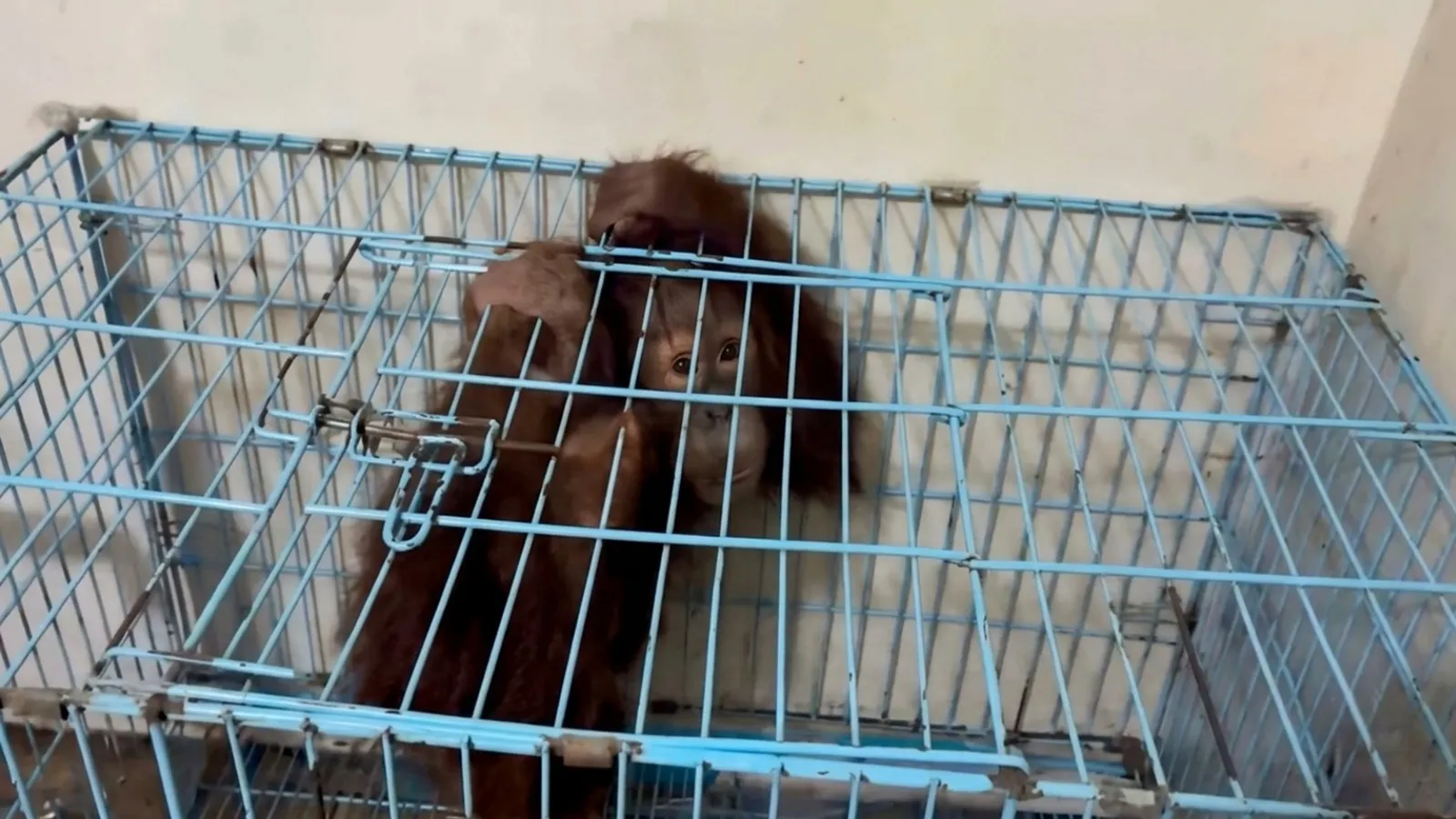
The orangutan was seized from an apartment in Dombivli by the Thane forest division in November 2024. Officials believe it is a male aged about three years. Its case matters because the animal was suspected to be part of an illegally trafficked wildlife consignment, and authorities are now pursuing its return to its likely country of origin. After seizure, the orangutan was first sent to the Balasaheb Thackeray Gorewada International Zoological Park in Nagpur. In March 2025, it moved to the Greens Zoological Rescue and Rehabilitation Centre at Vantara, in Jamnagar district, Gujarat. The transfer followed an order linked to a Supreme Court-appointed high-powered committee. The animal remains at the Gujarat centre while India and Indonesia complete repatriation formalities. Indian officials said the necessary permissions have been issued, while Indonesia is completing import and entry documents. The transfer is expected in the coming days, with arrangements intended to support safe travel and suitable care after arrival.
Based on reporting by Indian Express
What happened to the orangutan seized from an apartment in Dombivli, and where is it being kept now?
The orangutan was seized from an apartment in Dombivli by the Thane forest division in November 2024. Officials believe it is a male aged about three years. Its case matters because the animal was suspected to be part of an illegally trafficked wildlife consignment, and authorities are now pursuing its return to its likely country of origin.
After seizure, the orangutan was first sent to the Balasaheb Thackeray Gorewada International Zoological Park in Nagpur. In March 2025, it moved to the Greens Zoological Rescue and Rehabilitation Centre at Vantara, in Jamnagar district, Gujarat. The transfer followed an order linked to a Supreme Court-appointed high-powered committee.
The animal remains at the Gujarat centre while India and Indonesia complete repatriation formalities. Indian officials said the necessary permissions have been issued, while Indonesia is completing import and entry documents. The transfer is expected in the coming days, with arrangements intended to support safe travel and suitable care after arrival.
What does “repatriation” mean when it is used for a seized wild animal?
For a seized wild animal, repatriation means returning it to the country from which it originated or was exported. It is more than physically transporting the animal. Authorities must establish the appropriate destination, secure permissions, and coordinate safe movement between countries.
In this case, Indian and Indonesian agencies are working together to return the orangutan to Indonesia. Indonesia had already issued an import permit in 2025. Indian authorities have shared their relevant permits and approvals, while Indonesian agencies are completing required import and entry documentation.
The process is now at an advanced stage, with only some formalities pending on the Indonesian side. Officials expect the orangutan to travel in the coming days. Repatriation also matters after the journey: the two countries are arranging for the animal to receive appropriate care upon arrival, rather than simply leaving its welfare to transport procedures.
How large was the seizure, and how long has this orangutan been in India?
The Thane forest division seized the orangutan along with nine other wildlife species. That makes a total of 10 species in the suspected consignment. The seizure was therefore not an isolated animal case, but part of a wider wildlife-trafficking investigation.
Officials seized the male orangutan from an apartment in Dombivli in November 2024. The animal was believed to be around three years old at that time. It was first sent to the Balasaheb Thackeray Gorewada International Zoological Park in Nagpur before later moving to a rehabilitation centre in Gujarat.
The article is dated October 10, 2026, so the orangutan has remained in India since November 2024, nearly two years. It is now at the Greens Zoological Rescue and Rehabilitation Centre at Vantara. Its stay is expected to end soon, because repatriation preparations are in an advanced stage and the transfer may occur within days.
Why was the orangutan seized, and why was it moved from a zoo in Nagpur to a rehabilitation centre in Gujarat?
The orangutan was seized from an apartment in Dombivli by the Thane forest division. Officials suspected it belonged to a consignment of illegally trafficked animals. Nine other wildlife species were seized at the same time, making the case part of a broader suspected trafficking operation.
The animal initially went to the Balasaheb Thackeray Gorewada International Zoological Park in Nagpur. In March 2025, Maharashtra’s then Chief Wildlife Warden directed the zoo to transfer it to the Greens Zoological Rescue and Rehabilitation Centre at Vantara, Gujarat. The direction cited the high-powered committee’s view that a local zoo might not be suitable.
The committee was appointed by the Supreme Court in 2023 to address wild-animal welfare and recommend transfers where appropriate. The Gujarat centre was therefore selected for proper rehabilitation while repatriation remained underway. The move did not end the return process; it provided an interim setting until the animal could go back to Indonesia.
Why is returning the orangutan to Indonesia preferred over keeping it permanently in an Indian zoo?
Returning the orangutan is preferred because international and Indian rules support repatriating seized wild animals when feasible. The article identifies Indonesia as the country involved in the return process. Repatriation can place the animal under the care of authorities and facilities connected to its likely country of origin.
Orangutans are listed under Appendix-I of CITES, which strictly limits their cross-border trade. Permitted purposes include research, transfers between recognised zoos, and breeding projects. The article also says India’s Wildlife Protection Act mandates repatriation after consultation with the likely country of origin or export.
Keeping the animal permanently in an Indian zoo would therefore be less consistent with those rules when a safe return is possible. The orangutan was moved to a rehabilitation centre because the high-powered committee considered a local zoo potentially unsuitable. India and Indonesia are now arranging the transfer and appropriate care after arrival.
What must Indian and Indonesian authorities arrange before and after the orangutan travels, and what will happen to it on arrival?
Before the orangutan travels, Indian and Indonesian authorities must ensure that all legal and practical requirements are complete. These include permits, approvals, import documentation, entry documents, and arrangements for the transfer itself. The process involves multiple ministries and agencies in both countries.
Indian authorities have already shared relevant permits and approvals issued by their competent authorities. Indonesia had issued an import permit in 2025 and is completing the required import and entry documentation. Officials are also coordinating travel arrangements so the animal can move safely between the two countries.
After arrival, the orangutan is expected to receive appropriate care in Indonesia. The Indonesian Ministry of Forestry said both sides continue coordinating to fulfil applicable requirements and protect the animal during the transfer. Indian officials said only a few formalities appeared pending, and repatriation was likely in the coming days.
What is CITES, and how does its Appendix-I listing restrict international trade in orangutans?
CITES is an international treaty that regulates cross-border trade in animals and plants. Its purpose in this case is important because orangutans are listed under Appendix-I, the treaty’s strictest category mentioned in the article. The listing limits how orangutans may be traded or transferred internationally.
Under Appendix-I, international movement is restricted to purposes such as research, transfers between recognised zoos, and breeding projects. A seized orangutan cannot simply be sold or moved across borders as ordinary cargo. Authorities must use the required permits and approvals, with the countries coordinating the animal’s lawful transfer.
The treaty also encourages repatriation when it is feasible. India’s Wildlife Protection Act similarly mandates repatriation after consultation with the likely country of origin or export. Those principles support returning this orangutan to Indonesia, subject to completed documents, safe travel arrangements, and appropriate care after arrival.
Key Facts:
📌 The orangutan was seized from a Dombivli apartment in November 2024.
📌 It is currently housed at a rehabilitation centre in Gujarat.
📌 Repatriation to Indonesia is expected in the coming days.
📌 Repatriation means returning the orangutan to Indonesia.
📌 India and Indonesia are coordinating permits and transfer arrangements.
📌 The animal should receive appropriate care after arrival.
📌 The seizure included the orangutan and nine other wildlife species.