News · Social Issues
A bank robbery, a murder, and a case that took Kerala police 19 years to crack
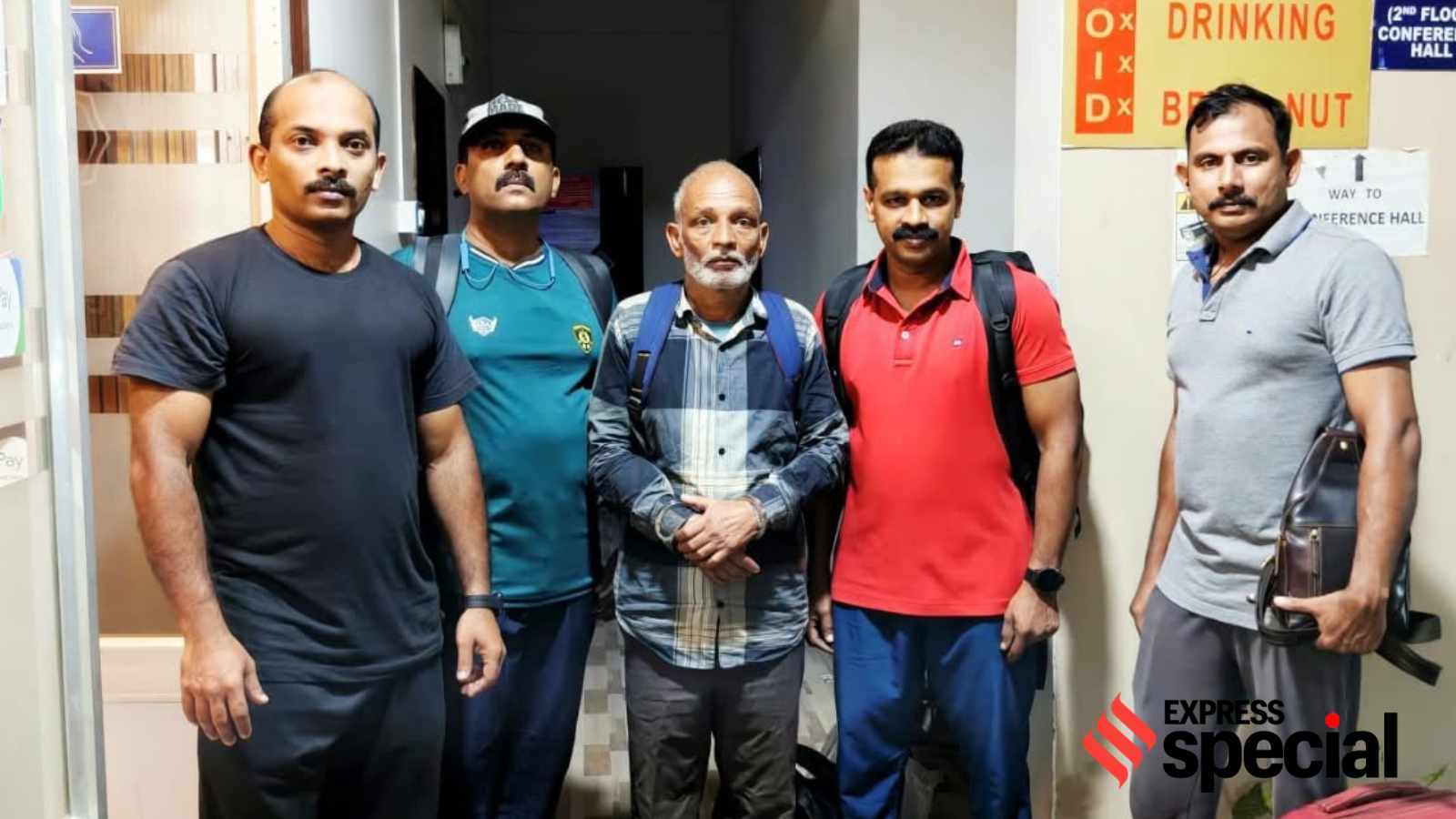
In December 2007, sawmill manager Balakrishnan disappeared from a mill in Perinthalmanna, Kerala. His body was found on December 27 under sawdust, covered with a cloth used by two migrant workers. Those workers, calling themselves Umesh and Vinod, had also vanished. Police later identified them as Dilip Rajak and Sanichar Baita, who were from Bihar, not Assam as they claimed. The investigation followed their public-pay-phone calls to Bihar. Police discovered that their names were false, but Rajak had already left his village with his wife and son. Years of visits to Bihar and Assam produced no arrest. In 2025, investigators used Gandiva, an AI-driven system on NATGRID, to age Rajak’s old photograph and find a SIM card in his name. Call-data records showed repeated SIM changes and helped investigators identify the phone’s tower location. With Assam Police, a four-member Kerala Crime Branch team arrested Rajak on September 20 and brought him to Malappuram on September 28. Sanichar remains on the run.
Based on reporting by Indian Express
What happened in the 2007 Kerala sawmill murder, and how was Dilip Rajak finally arrested?
In December 2007, sawmill manager Balakrishnan disappeared from a mill in Perinthalmanna, Kerala. His body was found on December 27 under sawdust, covered with a cloth used by two migrant workers. Those workers, calling themselves Umesh and Vinod, had also vanished. Police later identified them as Dilip Rajak and Sanichar Baita, who were from Bihar, not Assam as they claimed.
The investigation followed their public-pay-phone calls to Bihar. Police discovered that their names were false, but Rajak had already left his village with his wife and son. Years of visits to Bihar and Assam produced no arrest. In 2025, investigators used Gandiva, an AI-driven system on NATGRID, to age Rajak’s old photograph and find a SIM card in his name.
Call-data records showed repeated SIM changes and helped investigators identify the phone’s tower location. With Assam Police, a four-member Kerala Crime Branch team arrested Rajak on September 20 and brought him to Malappuram on September 28. Sanichar remains on the run.
What is a cold case, and why did this investigation remain unresolved for nearly 19 years?
A cold case is an unresolved criminal investigation that has gone for years without an arrest or a clear conclusion. It still matters because investigators can reopen old evidence when new information, technology, or cooperation creates a fresh lead. The Kerala sawmill murder remained active even after early inquiries failed to find the missing workers.
Police learned that the men called Bihar from a public phone, but the names Umesh and Vinod were fake. They identified Dilip Rajak and Sanichar Baita in 2008, yet Rajak had already left his village with his wife and son. Police later made periodic visits to Assam and Bihar, including visits in 2021 and 2025, without finding the suspects.
The breakthrough came when investigators used Gandiva to search after ageing Rajak’s old photograph. A SIM card in his name, call-data records, and a phone tower location produced a current lead. Rajak was arrested, but Sanichar remains missing, so the wider case is not fully resolved.
How large was the investigation in time and distance, spanning 19 years and about 3,600 kilometres across Kerala, Bihar, and Assam?
This was not a local investigation that ended at the sawmill. The murder occurred in Perinthalmanna, Kerala, while the suspects’ family and identity trail led to Dabhra village in Araria, Bihar. Their later work and eventual arrest took investigators to Assam. The article describes the journey as roughly 3,600 kilometres and nearly two decades.
The case began in December 2007, after Balakrishnan’s body was discovered at the sawmill. Police traced calls from a public phone to Bihar and learned the workers had used false names. Rajak later moved away with his wife and son, while both suspects avoided their village. Kerala teams periodically searched Assam and Bihar, including fieldwork in 2021 and 2025.
The crime branch finally combined old investigative work with Gandiva, NATGRID data, call records, and tower information. A four-member team travelled to Assam and arrested Rajak on September 20. The distance and time show why cross-state police cooperation became essential, while Sanichar’s escape keeps the investigation open.
How did the suspects’ fake names, movement between states, and repeated changes of SIM cards make them difficult to trace?
False names and changing locations can break the connection between a suspect and older records. In Kerala, Dilip Rajak and Sanichar Baita claimed to be Umesh and Vinod from Assam. Their real identities were different, and their Bihar village offered little help because Rajak had already left and both men stayed away.
Their phone use created another obstacle. They had no personal phone at the sawmill and made calls through a public pay phone. Police traced those calls to Bihar, but the discovery did not immediately reveal where the men had gone. Years later, investigators found that Rajak had changed SIM cards at least 15 times, while making few calls and sending fewer messages.
The later data trail became useful because the SIM activity could be connected to a phone tower location. Gandiva helped investigators search for Rajak after ageing an old photograph. The case shows how aliases, migration, limited communications, and repeated SIM changes delayed the search, but did not erase every trace.
What are call-data records and mobile-phone tower locations, and how can they help investigators locate a suspect?
Call-data records are telecommunications records showing details such as calls, messages, and the numbers or network points involved. A mobile-phone tower location indicates the area where a phone connected to the network. These records do not automatically prove who used a phone, but they can help investigators build a timeline and identify a likely location.
In this case, police found a SIM card in Dilip Rajak’s name after using Gandiva to search with an aged version of his old photograph. They then secured call-data records. The records showed that the person had changed SIM cards at least 15 times, while making few calls and sending fewer messages. Investigators later identified the phone’s tower location.
That combination gave police a practical lead after years without success. The tower information helped them locate Rajak in Assam, where a four-member Crime Branch team arrested him on September 20 with local police assistance. The records supported the search, while the arrest required fieldwork and cross-state cooperation.
What is NATGRID, and how did its Gandiva search system help police connect an old photograph to a current SIM card?
NATGRID is an intelligence-sharing platform that connects multiple government agencies and databases, including Railways, police, and telecom sources. Gandiva is described in the article as an AI-driven analytical and search engine deployed over NATGRID. Its importance here was its ability to unify, cross-reference, and analyse large volumes of security, financial, and demographic data.
Investigators fed an old photograph of Dilip Rajak into AI to estimate his aged appearance. They then searched the connected database and found a SIM card in Rajak’s name. Police obtained call-data records and found that the user had changed SIM cards at least 15 times. They also identified the phone’s tower location, strengthening the lead.
The technology did not replace police work. Investigators had already traced calls, visited Bihar and Assam, and gathered background information. Gandiva connected that older investigation to a current data trail. With Assam Police, the Kerala Crime Branch located and arrested Rajak on September 20. Sanichar Baita remains unarrested.
What can happen in a criminal investigation when police combine witness information, public records, telecommunications data, and cross-state cooperation?
Combining evidence lets investigators compare clues that may seem weak on their own. Witness information can establish what happened and who disappeared. Public or administrative records can test identities. Telecommunications data can reveal contact patterns and locations. Cross-state cooperation can then turn an analytical lead into a physical search and arrest.
In Rajak’s case, police learned that two workers vanished after Balakrishnan disappeared. They traced their public-phone calls to Bihar and discovered that Umesh and Vinod were false names. Later, Gandiva linked an aged photograph to a SIM card. Call-data records showed repeated SIM changes, and tower data helped identify the phone’s location.
The result was a breakthrough after years of unsuccessful searches. Kerala Crime Branch investigators worked with Assam Police, arrested Rajak on September 20, and brought him to Malappuram on September 28. The approach can advance old investigations, but this case also shows its limits: Sanichar Baita is still on the run, and police only say the bank robbery may be linked to the murder.
Key Facts:
📌 Balakrishnan’s body was found under sawdust on December 27, 2007.
📌 Dilip Rajak was arrested in Assam on September 20.
📌 Sanichar Baita remains on the run.
📌 Police identified the suspects in 2008 but could not find them.
📌 The suspects stayed away from their Bihar village.
📌 Gandiva produced the breakthrough nearly two decades later.
📌 The investigation stretched across Kerala, Bihar, and Assam.