News · Politics & Governance
Turkey Passes Law to Advance Peace With Kurdish Militants
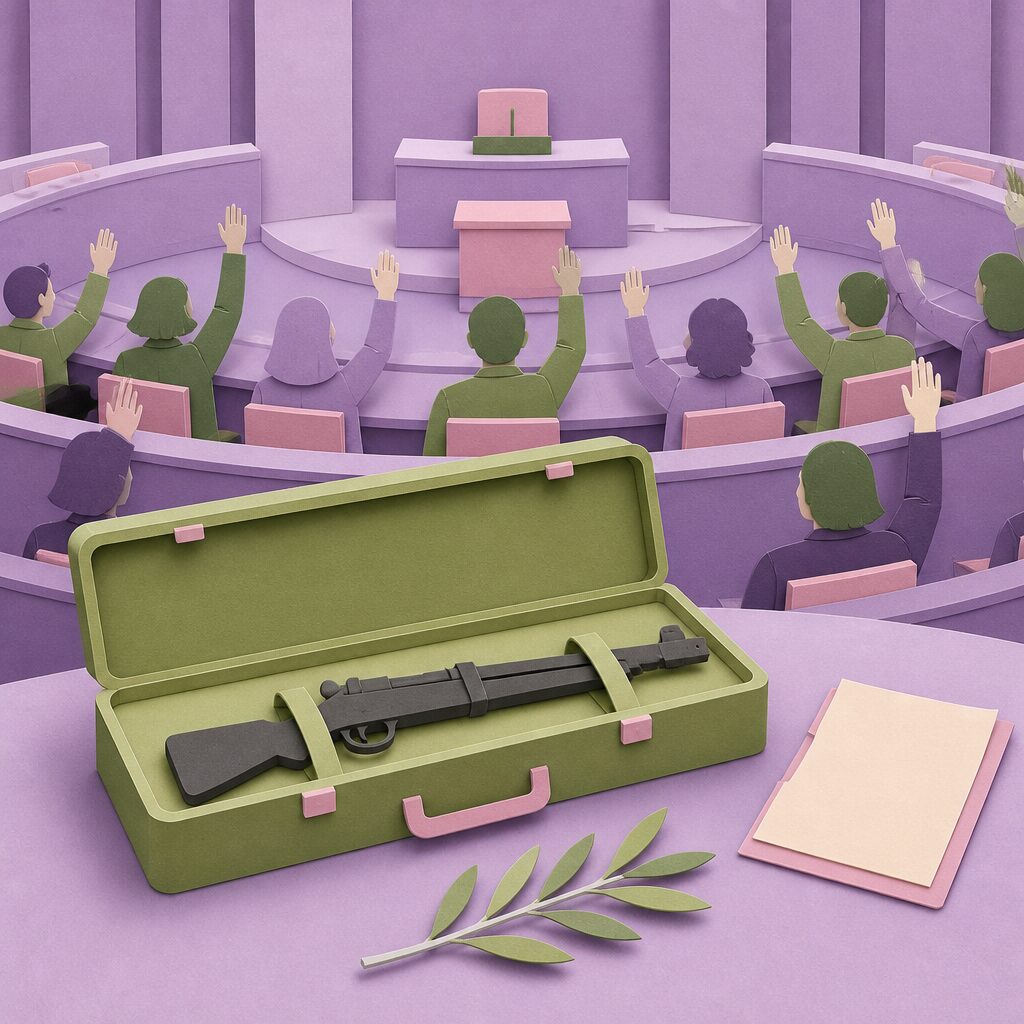
Turkey’s new law creates a legal path toward peace with PKK members. It calls for the group’s complete disarmament and suspends the sentences of some former militants. This matters because ending an insurgency requires both stopping armed activity and addressing what happens to participants afterward. The key mechanism is conditional relief. Former militants may avoid serving suspended sentences, while the PKK is expected to surrender its weapons. The article says parliament approved these measures late Monday. That connects legal leniency to a broader peace effort rather than treating amnesty as a separate action. The law does not by itself guarantee peace. Disarmament must occur in practice, and authorities must determine who qualifies for suspended sentences. If both sides follow through, the measure could reduce violence and support reintegration. If commitments fail, distrust and conflict could return.
Based on reporting by Human Progress
What did Turkey's new law change for PKK members and former militants?
Turkey’s new law creates a legal path toward peace with PKK members. It calls for the group’s complete disarmament and suspends the sentences of some former militants. This matters because ending an insurgency requires both stopping armed activity and addressing what happens to participants afterward.
The key mechanism is conditional relief. Former militants may avoid serving suspended sentences, while the PKK is expected to surrender its weapons. The article says parliament approved these measures late Monday. That connects legal leniency to a broader peace effort rather than treating amnesty as a separate action.
The law does not by itself guarantee peace. Disarmament must occur in practice, and authorities must determine who qualifies for suspended sentences. If both sides follow through, the measure could reduce violence and support reintegration. If commitments fail, distrust and conflict could return.
What is the Kurdistan Workers’ Party, or PKK?
The Kurdistan Workers’ Party, or PKK, is an organized Kurdish separatist movement. It has pursued political aims through an armed insurgency against the Turkish state. The source article identifies it as the group involved in the proposed peace effort and describes it as responsible for one of the world’s longest insurgencies.
The PKK is not simply a political party operating through elections. Its role in this agreement concerns its armed organization, fighters, and weapons. The law specifically calls for the PKK to disarm. It also addresses some former militants by suspending their sentences, creating a possible route away from armed conflict.
The article does not provide the PKK’s founding date, leadership, or detailed political program. More broadly, the group has been active since the late twentieth century and has fought Turkey for decades. Its future role would depend on whether disarmament becomes real and whether former members can return to civilian life.
What does it mean for the PKK to fully disarm?
For an armed group, full disarmament means surrendering or permanently removing its weapons and ending its capacity to conduct military attacks. It usually involves more than announcing a ceasefire. Fighters must stop operating as an armed force, and weapons may need to be collected, documented, and monitored.
In this case, Turkey’s parliament passed a law calling for the PKK’s full disarmament. The same law suspends some sentences for former militants. The mechanism is therefore reciprocal in purpose: the group gives up armed power, while eligible individuals may receive legal relief. The article does not describe the inspection process or timetable.
Disarmament could reduce the risk of renewed attacks and make political participation more possible. Yet a declaration alone would not prove success. Durable peace would require credible verification, compliance by PKK members, and practical arrangements for former fighters. Without those steps, weapons could remain hidden or violence could resume.
How long has the conflict between Turkey and the PKK lasted, and how many people have been affected by it?
The conflict is one of the world’s longest insurgencies. The armed phase commonly dated to 1984 has lasted more than 40 years. Its length matters because prolonged conflict can shape several generations, weaken communities, and make compromise harder. The article itself gives no exact start date or casualty total.
Outside the article, widely cited estimates place deaths from the Turkey-PKK conflict at more than 40,000. Millions of people have also been affected through displacement, disrupted livelihoods, security measures, and continuing fear. These figures vary because different estimates count civilians, fighters, and deaths from different periods in different ways.
The scale helps explain why lawmakers are pursuing a peace effort. A successful disarmament could prevent further deaths and reduce the conflict’s social costs. However, a law cannot erase decades of suffering. Any lasting settlement would need implementation, trust, and attention to people affected by the violence.
What are Turkey and the PKK each expected to do under this peace effort?
The peace effort assigns different responsibilities to the two sides. Turkey’s parliament has created conditional legal relief by suspending some sentences for former PKK militants. The PKK, meanwhile, is expected to give up its weapons completely. This division matters because peace requires both government action and an insurgent group’s withdrawal from armed conflict.
The main mechanism is an exchange of commitments. The group’s disarmament addresses immediate security concerns. Suspended sentences address what happens to some people who previously took part in the insurgency. The article does not say that every former militant is covered, nor does it describe all of Turkey’s future obligations.
If both sides carry out their roles, the arrangement could open space for reduced violence and civilian politics. Turkey would need to apply the legal provisions consistently, while the PKK would need to disarm in practice. Unclear rules, incomplete compliance, or renewed attacks could undermine the peace effort.
What could happen if the PKK disarms and some former militants receive suspended sentences?
If the PKK truly disarms, its ability to launch organized attacks would be reduced or ended. If some former militants receive suspended sentences, they could avoid immediate imprisonment under the law’s conditions. These changes matter because peace requires both security and a workable future for people leaving an armed movement.
The article provides a concrete pairing: parliament demands full PKK disarmament and suspends sentences for some former militants. The key mechanism is conditional reintegration. Legal relief can encourage fighters to leave the conflict, while disarmament can reassure the state that violence is stopping. The article does not guarantee that every former militant qualifies.
The best possible outcome would be fewer attacks, fewer casualties, and greater room for political solutions. Former fighters might rebuild civilian lives instead of returning to combat. The result would still depend on verification, fair implementation, and trust. If either side breaks the arrangement, tensions could rise again.
Why do governments sometimes combine amnesty with disarmament when trying to end an insurgency?
Governments sometimes combine amnesty with disarmament because insurgents may fear punishment if they surrender. Amnesty or suspended sentences can reduce that fear and make leaving the armed group more attractive. Disarmament protects the public by removing weapons and ending the group’s ability to continue attacks. Together, the policies address both motivation and security.
Turkey’s law illustrates this approach. It calls for the PKK’s full disarmament while suspending the sentences of some former militants. The legal relief is conditional, so former fighters receive an incentive within a framework tied to peace. The article does not explain every eligibility rule or enforcement measure.
This combination can help transform fighters into civilians and turn a military conflict into a political process. It can also build confidence if each side sees the other taking concrete steps. But poorly designed amnesty may anger victims or encourage renewed violence. Lasting results require clear conditions, credible monitoring, and consistent enforcement.
Key Facts:
📌 The law requires full PKK disarmament.
📌 Some former militants receive suspended sentences.
📌 The amnesties are conditional, not universal.
📌 PKK stands for Kurdistan Workers’ Party.
📌 It is a Kurdish separatist group.
📌 The PKK has waged an armed insurgency against Turkey.
📌 Disarmament means surrendering weapons and ending armed operations.