News · Defence & Security
News Wrap: U.S. strikes Iran after attempted attacks against ships in Strait of Hormuz
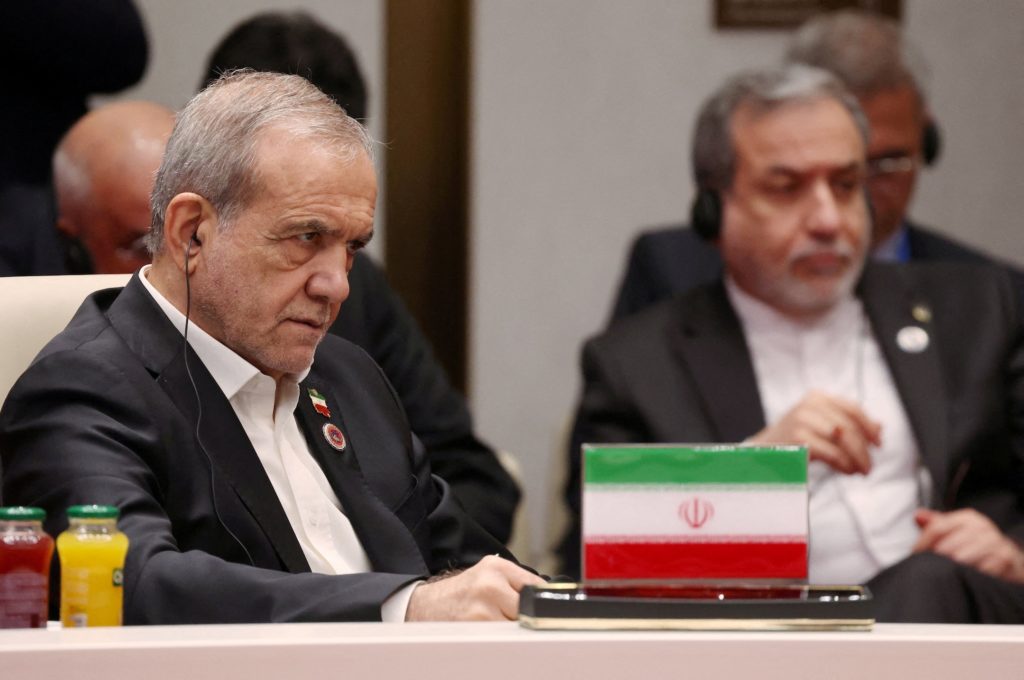
The article reports that the United States struck targets inside Iran. It does not say what those targets were. It also does not identify the ships involved, the weapons used, or whether any vessel was damaged. Those missing details matter because they shape how people judge the military response. The stated trigger was attempted attacks against ships in the Strait of Hormuz. In general, such attacks could involve missiles, drones, mines, or fast boats, but the article does not specify which method was alleged here. The key mechanism is retaliation: a country says force was used to deter or stop further attacks. The immediate reality is therefore limited to the article's account. It establishes a U.S. strike and an official explanation, not an independently described incident. Further evidence could clarify the targets, the alleged attacks, and whether the response was proportionate under international law.
Based on reporting by PBS NewsHour
What did the United States strike inside Iran, and what attempted attacks against ships did it say prompted the strikes?
The article reports that the United States struck targets inside Iran. It does not say what those targets were. It also does not identify the ships involved, the weapons used, or whether any vessel was damaged. Those missing details matter because they shape how people judge the military response.
The stated trigger was attempted attacks against ships in the Strait of Hormuz. In general, such attacks could involve missiles, drones, mines, or fast boats, but the article does not specify which method was alleged here. The key mechanism is retaliation: a country says force was used to deter or stop further attacks.
The immediate reality is therefore limited to the article's account. It establishes a U.S. strike and an official explanation, not an independently described incident. Further evidence could clarify the targets, the alleged attacks, and whether the response was proportionate under international law.
What is the Strait of Hormuz, and where is it located?
The Strait of Hormuz is a narrow maritime passage at the entrance to the Persian Gulf. It connects the Persian Gulf with the Gulf of Oman and, beyond it, the Arabian Sea and Indian Ocean. Iran borders its northern side, while Oman controls territory along parts of its southern side. Its location makes it a major global chokepoint.
Ships carrying oil, petroleum products, and liquefied natural gas use the strait to reach international markets. Traffic follows designated shipping lanes, which help large vessels pass safely through restricted waters. The channel is strategically important because many major energy exporters sit inside the Persian Gulf.
The article highlights the strait by linking it to attempted attacks against ships and U.S. strikes inside Iran. Any disruption there can affect trade far beyond the region. Governments and companies therefore monitor security, shipping insurance, and possible alternative routes closely.
How much of the world's oil and natural gas passes through the Strait of Hormuz?
The Strait of Hormuz carries an exceptionally large share of global energy. U.S. Energy Information Administration estimates commonly put oil flows at about one-fifth of world petroleum liquids consumption, measured by daily volume. Natural-gas figures are often reported as a share of liquefied natural gas, or LNG, trade rather than all gas production.
Recent estimates generally place LNG moving through Hormuz at more than one-fifth of global LNG trade. Exact percentages change with production, demand, prices, and shipping patterns. The key mechanism is concentration: many exporters and importers depend on one narrow route, so a disruption can affect supply quickly.
These figures explain why the article's mention of attempted attacks against ships is significant. Even a short security crisis can raise freight and insurance costs. It can also push energy buyers to seek alternative supplies, while producers try pipelines or other ports where possible.
Why is Iran able to threaten or interfere with ships traveling through the strait?
Iran can threaten ships in the Strait of Hormuz mainly because the waterway runs beside its coastline. The passage is narrow, so vessels have limited room to maneuver. That geography lets Iran observe traffic and place military systems close to commercial routes. It does not mean every threat will succeed, but proximity creates leverage.
Iran's military capabilities include shore-based missiles, naval mines, drones, and fast attack boats. The Islamic Revolutionary Guard Corps Navy operates in the Gulf and has practiced swarming tactics with small craft. Mines could endanger a wide area, while missiles or drones could threaten specific ships. These tools can impose delays even without sinking a vessel.
The article says the United States cited attempted attacks against ships before striking targets inside Iran. That claim shows how maritime incidents can become wider military confrontations. Future risks depend on detection, escorts, de-escalation efforts, and whether ships can continue using the route safely.
What consequences can attacks or military strikes near the strait have for shipping, energy prices, and countries around the world?
Attacks or military strikes near the Strait of Hormuz can disrupt more than local shipping. Ship operators may slow voyages, avoid the area, request escorts, or wait for security updates. Insurers can raise premiums, and crews may face greater danger. These added costs can make delivered energy more expensive.
The key mechanism is a supply-risk premium. If traders fear that oil or gas exports could be delayed, they may bid prices higher before any physical shortage occurs. Airlines, factories, power companies, and transport firms then face larger fuel bills. Governments may also release emergency reserves or increase patrols.
The article connects attempted ship attacks with U.S. strikes inside Iran, showing how quickly maritime risk can become geopolitical. Prolonged tension could affect inflation, national budgets, and energy security worldwide. Calm patrols, diplomacy, alternative routes, and restored confidence can reduce those effects, but markets may remain sensitive to new incidents.
What alternative routes or transportation methods can countries use if shipping through the Strait of Hormuz is disrupted?
Countries facing a Hormuz disruption can combine several workarounds. Oil producers may send more crude through pipelines to ports on the Red Sea or Arabian Sea. Saudi Arabia has the East-West pipeline, and the United Arab Emirates has a pipeline to Fujairah, outside the strait. Importers can also use stored reserves and seek supplies from other regions.
The key mechanism is substitution. Pipelines move some oil without ships entering Hormuz, while tankers can load at alternative ports. LNG is harder to reroute because it needs specialized terminals and ships. Rail and road transport can help with small volumes, but they cannot replace the strait's immense capacity.
The article's reported attacks and U.S. strikes make these limits important. Alternative routes may cushion a short disruption, not fully replace normal flows. Governments may expand pipelines, storage, ports, and renewable energy over time. Such projects reduce vulnerability but require years and substantial investment.
How do international law and the principle of self-defense govern a country's response when its military or commercial ships are attacked?
Under the United Nations Charter, Article 51 recognizes an inherent right of individual or collective self-defense if an armed attack occurs. A state responding to an attack should show necessity and proportionality. It should use force to stop or prevent the threat, not impose unlimited punishment. It must also report self-defense measures to the Security Council.
For attacks at sea, the legal analysis depends on evidence, attribution, scale, and immediacy. A government may need to demonstrate that a state or organized armed group was responsible. International maritime law also protects navigation, including transit through strategic waterways, while allowing action against genuine threats. The facts determine whether force is lawful.
The article says the United States cited attempted attacks against ships before striking inside Iran. It does not provide the evidence or legal justification in detail. Further information would be needed to assess the response. Future incidents will test both deterrence and the limits of self-defense.
Key Facts:
📌 The United States struck targets inside Iran.
📌 The article does not name the targets.
📌 Washington cited attempted attacks against ships.
📌 Hormuz connects the Persian Gulf and Gulf of Oman.
📌 Iran lies north of the strait.
📌 Oman controls territory along its southern side.
📌 About one-fifth of global petroleum liquids crosses Hormuz.