News · History & Heritage
Americans remember the lives lost in the 9/11 attacks 25 years ago
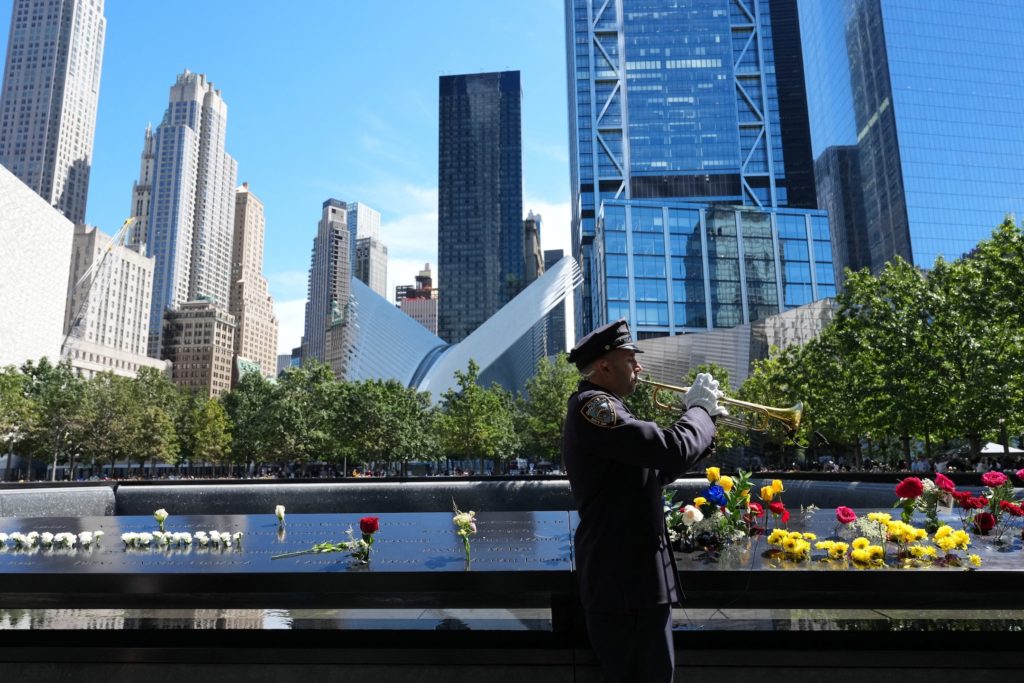
“9/11” is the common name for the terrorist attacks carried out in the United States on September 11, 2001. Nineteen al-Qaida hijackers seized four commercial airplanes. Two planes crashed into New York’s World Trade Center, one struck the Pentagon, and one crashed near Shanksville, Pennsylvania. The attacks killed 2,977 people. The attack plan used coordinated hijackings to strike important national symbols. The World Trade Center represented the country’s financial power. The Pentagon represented its military leadership. Passengers and crew members fought back on the fourth plane, which crashed in Pennsylvania before reaching its intended target. These connected attacks created nationwide shock and loss. The article says the attacks put the United States on a course that defined the following quarter-century. Their effects included wars, new security systems, expanded counterterrorism efforts, and lasting public debate. The anniversary ceremonies show that 9/11 remains both a historical event and a continuing memory for families, survivors, responders, and the wider country.
Based on reporting by PBS NewsHour
What does “9/11” refer to, and what happened in the attacks?
“9/11” is the common name for the terrorist attacks carried out in the United States on September 11, 2001. Nineteen al-Qaida hijackers seized four commercial airplanes. Two planes crashed into New York’s World Trade Center, one struck the Pentagon, and one crashed near Shanksville, Pennsylvania. The attacks killed 2,977 people.
The attack plan used coordinated hijackings to strike important national symbols. The World Trade Center represented the country’s financial power. The Pentagon represented its military leadership. Passengers and crew members fought back on the fourth plane, which crashed in Pennsylvania before reaching its intended target. These connected attacks created nationwide shock and loss.
The article says the attacks put the United States on a course that defined the following quarter-century. Their effects included wars, new security systems, expanded counterterrorism efforts, and lasting public debate. The anniversary ceremonies show that 9/11 remains both a historical event and a continuing memory for families, survivors, responders, and the wider country.
Where did the attacks take place, and why are New York, the Pentagon, and Shanksville significant?
The attacks took place at three main locations. Two hijacked airplanes hit the World Trade Center in New York. Another struck the Pentagon, near Washington, D.C. A fourth plane crashed near Shanksville, Pennsylvania. The article identifies all three places as locations of major 25th-anniversary gatherings.
Each site carries a distinct meaning. New York was home to the World Trade Center, a major symbol of American commerce and global connection. The Pentagon is the headquarters of the United States Department of Defense. In Pennsylvania, passengers and crew members resisted the hijackers, and the plane crashed before reaching its intended target. That act made the site a lasting symbol of courage and sacrifice.
The locations help people remember the attacks as both one coordinated operation and several personal tragedies. Ceremonies in New York, at the Pentagon, and in Shanksville connect national history with local grief. They also preserve different forms of remembrance: loss, duty, resistance, and continuing service.
How many people were killed, and how large was the group of people affected by the attacks?
The confirmed death toll from the attacks was 2,977 people. That figure is the clearest measure of the immediate human loss. It includes people killed at the attack sites and aboard the hijacked airplanes. The article uses this number to show the scale of the tragedy remembered at the 25th-anniversary ceremonies.
The wider affected group was much larger, but the article does not provide a single total. Families lost relatives. Survivors carried physical and emotional consequences. First responders faced danger during the attacks and, in many cases, later health problems. Communities near the sites also endured disruption, fear, and grief. Their experiences show why the impact cannot be measured only by the death toll.
The attacks also affected the entire United States and people around the world. They changed public behavior, government policy, security procedures, and foreign relations. Twenty-five years later, families, survivors, responders, and dignitaries still gather to remember. The continuing ceremonies demonstrate that the affected community includes several generations and extends far beyond the original sites.
Who were the victims and responders remembered at the anniversary ceremonies?
The anniversary ceremonies honored the people who died in the attacks and those who responded to them. The article specifically names families, survivors, first responders, and dignitaries among the people marking the 25th anniversary. Together, they represent victims, witnesses, rescuers, officials, and the broader public that continues to remember.
The victims included civilians, passengers and crew members, workers at the World Trade Center, and people at the Pentagon. First responders included firefighters, police officers, emergency medical workers, and others who entered dangerous sites or helped afterward. Survivors carried memories of escape, rescue, and loss. Families remembered relatives while also preserving their stories for later generations.
The ceremonies matter because remembrance is both personal and national. Names and stories give individual meaning to the death toll of 2,977. Gatherings in New York, at the Pentagon, and in Shanksville connect different communities to one shared event. As time passes, these ceremonies help teach younger people what happened and why honoring victims and responders remains important.
What major changes did the attacks set in motion for the United States over the following 25 years?
The article does not list every change, but it says 9/11 set the United States on a course that defined the next 25 years. In established history, that course included a broad war on terrorism, the U.S.-led war in Afghanistan, and major changes to homeland security. The attacks also reshaped how leaders discussed national safety and international threats.
The government created or strengthened security systems. These included the Department of Homeland Security, the Transportation Security Administration, tighter airport screening, intelligence sharing, and expanded surveillance and counterterrorism powers. The United States also used military force against al-Qaida and the Taliban in Afghanistan. These responses aimed to prevent another coordinated attack, but they produced debates over cost, civil liberties, and government authority.
Those consequences remain part of American public life. Security checks, emergency planning, counterterrorism operations, and arguments about privacy all reflect the post-9/11 era. The anniversary encourages people to examine both the protection these changes provided and the burdens they created. Its forward implication is clear: national responses can shape policy long after the original crisis ends.
Who organized and carried out the attacks, and what was al-Qaida?
Al-Qaida organized the September 11 attacks. Nineteen members of the network carried them out by hijacking four commercial airplanes. The article itself does not name al-Qaida, but this attribution is established historical knowledge. Osama bin Laden led al-Qaida when the attacks were planned and launched.
Al-Qaida was a transnational extremist organization that used terrorism to pursue political and ideological goals. It recruited and trained members, built networks across countries, and planned attacks against the United States and other targets. The hijackers used ordinary airliners as weapons, turning transportation systems into tools for a coordinated assault. Their plan targeted symbols of American economic and military power.
After 9/11, the United States made dismantling al-Qaida a central national-security goal. Military operations, intelligence work, international cooperation, and financial investigations targeted the network. Al-Qaida was weakened, but terrorism did not disappear. The group’s role helps explain why the attacks changed U.S. foreign policy and why counterterrorism remained a major concern for decades.
What is terrorism, and why can a single coordinated attack change a country's foreign policy, security systems, and public life?
Terrorism is the deliberate use or threat of violence against civilians or other targets to create fear and advance political, ideological, or religious goals. It is not defined only by the number of victims. Its power also comes from the message it sends to millions of people who witness the event or fear becoming targets. The 9/11 attacks showed how terrorism can produce national consequences.
The attackers coordinated several hijackings and struck symbolic locations. That mechanism multiplied the effect of each individual attack. News coverage spread images and uncertainty across the country, while the targets suggested that economic, military, and political systems could be reached. Leaders then faced pressure to protect the public, identify the perpetrators, and prevent another attack.
As a result, one operation can change foreign policy, security systems, and daily life. Governments may launch military campaigns, reorganize agencies, increase screening, and expand intelligence powers. People may alter travel, public gatherings, and their sense of safety. The article’s reference to a 25-year national course shows that terrorism can create consequences far beyond the original violence.
Key Facts:
📌 9/11 refers to the terrorist attacks of September 11, 2001.
📌 Nineteen hijackers seized four commercial airplanes.
📌 The attacks killed 2,977 people.
📌 Two planes struck New York’s World Trade Center.
📌 One plane hit the Pentagon near Washington, D.C.
📌 A fourth plane crashed near Shanksville, Pennsylvania.
📌 The attacks killed 2,977 people.