News · Science & Technology
10,000 years of wheat and barley selection reveal shared climate-adaptation genes
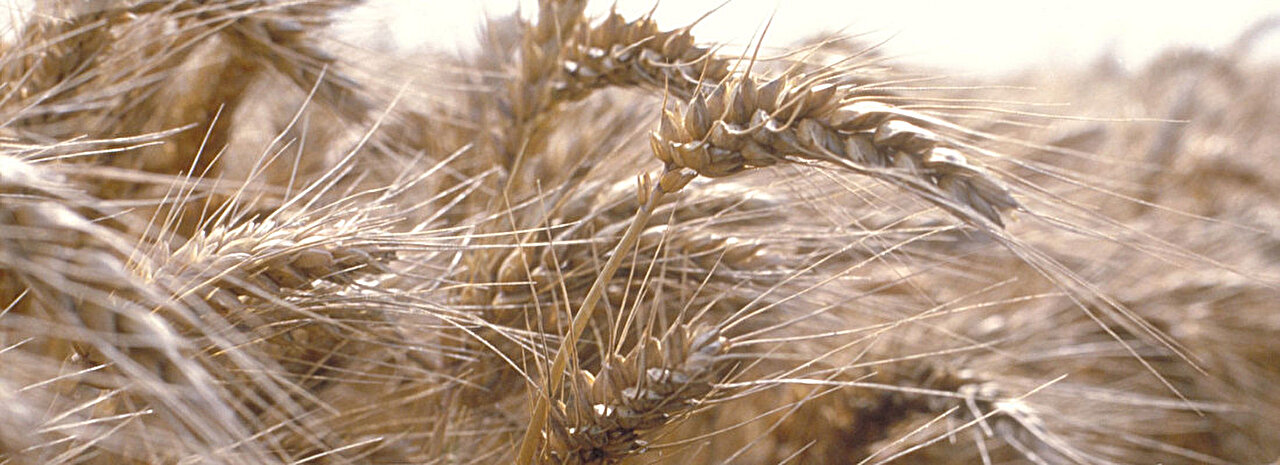
Researchers from INRAE, the University of Clermont Auvergne, and the CNRS reconstructed 10 ancient plant genomes. These genomes represent common ancestors shared by 84 botanical species important to agriculture. The goal is to look backward and identify genetic features that persisted as plants changed and environments shifted. A useful example is drought adaptation. If a gene appears in several related crops and remains conserved in their ancestral genomes, it may have helped plants survive limited water. Researchers can compare that gene across species and through time. This can highlight shared biological responses rather than traits found in only one crop. The work does not by itself prove that every shared gene causes drought tolerance. Instead, it provides a map of promising candidates for further testing. Such candidates could help explain how crops adapted to environmental constraints and guide breeding for future climate conditions. The article identifies drought as one important target.
Based on reporting by Phys.org
What did the research teams reconstruct, and how could it reveal how crops adapted to climate over time?
Researchers from INRAE, the University of Clermont Auvergne, and the CNRS reconstructed 10 ancient plant genomes. These genomes represent common ancestors shared by 84 botanical species important to agriculture. The goal is to look backward and identify genetic features that persisted as plants changed and environments shifted.
A useful example is drought adaptation. If a gene appears in several related crops and remains conserved in their ancestral genomes, it may have helped plants survive limited water. Researchers can compare that gene across species and through time. This can highlight shared biological responses rather than traits found in only one crop.
The work does not by itself prove that every shared gene causes drought tolerance. Instead, it provides a map of promising candidates for further testing. Such candidates could help explain how crops adapted to environmental constraints and guide breeding for future climate conditions. The article identifies drought as one important target.
What is a paleogenome, and how is it obtained from ancient plant material?
A paleogenome is the genome reconstructed from an organism that lived in the past. In this research, it refers to ancient plant genetic information representing ancestors of modern agricultural species. The reconstruction matters because it lets scientists study genetic history, not just the DNA present in living crops.
Ancient plant material can preserve small, damaged DNA fragments. Researchers carefully extract those fragments, sequence them, and compare overlapping pieces with genomes from living plants and related species. Computer analysis then helps assemble a likely ancestral sequence while distinguishing authentic ancient DNA from contamination. The source article reports the reconstructed genomes but does not describe the laboratory steps.
Paleogenomes are therefore informed reconstructions, not perfectly preserved modern genomes. They can reveal which genetic features existed before or during domestication. Comparing those features across species may expose genes that endured through evolution and could be linked to useful traits, including responses to drought.
How many ancient genomes, plant species, and years of agricultural history are involved in this research?
The research covers three striking numbers: 10 reconstructed ancient genomes, 84 botanical species of agronomic interest, and roughly 10,000 years of agricultural history. Together, they connect ancestral plants with a broad set of crops and crop relatives. This makes the study wider than an investigation of one species.
The 10 genomes represent common ancestors rather than 10 individual modern crop varieties. Each ancestral genome can therefore provide clues relevant to multiple descendant species. Researchers can compare corresponding genes across those lineages. The article emphasizes genes shared between species and retained throughout evolutionary history, especially genes that may support adaptation to drought.
This broad timescale also includes the period in which humans selected plants for cultivation. The study offers a historical framework for understanding how useful traits persisted or changed. It does not mean every year or every crop is represented equally. Instead, the numbers describe the research’s overall genetic and agricultural scope.
How did 10,000 years of human selection change wheat and barley and their wild ancestors?
Human selection changed wheat and barley by repeatedly saving and planting seeds from plants with useful characteristics. Over roughly 10,000 years of agriculture, these choices shifted domesticated crops away from their wild ancestors. The result was more predictable food production, but often less genetic diversity than in wild populations.
One key example is seed dispersal. Wild grasses commonly release, or “shatter,” their seeds when mature, helping them reproduce naturally. Farmers preferred wheat and barley whose seeds stayed attached to the plant until harvest. Selection also favored larger grains, more uniform ripening, and plant forms suited to cultivation. These changes are established features of cereal domestication; the article’s summary does not list each trait.
Ancient genomes can help date and trace such changes. They show which genetic variants existed in ancestral populations and which became common in crops. Comparing wheat and barley with their wild relatives can reveal how selection shaped domestication while preserving or losing genes useful for environmental adaptation.
What does it mean for a gene to be shared across different plant species and retained through evolution?
When a gene is shared across plant species, related species carry corresponding versions inherited from a common ancestor. When it is retained through evolution, natural or human selection has not eliminated it from those lineages. This persistence can signal that the gene performs a useful function, although it does not prove that function by itself.
For example, several crops might carry related versions of a gene involved in responding to water shortage. The DNA sequence may differ slightly between species, while the gene’s broader role remains similar. Researchers can compare ancient and modern versions, examine when the gene is active, and test plants with altered copies. Those steps help separate correlation from cause.
The article highlights such shared genes as possible keys to adaptation. Their value is that one discovery could matter across multiple crops, not just one species. Still, environmental traits usually involve many genes and conditions, so shared ancestry is a starting point for investigation rather than a complete explanation.
How could identifying shared climate-adaptation genes help breeders develop crops that tolerate drought and other environmental stresses?
Identifying shared climate-adaptation genes gives breeders a shortlist of genetic features worth testing. Instead of searching independently in every crop, they can examine corresponding genes across species and ancestral genomes. This may reveal variants associated with surviving drought, heat, or other environmental constraints.
For instance, breeders could compare drought-related versions of a shared gene in wheat, barley, and their relatives. If one version consistently appears in plants that maintain growth or yield under dry conditions, researchers could track it with genetic markers. They might then cross plants to bring that version into a breeding population. The exact mechanism must be confirmed experimentally; the article says these genes might play a key role.
This approach could make crop improvement more targeted and efficient. Breeders would still need field trials because a gene’s effect depends on its genetic background and environment. They must also check yield, quality, and other traits. The broader promise is crops better prepared for changing climate pressures.
What are genes, and how can changes in them influence plant traits such as drought tolerance?
Genes are sections of DNA that contain instructions for making proteins or controlling when biological processes occur. Proteins help build plant structures, move substances, and respond to the environment. Because genes influence these processes, they contribute to traits such as growth, flowering, root development, and drought tolerance.
A change in a gene can alter a protein’s structure or change how much of it a plant produces. Under drought, a variant might influence water loss through leaves, root growth, or chemical signals that help cells cope with dehydration. These examples describe established plant biology; the article itself does not specify which mechanisms the reconstructed genes control. Many traits involve several genes working together.
The research seeks genes shared across species and retained through evolution that may support adaptation. Finding such genes does not immediately explain or improve a trait. Scientists must test gene activity and plant performance under controlled and field conditions. Those results could show which variants are useful for breeding climate-resilient crops.
Key Facts:
📌 Ten ancient genomes represent common ancestors of 84 agronomic plant species.
📌 Researchers seek genes retained during adaptation to environmental constraints.
📌 Drought tolerance is a major potential application of the findings.
📌 A paleogenome is a reconstructed genome from an ancient organism.
📌 Ancient DNA is usually fragmented and chemically damaged.
📌 Sequencing and computational comparison help rebuild ancestral genetic sequences.
📌 The study reconstructed 10 ancient plant genomes.