News · Environment & Climate
Back-to-back Arctic storms can double sea ice loss
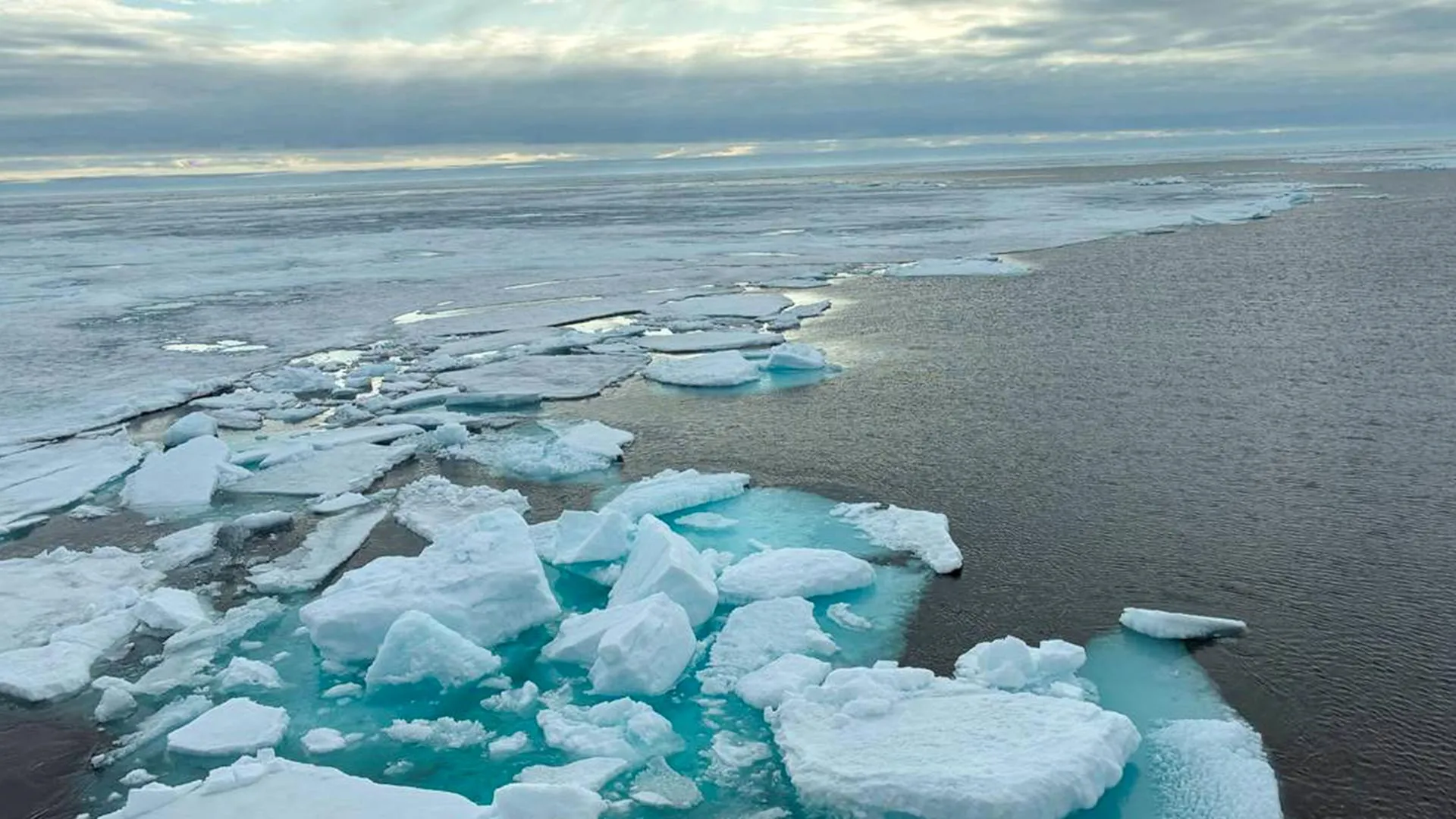
An Arctic cyclone is a large, rotating low-pressure storm affecting the Arctic region. It brings strong winds, changing pressure, clouds, and often snow or rain. The article focuses on its effect on sea ice, rather than treating it as just another snowstorm. An ordinary winter storm can affect many regions and may mainly disrupt travel or bring heavy snow. An Arctic cyclone is especially important because its winds and waves push, break, and spread sea ice. When cyclones arrive close together, the first storm can leave the ice more exposed before the next one arrives. The article shows that clusters of Arctic cyclones cause about twice as much ice loss as isolated cyclones. Their effects also last roughly two and a half times longer. As Arctic ice becomes thinner and weaker, these storms appear to be causing increasing damage, making Arctic cyclones an important part of the region’s changing climate.
Based on reporting by ScienceDaily
What is an Arctic cyclone, and how is it different from an ordinary winter storm?
An Arctic cyclone is a large, rotating low-pressure storm affecting the Arctic region. It brings strong winds, changing pressure, clouds, and often snow or rain. The article focuses on its effect on sea ice, rather than treating it as just another snowstorm.
An ordinary winter storm can affect many regions and may mainly disrupt travel or bring heavy snow. An Arctic cyclone is especially important because its winds and waves push, break, and spread sea ice. When cyclones arrive close together, the first storm can leave the ice more exposed before the next one arrives.
The article shows that clusters of Arctic cyclones cause about twice as much ice loss as isolated cyclones. Their effects also last roughly two and a half times longer. As Arctic ice becomes thinner and weaker, these storms appear to be causing increasing damage, making Arctic cyclones an important part of the region’s changing climate.
How much more sea ice do clusters of back-to-back cyclones destroy compared with isolated cyclones?
Clusters of back-to-back Arctic cyclones cause about twice as much sea ice loss as isolated cyclones. This is the article’s clearest measure of their unusual power. The comparison shows that storm timing matters, not just the strength of one storm.
A single cyclone can push, fracture, and disperse ice. When another cyclone arrives soon afterward, it encounters ice that may already be thinner, cracked, or scattered. The second storm can then extend the damage and expose more ocean. Repeated wind and wave action also gives the ice less time to recover or refreeze.
This result matters because Arctic storms do not always act independently. A period with several storms can remove far more ice than one storm alone. The article also reports that cluster impacts persist roughly two and a half times longer, suggesting that repeated storms can shape sea-ice conditions well beyond the original weather event.
Why do several Arctic storms in a row cause more damage than a single storm?
Several Arctic storms in a row cause more damage because their effects build on one another. The first cyclone can fracture, move, and thin the sea ice. Later cyclones then encounter a weaker, more open ice cover instead of undisturbed ice. The article identifies this clustering as especially destructive.
For example, strong winds from one storm may break large ice sheets into smaller pieces and push them apart. A following storm can move those pieces again, widen openings, and expose additional seawater. Waves can travel farther through open water and strike the remaining ice, increasing breakage. The ice also has less time to recover between storms.
The measured result is substantial: clusters produce about twice as much sea ice loss as isolated cyclones. Their influence lasts roughly two and a half times longer as well. This means storm sequences can reshape Arctic ice conditions for extended periods, especially as the background ice cover becomes thinner and weaker.
How long do the effects of storm clusters on Arctic sea ice last?
Storm clusters affect Arctic sea ice for roughly two and a half times longer than isolated cyclones. This does not mean the storms themselves necessarily last that long. It means their influence on ice loss and ice conditions persists well after the weather events have ended.
The mechanism is cumulative. One cyclone can break and move ice, leaving cracks and open water behind. A later cyclone can enlarge those openings and further disperse the ice. Afterward, broken and scattered ice may take longer to consolidate, while exposed ocean can absorb sunlight and remain more open. These processes extend the storm sequence’s effects.
The article’s finding shows why storm clusters matter beyond short-term weather forecasting. Their longer-lasting impact can keep the ice vulnerable between storms and through later seasons. Since Arctic ice is already becoming thinner and weaker, prolonged damage may contribute to increasingly rapid ice loss over time.
What happens to the Arctic climate and ecosystem when sea ice is lost more quickly?
When Arctic sea ice disappears more quickly, the region loses a bright surface that reflects sunlight. Darker open water absorbs more solar energy, which contributes to additional warming. Rapid ice loss also changes the physical habitat used by animals that depend on sea ice for resting, hunting, breeding, or shelter.
For example, seals and polar bears rely on sea-ice platforms, while algae growing within or beneath the ice supports parts of the marine food web. Less ice and more open water can alter where these organisms live and how energy moves through the ecosystem. These effects can spread through connected food chains.
The article reports that cyclone clusters cause about twice as much ice loss as isolated storms, and their impacts last roughly two and a half times longer. It does not detail every ecosystem consequence, but established climate science shows that faster ice loss can amplify regional warming and disrupt Arctic habitats. Thinner ice also increases vulnerability to later storms.
Why is thinner, weaker sea ice more vulnerable to damage from later storms?
Thinner, weaker sea ice is more vulnerable because it takes less force to bend, crack, move, or break it. It also provides less continuous coverage across the ocean. The article says Arctic ice is becoming thinner and weaker, while storm damage appears to be increasing.
Consider two storms arriving close together. The first can fracture a thick ice sheet, but a thinner sheet may break apart more extensively. It can also be pushed into smaller pieces or separated by open-water gaps. When the next cyclone arrives, its winds and waves act on ice that already has cracks and less structural strength. The damage can therefore spread faster.
This creates an important change in storm impacts. A cyclone that once caused limited disruption may now produce greater ice loss because the starting conditions are different. The article links this increasing vulnerability with more destructive storm clusters, which cause about twice the loss of isolated cyclones and effects lasting about two and a half times longer.
How can melting sea ice create a feedback loop that leads to even more future warming and ice loss?
Sea-ice loss can create a feedback loop because bright ice reflects much sunlight, while dark ocean water absorbs it. When ice melts, more water is exposed. The ocean then gains heat, which can encourage additional melting and make future ice formation more difficult. This is a well-established Arctic climate process.
The cycle can combine with storms. A cyclone cluster may break and remove ice, opening more water. That water absorbs sunlight after the storm, helping maintain warmer conditions. As the remaining ice becomes thinner and weaker, later cyclones can damage it more easily. Each stage leaves the Arctic more vulnerable to the next stage.
The article reports that storm clusters cause about twice as much ice loss as isolated cyclones and that their effects last roughly two and a half times longer. It also says increasing damage may create a feedback loop accelerating future loss. Thus, storms and warming can reinforce each other, though the article does not quantify the loop’s total future contribution.
Key Facts:
📌 Arctic cyclones are large low-pressure storms affecting the polar region.
📌 Their winds and waves can break and redistribute sea ice.
📌 Storm clusters cause more lasting ice loss than isolated cyclones.
📌 Cyclone clusters cause about twice the sea-ice loss.
📌 Isolated cyclones provide the comparison baseline.
📌 Storm timing amplifies damage beyond one cyclone’s effects.
📌 The first storm weakens ice before later storms arrive.