News · Science & Technology
One Mount Etna eruption took weeks. Another happened in hours
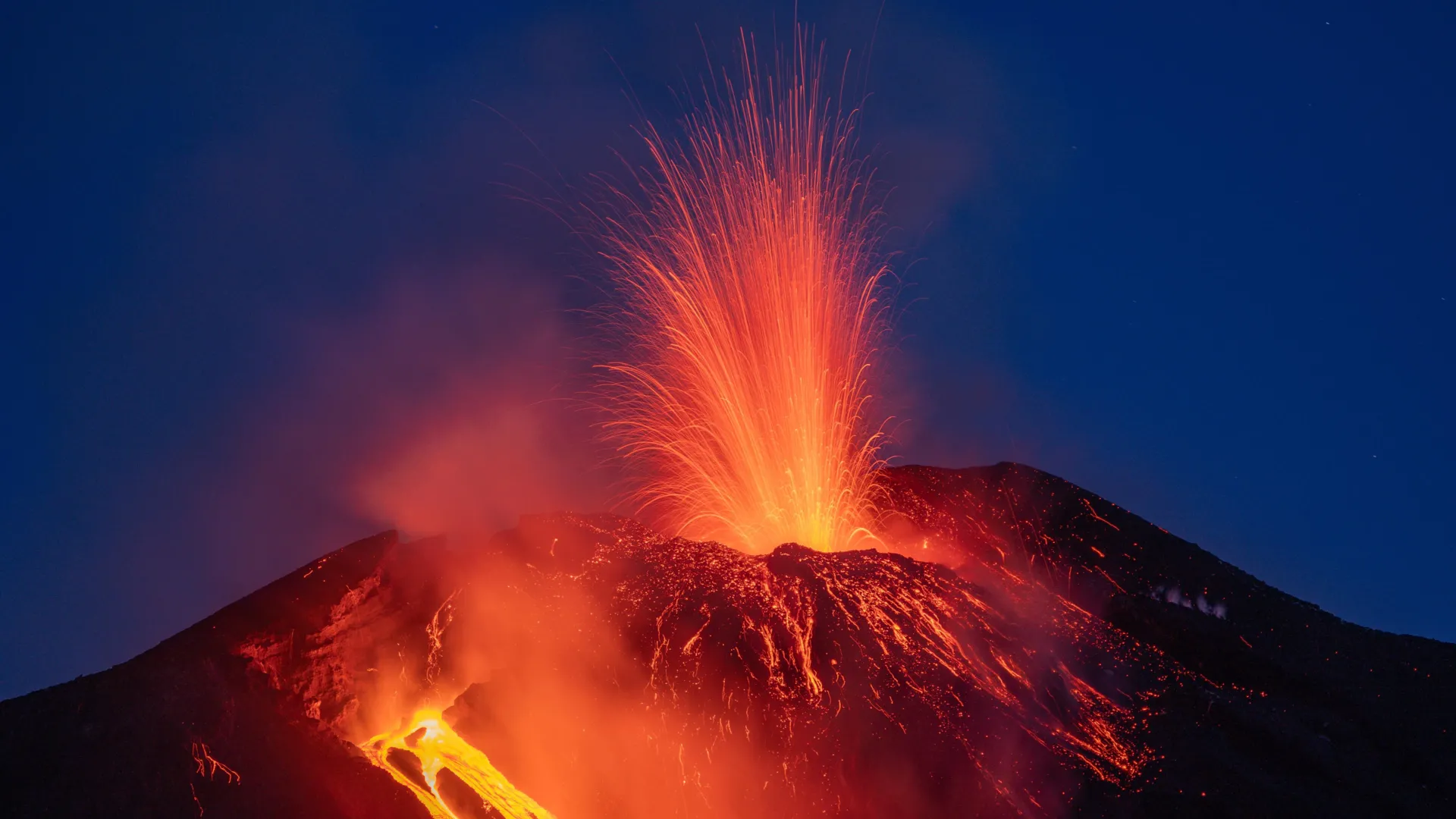
Mount Etna’s ancient eruptions did not follow one timetable. In some events, magma remained near the surface for weeks before erupting. In others, magma traveled upward from nearly 30 kilometers underground in only hours. That contrast shows that eruptions can begin through very different underground pathways. The key difference involved volcanic gases, including carbon dioxide and water. Gases dissolved in magma affect how it moves and changes as pressure falls during ascent. Scientists traced the ancient eruption histories by examining these gas clues. Their results connected different gas patterns with either prolonged near-surface storage or rapid upward travel. This matters because eruption speed can influence how much warning scientists have and how explosive an event becomes. The article presents gas analysis as a powerful new way to understand past eruptions. It may also help scientists recognize pathways linked with future explosive activity, although prediction remains difficult.
Based on reporting by ScienceDaily
What happened during Mount Etna’s ancient eruptions, and how did their timelines differ?
Mount Etna’s ancient eruptions did not follow one timetable. In some events, magma remained near the surface for weeks before erupting. In others, magma traveled upward from nearly 30 kilometers underground in only hours. That contrast shows that eruptions can begin through very different underground pathways.
The key difference involved volcanic gases, including carbon dioxide and water. Gases dissolved in magma affect how it moves and changes as pressure falls during ascent. Scientists traced the ancient eruption histories by examining these gas clues. Their results connected different gas patterns with either prolonged near-surface storage or rapid upward travel.
This matters because eruption speed can influence how much warning scientists have and how explosive an event becomes. The article presents gas analysis as a powerful new way to understand past eruptions. It may also help scientists recognize pathways linked with future explosive activity, although prediction remains difficult.
What is Mount Etna, and where is it located?
Mount Etna is an active volcano located on Sicily, an island belonging to Italy in the Mediterranean Sea. It rises on Sicily’s eastern side, near the cities of Catania and Messina. As a volcano, Etna is an opening in Earth’s crust where magma, gases, ash, and lava can reach the surface.
The article focuses on Etna’s ancient eruptions rather than describing one single modern event. Those eruptions provide a natural record of how magma traveled underground before breaking through. Scientists can study materials from past activity to reconstruct the magma’s movement and the conditions it experienced.
Etna’s location and long history make it especially valuable for volcanic research. Its repeated activity offers many examples for comparison. By linking volcanic gases with magma pathways, researchers hope to improve understanding of how eruptions develop and possibly identify signs associated with explosive behavior.
How much did the eruption times vary—from magma lingering near the surface to magma rising from deep underground?
The eruption times varied from weeks of near-surface magma storage to only hours of ascent from nearly 30 kilometers underground. The article does not give exact durations for each week-long or hour-long event. Still, the contrast is striking: one pathway involved magma waiting close to the surface, while another involved a rapid journey through much of the crust.
This is not simply a difference in eruption date. It describes how quickly magma moved before reaching the volcano’s outlet. Scientists used volcanic gases, especially carbon dioxide and water, to distinguish these underground histories. The gases preserved clues about the pressure and depth conditions the magma experienced.
Such a wide range matters for hazard assessment. Magma that arrives rapidly may give less time for changes to be detected. Magma stored near the surface may interact with the surrounding volcanic system for longer. Gas evidence could help identify which kind of pathway is developing.
Why might magma remain near the surface for weeks in one eruption but rise from nearly 30 kilometers deep in only hours in another?
Magma does not always rise through the volcano in the same way. Some magma may collect and remain in a shallow underground reservoir, where it can wait for weeks. Other magma may travel upward rapidly from deep below. Differences in pressure, temperature, rock fractures, and gas content can help determine the route and speed.
Volcanic gases are especially important because carbon dioxide and water are dissolved in magma underground. As magma rises, surrounding pressure decreases. Gas behavior then changes, helping reveal whether the magma spent time near the surface or came quickly from depth. At Etna, scientists used these chemical clues to distinguish the pathways.
The article’s central finding is that gas evidence can reconstruct hidden movement before an eruption. This could improve understanding of why one event develops slowly while another accelerates. It may also help scientists identify conditions associated with explosive eruptions, though gas signals cannot guarantee exactly what will happen.
What are volcanic gases such as carbon dioxide and water, and how can scientists use them to distinguish different eruption pathways?
Volcanic gases are chemical substances carried by magma, often dissolved while the magma remains underground. Carbon dioxide and water are two important examples named in the article. They are not merely by-products at the surface; their amounts and behavior can record the conditions magma experienced below the volcano.
As magma rises, pressure decreases. Dissolved gases can begin coming out of the magma and forming bubbles. Different gases respond to depth and pressure in different ways, so their proportions can preserve clues about magma storage and ascent. Scientists examined these clues at Mount Etna to separate magma that lingered near the surface from magma that rose nearly 30 kilometers in hours.
This approach turns gases into a kind of underground travel record. It helps researchers reconstruct eruption pathways that cannot be observed directly. The article suggests that such evidence could improve understanding of explosive eruptions and support future monitoring, although it is one tool rather than a complete prediction system.
What can happen because magma and its gases reach the surface rapidly, especially in an explosive eruption?
When magma and its gases rise quickly, pressure can drop faster than the gases can escape smoothly. Dissolved gases may then expand into bubbles. If expansion becomes intense, it can break the magma apart and drive an explosive eruption. The article connects gas behavior with the ability to understand and potentially anticipate this danger.
In an explosive event, the volcano can release ash, fragmented rock, lava, and hot gases. Ash may spread through the atmosphere, while fast-moving volcanic material and gases can threaten areas near the volcano. The exact effects depend on the eruption, so the article does not assign a particular hazard to Etna’s ancient events.
Rapid ascent is therefore important not only because it shortens the underground journey. It can also leave less time for scientists to detect changing conditions. Gas measurements may help identify magma pathways linked with explosive behavior, improving scientific understanding and possibly supporting earlier warnings.
How do pressure, dissolved gases, and bubbles inside rising magma control whether a volcano erupts gently or explosively?
Pressure controls how much gas magma can hold underground. Deep magma experiences high pressure, which keeps carbon dioxide and water dissolved. As magma rises, pressure falls. The gases then begin forming bubbles, much like carbonation escaping when a bottle is opened. Bubble growth can make magma expand and move faster.
If gas escapes steadily, magma may reach the surface in a relatively gentle eruption, releasing lava and gases. If bubbles grow rapidly or cannot escape, pressure can build inside the magma. The magma may fragment into ash and rock, producing an explosive eruption. Magma viscosity also matters because thicker magma can trap bubbles more effectively.
These principles explain why gas evidence is useful at Etna. Gas composition and behavior can indicate the magma’s depth, storage history, and ascent speed. The article shows that such clues distinguish slow, shallow pathways from rapid deep ones. They may improve monitoring, but eruption behavior remains complex and difficult to predict perfectly.
Key Facts:
📌 Some magma lingered near the surface for weeks.
📌 Other magma rose nearly 30 kilometers in hours.
📌 Volcanic gases revealed contrasting eruption pathways.
📌 Mount Etna is an active volcano.
📌 It stands on Sicily, Italy.
📌 Sicily lies in the Mediterranean Sea.
📌 Magma storage lasted weeks in some eruptions.